Four New Departments to Launch, Undergraduate Program Begins Next Spring
Expansion to GIST, DGIST, and UNIST by 2027
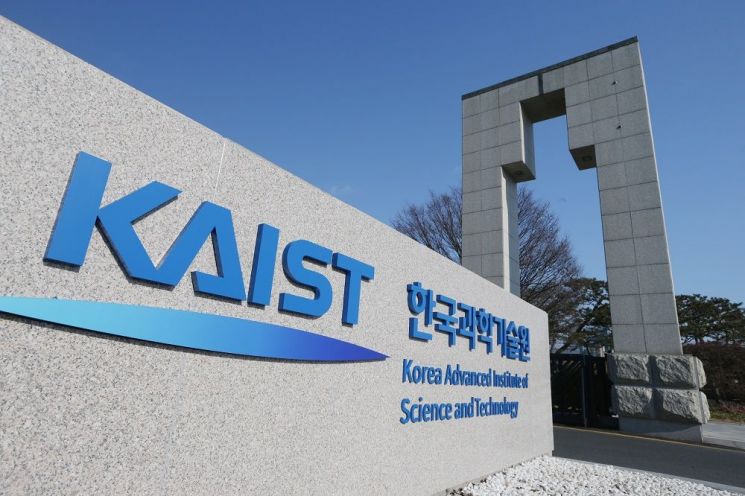
The Ministry of Science and ICT and the Korea Advanced Institute of Science and Technology (KAIST) will launch a new artificial intelligence (AI) college with an enrollment of 300 students starting next year, officially kicking off efforts to nurture the nation’s core AI talent.
The government’s national agenda item to establish “AI colleges at science and technology institutes” will be realized for the first time at KAIST. This move is expected to spark the creation of a hyper-regional AI talent ecosystem across all four science and technology institutes by 2027.
Four New Departments Covering Core AI Technology, Applications, and Policy
The KAIST board of directors approved the establishment of the AI college on December 11, and student recruitment will begin next year. The new AI college will launch four departments: the Department of AI Computing, the Department of AI Systems, the Department of AX (AI Transformation), and the Department of AI Futures, alongside the AI undergraduate program. Each department will start with five full-time faculty members, totaling 20, with plans to continuously expand the faculty to strengthen AI expertise.
The Department of AI Computing will nurture talent capable of designing and developing cutting-edge models such as generative AI, multimodal AI, and agentic AI. The Department of AI Systems will produce hardware specialists focused on high-performance, low-power AI semiconductors and system design.
The Department of AX will consist of four tracks: Data & Content AI, Manufacturing & Physical AI, Bio & Materials AI, and AI Sustainability. Its goal is to foster interdisciplinary talent capable of directly applying AI to industrial and societal challenges. The Department of AI Futures will focus on AI ethics, policy, economics, and algorithmic norms, aiming to educate future policy experts who will shape the national AI strategy.
The scale of student recruitment will also expand significantly. With the establishment of the AI college, KAIST will increase its enrollment by 300 students: 100 undergraduates, 150 master’s students, and 50 doctoral students. The undergraduate program will begin in the spring semester of 2026, and the graduate program will start in the fall semester of the same year. Under KAIST’s first-year undeclared major system, sophomores entering in 2026 will be able to choose one of the four departments as their primary major.
Expansion to Four Science and Technology Institutes... Establishing Regional AI and AX Hubs
Starting with the establishment of the KAIST AI college, the government plans to expand AI colleges to Gwangju Institute of Science and Technology (GIST), Daegu Gyeongbuk Institute of Science and Technology (DGIST), and Ulsan National Institute of Science and Technology (UNIST) by 2027. This will create a regional AI and AX innovation system based on four hyper-regional hubs. Each institute will develop AX curricula tailored to their regional strategic industries, aiming to cultivate practical talent needed in the field.
For example, GIST in the Honam region will focus on energy and mobility, UNIST in the southeastern region will specialize in shipbuilding and marine industries, and DGIST in the Daegu-Gyeongbuk region will offer a curriculum centered on physical AI, each linked to their respective regional competitive industries.
As the leading model, KAIST will first establish standardized curricula and then help disseminate them to other science and technology institutes and regional flagship national universities. Practical collaboration systems, such as credit exchange, joint faculty appointments, co-supervision, and expanded project participation, will be gradually implemented.
Koo Hyukchae, First Vice Minister of Science and ICT, stated, “With the launch of the KAIST AI college, a national-level AI-specialized education system is now in full operation. We will boldly support its expansion to other science and technology institutes to drive AI transformation and balanced development in regional strategic industries.”
Meanwhile, it was reported that the KAIST board did not discuss the appointment of a new president, a position that has been vacant for nine months. The KAIST Faculty Association recently issued a statement urging the prompt appointment of a new president, expressing concern over the prolonged vacancy.
© The Asia Business Daily(www.asiae.co.kr). All rights reserved.

















