Top 20% Pain Index Scores 127... Up to 12.7 Times the Maximum Pain of a Single Disease or Procedure
'Personalized' Advance Directives Needed to Strengthen Patient Autonomy
Address Institutional Blind Spots and Timing Issues... Ensure Continuity of Care
Lee Chang-yong: "Hope Policy Alternatives Address Macroeconomic Issues of Life-Sustaining Treatment Amid Aging Population"
When the pain experienced by patients receiving life-sustaining treatment was measured, it was found to reach up to 12.7 times the extreme pain of trigeminal neuralgia. While 84.1% of people aged 65 and older expressed that they would not want life-sustaining treatment if there was no chance of recovery, in reality, only 16.7% of actual deaths involved withholding or discontinuing such treatment.
The Bank of Korea and the National Health Insurance Service agreed, through joint research, that it is time to address the limitations of the life-sustaining treatment decision system to ensure that patients' wishes are more fully realized in medical settings. To this end, they emphasized the need to accept more personalized advance directives to strengthen patient autonomy, as well as to resolve institutional blind spots and issues regarding the timing of implementation. Ensuring continuity of care was also highlighted as essential.
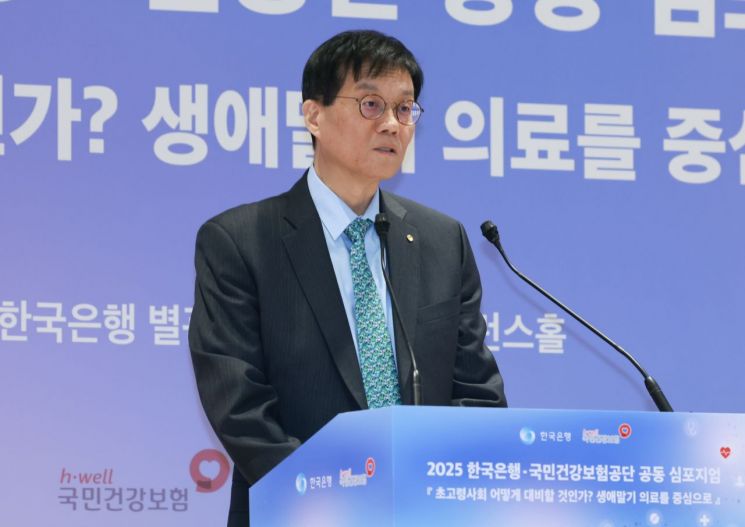 Lee Chang-yong, Governor of the Bank of Korea, is delivering a welcoming speech at the "Bank of Korea-National Health Insurance Service Joint Policy Symposium" held on the 11th at the Bank of Korea in Jung-gu, Seoul. Bank of Korea
"Focusing on Patient Suffering" Top 20% Score 127.2... Up to 12.7 Times the Maximum Pain of a Single Disease or Procedure
Lee Inro, Deputy Director of the Population and Labor Research Division at the Bank of Korea Economic Research Institute, announced these findings as a presenter at the joint symposium with the National Health Insurance Service held on the 11th at the Bank of Korea in Jung-gu, Seoul, under the joint research project "Life-Sustaining Treatment, Whose Choice Is It?: The Gap Between Patient Preferences and Medical Reality, and Ways to Address It" (Kim Taekyung, Lee Inro, Jeong Jongwoo, Yoo Inkyoung, Han Eunjeong, Park Youngwoo).
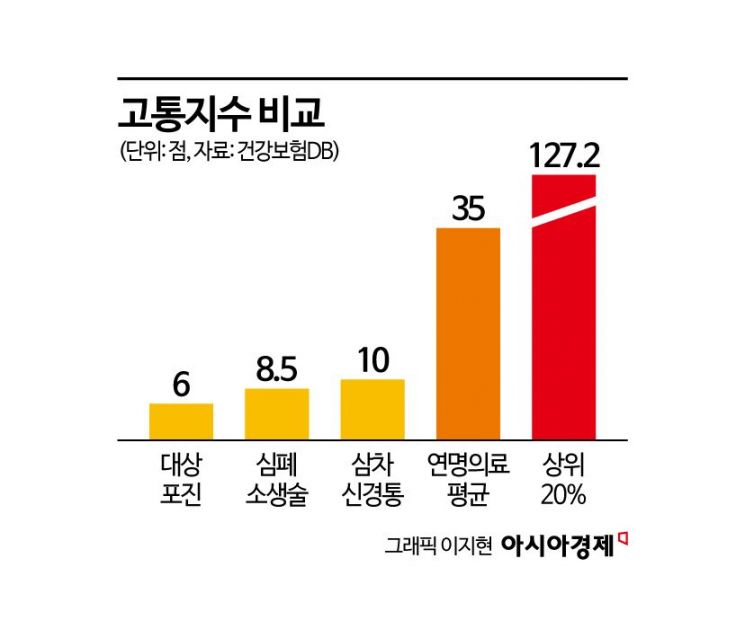
According to the "Life-Sustaining Treatment Pain Index," calculated for the first time in the world in this study, the average physical pain score for patients receiving life-sustaining treatment was 35. This is about 3.5 times higher than the maximum pain experienced in cases of a single disease or procedure, such as herpes zoster (6 points), cardiopulmonary resuscitation (8.5 points), or trigeminal neuralgia (10 points). For patients in the top 20% of the pain index, the score reached 127.2, which is approximately 12.7 times higher than the maximum pain of a single disease or procedure.
There was also a significant gap between patient preferences and medical reality. While 84.1% of older adults aged 65 and above expressed a desire to refuse life-sustaining treatment if there was no chance of recovery, only 16.7% of actual deaths among this age group involved withholding or discontinuing such treatment. Lee stated, "This suggests that a considerable number of elderly patients undergo life-sustaining procedures right up until death, regardless of their own wishes."
Life-Sustaining Treatment Costs to Reach 16.9 Trillion Won by 2070, Only 3.6 Trillion Won if Survey Results Are Reflected..."Reallocate Savings to Improve Quality of End-of-Life Care"
The number of patients receiving life-sustaining treatment increased by an average of 6.4% per year between 2013 and 2023. In addition to the demographic trend of population aging (which contributed about 60%), the researchers analyzed that a combination of institutional and structural factors-such as restrictions on patient autonomy throughout the entire process from advance discussion, hospital selection, end-of-life determination, to post-withdrawal care-also played a role.
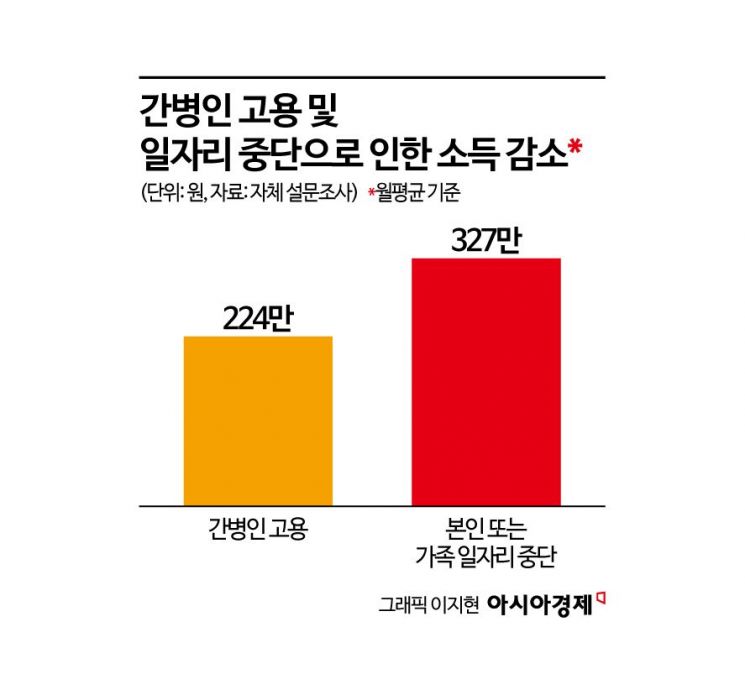
Not only the suffering of patients but also the increasing financial burden on families was identified as a social issue. The average end-of-life medical expenses per patient (out-of-pocket costs excluding health insurance coverage for the year before death) doubled from 5.47 million won in 2013 to 10.88 million won in 2023, growing at an average annual rate of 7.2%. This amounts to about 40% of the median income for households aged 65 and older. In addition to medical expenses, families may face further economic burdens such as hiring caregivers or taking leave from work or retiring.
The researchers projected that if the current rate-where nearly 70% of older decedents receive life-sustaining procedures-continues, the National Health Insurance Service's expenditure on life-sustaining treatment will rise from 3 trillion won in 2030 to 16.9 trillion won by 2070. In contrast, if the rate drops to 15% as reflected in the survey, the cost would be only about 3.6 trillion won. Lee stated, "If the savings are reallocated to facilities such as hospices and other care institutions, the quality of end-of-life care for patients could be greatly improved."
Record Specific Personal Preferences, Expand Items in Advance Directives
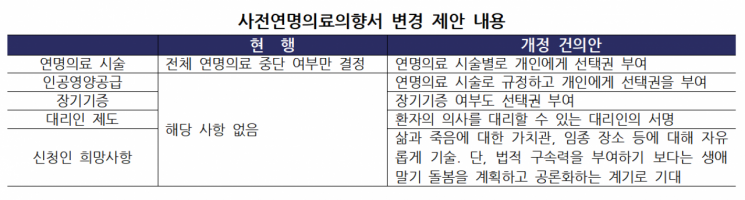
The researchers emphasized the need to introduce a more personalized advance directive form to more accurately reflect patients' specific preferences and values in clinical practice. The new form includes: ▲ selective refusal of legally defined life-sustaining procedures, ▲ statements on artificial nutrition (which is not currently included in legally defined life-sustaining procedures but is closely related to sustaining life), ▲ organ donation intentions, and ▲ designation of a healthcare proxy. Lee explained, "We have designed a space where patients can freely describe their wishes regarding the place of death, type of care, and other preferences, so that they can thoughtfully consider their end-of-life process in advance and record their personal choices in detail."
The analysis also pointed out the need to strengthen institutional and financial support so that patients can fully exercise their autonomy even in smaller or long-term care hospitals. There was also a suggestion to start a public discussion on whether to adjust the current timing of implementing life-sustaining treatment withdrawal, which is limited to the 'end-of-life' period. Lee emphasized, "The goal of improving the life-sustaining treatment system is to help individuals thoroughly consider in advance how they wish to conclude their lives in accordance with their values and to ensure that their self-determination is respected until the very end."
Meanwhile, Lee Chang-yong, Governor of the Bank of Korea, said in his welcoming speech that day, "There was considerable internal debate within the Bank of Korea about addressing the issue of life-sustaining treatment," and added, "We were concerned that approaching such a sensitive topic as the dignity of life from an economic perspective-considering health insurance and finances-might lead to misunderstandings." However, he explained, "Given the rapid pace of population aging, we could no longer ignore the macroeconomic challenges posed by issues related to life-sustaining treatment."
Governor Lee was moved to tears as he recalled his late mother, who passed away last August. He said, "At that time, my mother asked not to be given any more nutritional supplements and only to have her pain relieved. Our family discussed this issue at length," adding, "Looking back, it seems it was the right choice for my mother. This research is also dedicated to her."
© The Asia Business Daily(www.asiae.co.kr). All rights reserved.