An Increase of 47.6 Billion Won and 7.9% Compared to the Previous Year
Gwangyang City in South Jeolla Province announced that, following the passage of the government budget bill in the National Assembly plenary session, it has secured a total of 650.5 billion won in national and provincial funds for 2026 (546.9 billion won in national funds and 103.6 billion won in provincial funds).
Despite challenging fiscal conditions such as the global economic slowdown and decreased tax revenues, the city secured a record-high amount of national and provincial funding, 47.6 billion won (7.9%) more than the previous year’s 602.9 billion won. This achievement is attributed to the relentless efforts of city officials who continued to visit the National Assembly, central government ministries, and the South Jeolla Provincial Government until the very end to secure the budget.
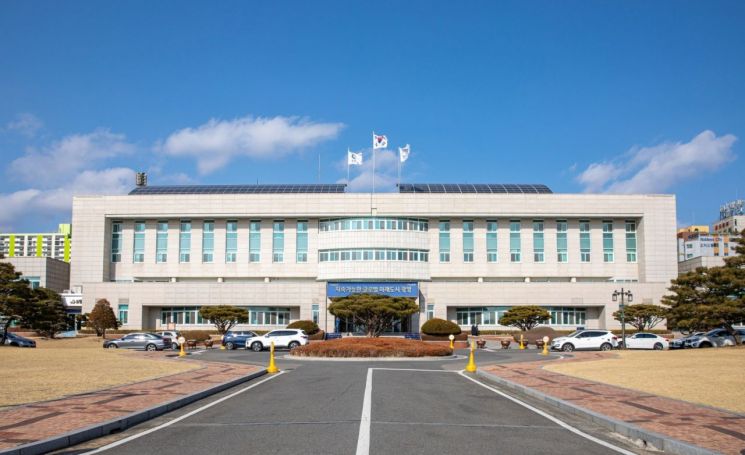
In particular, four major projects that were not included in the initial government budget proposal but received increased funding during the National Assembly’s budget review process are considered representative accomplishments. These include 2.8 billion won for the establishment of the Steel and Metal Digital Transformation (AX) Support Center (total project cost: 22 billion won), 3.5 billion won for the construction of the access road to the Sepung Industrial Complex (total project cost: 38 billion won, increased from the previous 1.871 billion won), 250 million won for the construction of the Gwangyang Veterans Hall (total project cost: 5.2 billion won), and 900 million won for repair work on the east and west hinterland roads of Gwangyang Port (total project cost: 19.6 billion won). These achievements are credited to the unwavering commitment of relevant department officials who persistently lobbied the National Assembly with the spirit of "where there is a will, there is a way."
Key new project budgets secured include 3.28 billion won for improving the parking environment at the Gwangyang Five-Day Market (total project cost: 6.5 billion won), 500 million won for design costs for the establishment of the Gwangyang Manufacturing Startup Shared Factory (Scale-Up Demonstration Center) in South Jeolla Province (total project cost: 30 billion won), 2.28 billion won for establishing a demonstration platform for next-generation battery raw materials (total project cost: 22 billion won), 950 million won for the creation of the Baekgyesan Millennium Camellia Garden (total project cost: 1.9 billion won), 400 million won for upgrading the Gwangyang Youth Culture Center (total project cost: 500 million won), 2.35 billion won for the maintenance of three aging mid-block water supply networks in Yonggang and Gusan, among others (total project cost: 47 billion won), and 2.08 billion won for the construction of a new water transmission pipeline in the Okrong District (total project cost: 4.3 billion won).
This securing of national and provincial funds is expected to significantly boost the momentum of Gwangyang City’s key initiatives, including revitalization of Gwangyang Port, large-scale SOC projects, fostering new secondary battery industries, expanding tourism infrastructure, and improving residential conditions, thereby providing a strong foundation for stable city administration in 2026.
A city official stated, "Despite difficult fiscal conditions, the resources secured through the cooperation of all staff will be allocated appropriately," adding, "We will focus our administrative capabilities on revitalizing the local economy, enhancing the stability of city operations, and improving the quality of life for our citizens."
Meanwhile, Gwangyang City plans to launch full-scale efforts to secure national and provincial funds for the following year, beginning with a report meeting to identify 2027 projects in January 2026.
© The Asia Business Daily(www.asiae.co.kr). All rights reserved.

















