Dell to Raise Prices by 15-20% Starting Mid-December
Lenovo Notifies Clients of Planned Price Hikes
TrendForce: "HP, Samsung, and LG Also Expected to Raise Prices"
Early Year Marks 'Academy Season' with Peak Admissions and Graduations
Due to a sharp rise in memory semiconductor prices, the prices of major new PCs and tablets set to be released during the Academy Season early next year are expected to increase by up to 20% across the board. Global manufacturers have signaled price adjustments starting at the end of this year, citing soaring memory costs, leading analysts to conclude that “chipflation” is now in full swing.
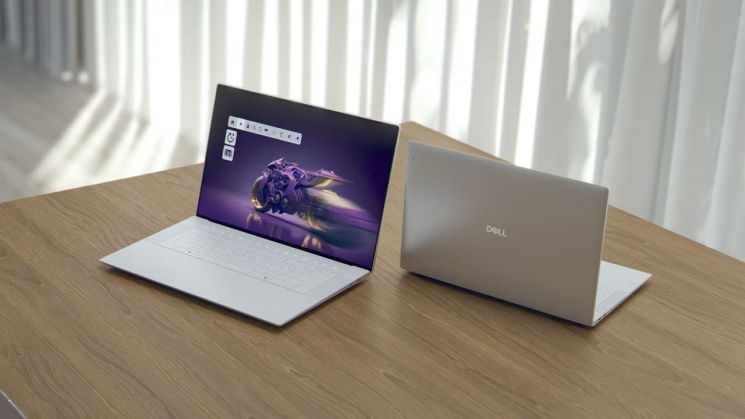
According to industry sources on December 12, global market research firm TrendForce, citing insiders, reported that “Dell Technologies, a U.S. company, has begun preparations to raise the prices of its products by 15 to 20% starting in mid-December.”
The outlet explained that this move is due to the recent steep increase in memory prices, including DRAM. The rising costs of memory components used in products such as AI PCs have made it inevitable for finished product prices to go up. In particular, the soaring price of DDR5, which is widely used in PCs, has had a direct impact. According to TrendForce and others, the price of DDR5 has surged by about 70% compared to the previous year, and the prices of other key components required for PC production have jumped by more than 170%. Jeff Clarke, Chief Operating Officer (COO) of Dell, said during the company’s third-quarter earnings announcement on November 25 (local time), “I have never seen memory chip costs rise this quickly.”
Lenovo has also reportedly decided to raise the prices of its products early next year and has notified its clients of this plan. The company has advised customers to place orders for urgently needed quantities by the end of this year, before the price hike takes effect. TrendForce stated, “Other companies such as HP, Samsung Electronics, and LG Electronics are also reviewing their product plans for next year, focusing on AI PCs and tablets.” Analysts expect these companies to join the wave of price increases as well.
While Samsung Electronics and LG Electronics have not yet finalized their product launch plans for next year, it is highly likely that they will release new PCs and tablets early next year. An industry insider stated, “January and February each year are known as the ‘Academy Season,’ when admissions and graduations are concentrated, making it the peak sales period for PCs and tablets.” Traditionally, the beginning of the year has been the high season for PCs and tablets, with companies strategically launching new products to coincide with this period. Whether they will raise prices along with new product launches is expected to be a matter of careful consideration until the last moment. According to industry sources, Samsung and LG typically monitor market conditions up until the product release and make their final pricing decisions at the last minute. This approach is likely to continue early next year. Like their competitors, price increases seem inevitable, but they are expected to look for ways to reduce production costs as much as possible to offer more competitive prices.
Meanwhile, there are predictions that PCs are just the beginning of chipflation. Industry insiders and experts say that smartphones and other devices are also entering a phase of price adjustments. This is especially likely since there appears to be no room for memory prices to decrease in the near future. According to the semiconductor industry, as Samsung Electronics and SK Hynix, which lead the memory market, concentrate their production on AI servers and data centers, supply for PCs and smartphones has become absolutely insufficient. In the smartphone industry, it is expected that product prices will rise by an average of 5 to 7% next year. Some analysts predict that if memory prices continue to rise, PC and smartphone shipments themselves could decrease by around 3%.
© The Asia Business Daily(www.asiae.co.kr). All rights reserved.
!["The Woman Who Threw Herself into the Water Clutching a Stolen Dior Bag"...A Grotesque Success Story That Shakes the Korean Psyche [Slate]](https://cwcontent.asiae.co.kr/asiaresize/183/2026021902243444107_1771435474.jpg)
















