Ministries of Science and ICT and Foreign Affairs Share Multilateral Cooperation, Research Security, and Global Research Achievements Amid Changing International Dynamics
The Ministry of Science and ICT and the Ministry of Foreign Affairs held a joint forum to strengthen science and technology diplomacy strategies focused on advanced technologies in response to shifting international dynamics. They comprehensively discussed the achievements of international cooperation and future policy directions.
On December 9, the two ministries co-hosted the '2025 K-Science & Technology Global Forum' at the Conrad Hotel in Seoul. The event brought together approximately 200 participants, including members of the diplomatic corps in Korea and researchers from both Korea and abroad. The forum centered on four key agenda items: directions for international cooperation in science and technology and diplomatic policy (Session 1), establishment of new multilateral cooperation platforms (Sessions 2 and 3), trends in research security policy (Session 3), and outcomes of major international cooperation cases (Session 4).
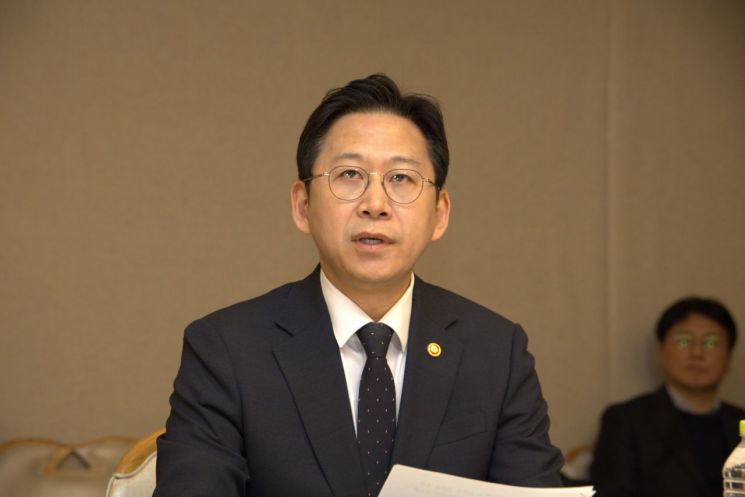 Background photo to aid understanding of the article featuring Deputy Prime Minister and Minister of Science and ICT, Hoon Bae. Photo by Yonhap News Agency
The keynote speech was delivered by world-renowned biophysicist Hah Taekjip, a professor at Harvard University. Under the theme 'From Biophysics to Global Impact,' he emphasized the importance of global research partnerships, stating, "Collaboration between academia and industry, as well as nurturing young talent, forms the foundation for sustainable innovation in science and technology."
In Session 1, the two ministries presented their science and technology diplomacy policy directions. Hwang Sunghoon, Director-General for International Cooperation at the Ministry of Science and ICT, explained that, in response to global environmental changes, "We will strengthen strategic and practical international cooperation based on a balance between openness and protection and secure technological sovereignty." Han Minyoung, Director-General for Climate, Environment, and Science Diplomacy at the Ministry of Foreign Affairs, stated, "Diplomacy centered on advanced technologies has become a core element of national strategy," and pledged active participation in shaping international norms in emerging technology sectors.
Sessions 2 and 3 focused on the establishment of new multilateral cooperation platforms and research security. Koo Bonkyung, Group Leader at the Institute for Basic Science (IBS), stressed that multilateral cooperation is key to securing global competitiveness in basic science. During a panel discussion, distinguished scholars from institutions such as the Asia Pacific Center for Theoretical Physics (APCTP) and IBS recommended that "the framework for international cooperation in science and technology should be newly designed."
In the subsequent research security session, participating countries shared their research security policies and discussed how to balance openness and security in the field of science and technology. Experts from the OECD and the Japanese government highlighted the need for safeguards as international joint research expands, while Kim Kuktae, Senior Researcher at KAIST, introduced the security systems in place at university research sites.
The final session featured presentations on the major achievements of flagship international cooperation projects. Project leaders in quantum, AI, and biotechnology shared their accomplishments and future plans, demonstrating that Korea's international science and technology networks are leading to tangible research outcomes.
Minister of Science and ICT Bae Hoon stated, "Advanced science and technology have become a core element that influences the entirety of a nation's economy, diplomacy, and security. We will strategically pursue international cooperation in key areas such as AI, advanced biotechnology, quantum, and energy to help Korea emerge as a global innovation hub." Kim Jina, Second Vice Minister of Foreign Affairs, added, "Competitiveness in science and technology is the driving force that reshapes the diplomatic landscape and alliance networks. We will work closely with the Ministry of Science and ICT to further strengthen a multi-layered science and technology diplomacy network."
© The Asia Business Daily(www.asiae.co.kr). All rights reserved.
![Clutching a Stolen Dior Bag, Saying "I Hate Being Poor but Real"... The Grotesque Con of a "Human Knockoff" [Slate]](https://cwcontent.asiae.co.kr/asiaresize/183/2026021902243444107_1771435474.jpg)
















