419 Billion Won Increase,
Securing Real Momentum for the 1 Trillion Won Budget Era
Uiseong County has secured 318.1 billion won in national and provincial subsidies for next year, marking a structural turning point in the region's fiscal management.
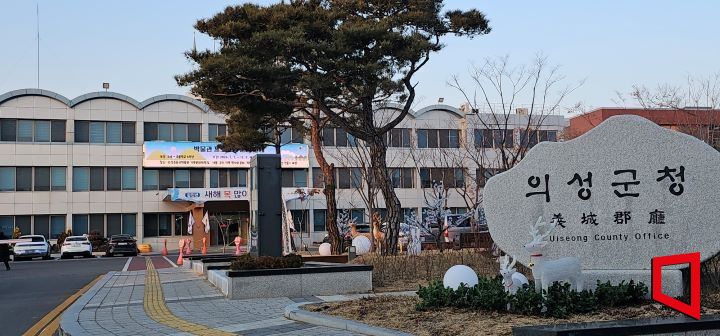
With the passage of the 2026 government budget bill in the National Assembly plenary session, the amount of national and provincial subsidies allocated to the county increased by 41.9 billion won from the previous year, reaching an all-time high. The county will now actively begin expanding its growth engines and upgrading its living and environmental infrastructure.
It is rare nationwide for a rural basic local government with low fiscal independence to surpass the 300 billion won mark in national and provincial subsidies.
Uiseong County is being recognized for establishing a robust system to secure external funding in line with the "1 trillion won budget era" by deploying multifaceted strategies, such as responding to national public contests, persuading stakeholders on regional issues, and negotiating with central government ministries.
◆ "Balanced Budget" Spreads Across Infrastructure, Safety, Environment, and Cultural Regeneration
Next year's national and provincial subsidies consist of 249 billion won from the central government and 69.1 billion won from the provincial government, totaling 318.1 billion won. The actual scale is expected to be even larger when considering the additional increases reflected during the National Assembly's review.
Key newly funded projects focus on expanding living infrastructure and upgrading environmental foundations.
The main projects include: 4.2 billion won for the Angye-myeon public parking lot (total 8.1 billion won), 300 million won for the Bio Valley wastewater treatment facility (total 15.4 billion won), 500 million won for phase 3 of Uiseong sewage pipeline maintenance (total 13 billion won), 300 million won for Angye sewage pipeline maintenance (total 10.1 billion won), and 800 million won for Angye old water supply pipeline maintenance (total 14.9 billion won). In addition, significant ongoing projects have been included in the areas of culture, environment, disaster prevention, and improvement of settlement conditions.
Representative projects include the Uiseong Match Factory cultural regeneration project (5.8 billion won), expansion of public livestock manure treatment facilities (7.2 billion won), establishment of an LPG pipeline network (5.3 billion won), maintenance of old water supply pipelines (4.6 billion won), rural village sewage system improvements (8 billion won), improvement of areas at risk from natural disasters (5 billion won), and revitalization of rural hubs (2.9 billion won).
Projects to improve residents' living conditions, such as the Basic Living Base Creation Project (2.9 billion won) and the Vulnerable Area Living Condition Renovation Project (1.1 billion won), also stand out.
◆ Success in Securing Budget at the National Assembly Stage... "Meticulous Budget Strategy Shines"
Uiseong County also secured additional budget allocations during the National Assembly review process through collaboration with the local lawmaker's office.
Notable additions include 750 million won for the Wildfire-Damaged Timber Resource Center and 800 million won for the expansion of open-field smart convergence demonstration models. Budget shortfalls in the government proposal were also addressed.
The Integrated Food Support Center received 2.1 billion won (an increase of 1.5 billion won), and the Living Resource Recovery Center received 1.6 billion won (an increase of 1.14 billion won), making it possible for both projects to proceed as planned next year.
◆ Linkage with the TK New Airport... A Signal for the Reshaping of Uiseong County's Economic Map
With the installation of a dedicated cargo terminal for Uiseong County in the basic plan for the new civilian airport virtually confirmed, the pace of expanding social overhead capital and establishing the foundation for aviation logistics and maintenance industrial complexes is expected to accelerate.
This structural transformation is expected to expand the county's focus from agriculture and bio-industries to logistics and aviation-centered industries. The securing of national and provincial subsidies is being evaluated as a watershed moment that will redraw the "economic map of Uiseong for the next 10 years."
◆ "Creating Tangible Changes for Residents"... The County Governor's Commitment
Kim Jusu, Governor of Uiseong County, stated, "Securing these national and provincial subsidies is a substantial investment that will allow us to redesign Uiseong's future industries and living environment. We will thoroughly prepare and implement these projects to improve the quality of life for our residents."
He added, "We will strengthen cooperation with the central government and North Gyeongsang Province to solidify the foundation for sustainable growth."
The 318.1 billion won secured by Uiseong County is a strategic achievement that goes beyond a simple budget increase, overcoming the structural limitations of local finance.
With the simultaneous strengthening of living SOC, environmental infrastructure, and industrial foundations, Uiseong's policy momentum for next year is expected to enter an "expansion phase." The synergy with the TK New Airport is being highlighted as a variable that could fundamentally change the region's industrial landscape going forward.
© The Asia Business Daily(www.asiae.co.kr). All rights reserved.
![Clutching a Stolen Dior Bag, Saying "I Hate Being Poor but Real"... The Grotesque Con of a "Human Knockoff" [Slate]](https://cwcontent.asiae.co.kr/asiaresize/183/2026021902243444107_1771435474.jpg)











