Revitalizing Local Tourism Through the Creation of a Complex Cultural Space
Integrating Cultural Heritage and Tourism Infrastructure
On December 8, Chilgok County in North Gyeongsang Province announced that it will construct the Waegwan Monastery History Museum, which will encompass over 120 years of the Benedictine Order’s history in Korea, following its selection for the Ministry of Culture, Sports and Tourism’s 2026 Religious and Cultural Facility Construction Project.
The Religious and Cultural Facility Construction Project aims to foster the nation’s spiritual culture, promote international exchange, and establish facilities for the preservation and utilization of religious culture and history.
The total project cost for the Waegwan Monastery History Museum is 18 billion won, with basic and detailed design services scheduled to begin in 2026 and completion targeted for 2029.
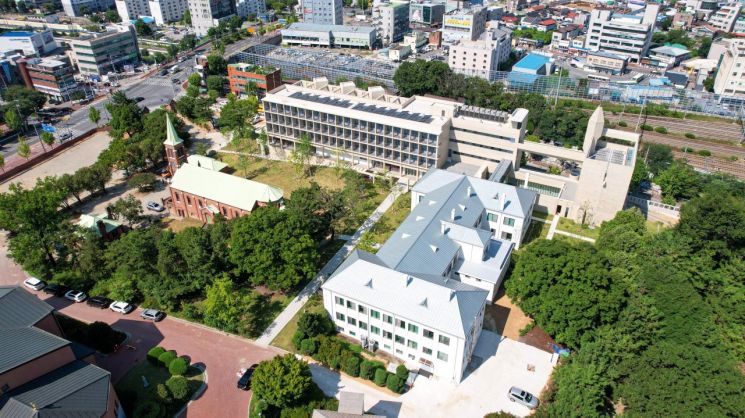 The Benedictine Order announced the establishment of the Waegwan Monastery History Museum, which encompasses over 120 years of its history in Korea. Photo by Lee Whan Kim
The museum, to be built within the Waegwan Monastery in Waegwan-eup, is planned as a space to widely share the monastery’s history, from its entry into Korea in 1909, through the Japanese colonial period and the Korean War, to its settlement in Waegwan-eup in 1952.
The museum will showcase and preserve approximately 160 artifacts held by the monastery, as well as valuable cultural heritage items such as the Gyeomjae Jeongseon painting album, plant specimens, and beekeeping manuals that have been returned from German monasteries. Through the preservation, management, and exhibition of these repatriated cultural assets, the museum aims to serve as a model for the effective utilization of returned heritage.
In addition, the county plans to systematically organize the monastery’s history by continuing efforts to repatriate overseas cultural assets related to Waegwan Monastery throughout the project’s implementation.
Furthermore, by developing and operating various programs linked to Chilgok County’s Catholic cultural heritage sites-such as Gasil Cathedral, the old Waegwan Cathedral, Hantiganeun-gil, and Hanti Holy Ground-as well as existing tourism infrastructure, the museum is expected to become a complex cultural space offering diverse attractions and experiences for local residents and visitors alike.
Kim Jaeuk, Mayor of Chilgok County, stated, “Through the construction of the history museum, we plan to create a space that brings together the history of the Benedictine Order and our county’s Catholic heritage. By connecting this with the Waegwan Station area revitalization project, we will actively promote local tourism and economic growth by making it a prominent destination for many visitors.”
Meanwhile, Chilgok County, as a key center for the spread of Catholicism in North Gyeongsang Province using Nakdong River water transport, retains many Catholic cultural heritage sites including cathedrals and holy grounds. Recently, the county has been actively utilizing religious resources, including Catholicism, to boost local tourism by launching new events such as the Holy Festival and Christmas Market.
© The Asia Business Daily(www.asiae.co.kr). All rights reserved.
![Clutching a Stolen Dior Bag, Saying "I Hate Being Poor but Real"... The Grotesque Con of a "Human Knockoff" [Slate]](https://cwcontent.asiae.co.kr/asiaresize/183/2026021902243444107_1771435474.jpg)
















