Coliform Bacteria Found in Pre-Salted Cabbage
Kimjang, the traditional Korean practice of making large quantities of kimchi to endure the long winter, is a significant part of Korea’s food culture. While the specifics vary by region, the main kimjang season typically begins in mid-November and lasts until mid-December.
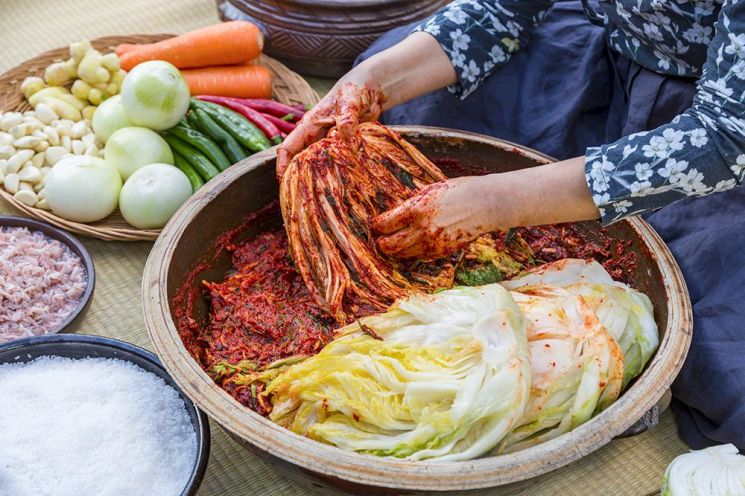
In the past, households would prepare kimjang by salting napa cabbage themselves. However, more families are now purchasing pre-salted cabbage in finished form to save time and labor.
Pre-salted cabbage is made from raw napa cabbage that undergoes processes such as selection, cutting, salting, washing, dehydration, and packaging. Since it is a non-heated product with no thermal processing involved, there is a risk that various environmental microorganisms, including coliform bacteria, may remain or re-contaminate the cabbage during manufacturing and distribution. Therefore, special caution is required.
It is safest to use pre-salted cabbage on the day it is received. If it must be stored for more than a day, it should be washed before use, as coliform bacteria-an indicator of hygiene-can multiply at room temperature.
Although it is known that beneficial lactic acid bacteria produced during kimchi fermentation can suppress coliform bacteria, maintaining initial hygiene is paramount. It is advisable to soak the pre-salted cabbage in clean water, gently rub the deep areas between the roots and leaves with your fingers, and then rinse thoroughly two to three times to remove surface microorganisms.
According to a survey by the Ministry of Food and Drug Safety, washing pre-salted cabbage three times reduces the total bacterial count by about 95% and coliform bacteria by about 93%. However, excessive washing can degrade the quality of the cabbage, so it is recommended not to exceed three washes.
Since food poisoning bacteria can be easily transmitted via hands, it is important to wash your hands thoroughly with running water and soap before handling ingredients, and to use disposable gloves whenever possible.
Kimjang involves a variety of ingredients and tools, so to prevent cross-contamination, it is important to use separate knives and cutting boards for each ingredient, and to avoid using containers that are old or have surface scratches. Be sure to clean and disinfect utensils before and after use.
Kimjang should be carried out in a cool environment, and ingredients should not be left at room temperature for extended periods during preparation. Sub-ingredients such as garlic, salted seafood, and red pepper powder should be checked for their manufacturing dates and used as soon as possible after opening. Finished kimchi should be stored at low temperatures to maintain quality and safety.
Kim Jaehan, Director of Internal Medicine at Daedong Hospital (specialist in internal medicine), stated, "Many people believe that all microorganisms are killed simply because the cabbage is salted, but some bacteria can survive or even multiply in brine, so thorough management is necessary." He emphasized, "The elderly, immunocompromised individuals, and young children are at higher risk of complications if food poisoning occurs, so extra caution is needed."
He added, "By simply following basic hygiene rules such as proper storage, washing of ingredients, and prevention of cross-contamination, you can significantly reduce the risk of food poisoning. I hope everyone pays a little more attention to prepare a safe and healthy kimjang."
Symptoms that may indicate food poisoning include: cramp-like abdominal pain, diarrhea, vomiting or nausea, dehydration symptoms such as dry mouth, dizziness, and decreased urine output, and fever. If these symptoms occur, seek appropriate medical care at a healthcare facility.
© The Asia Business Daily(www.asiae.co.kr). All rights reserved.
![Clutching a Stolen Dior Bag, Saying "I Hate Being Poor but Real"... The Grotesque Con of a "Human Knockoff" [Slate]](https://cwcontent.asiae.co.kr/asiaresize/183/2026021902243444107_1771435474.jpg)
















