"Money Loses Its Meaning With AI... Energy Becomes More Important"
Herman Daly, Former World Bank Economist, Made Similar Arguments
"Energy Is the Only Irreplaceable Resource"
Elon Musk, Chief Executive Officer (CEO) of Tesla, predicted that in the near future, energy will replace money. He believes that as technological advancements make everything abundant, the need for money will disappear, but the value of energy will only increase. This prediction that energy will become the center of the economy aligns with the arguments made by Herman Daly, who served as Senior Economist at the World Bank.
"As AI Advances, the Value of Money Will Decline... Only Energy Will Matter"
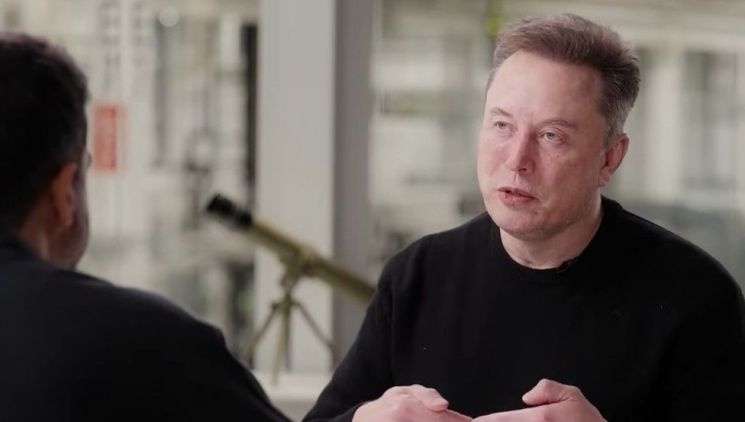
On December 2 (local time), CEO Musk appeared on the YouTube channel of Indian entrepreneur Nikhil Kamath and argued, "In the long run, the concept of money will disappear," explaining, "This is because AI and robots will fulfill all human desires."
He said, "With the adoption of AI and robotics, I expect that within about three years, the supply of goods and services will surpass the supply of money. This will bring about deflation," adding, "It may sound strange, but in an environment where everything is abundant, money loses its meaning. This is because money can no longer serve the function of distributing and allocating labor and resources."
Instead, CEO Musk predicted, "Power generation based on the laws of physics will become the real money." The reason is that energy, as the driving force behind AI and robots, will become increasingly important. He added, "Energy cannot be regulated by law, nor can governments print it," and "In the future, human society will grant influence to those who produce and use energy."
"The Relationship Between Energy Use and the Economy Must Be Studied"
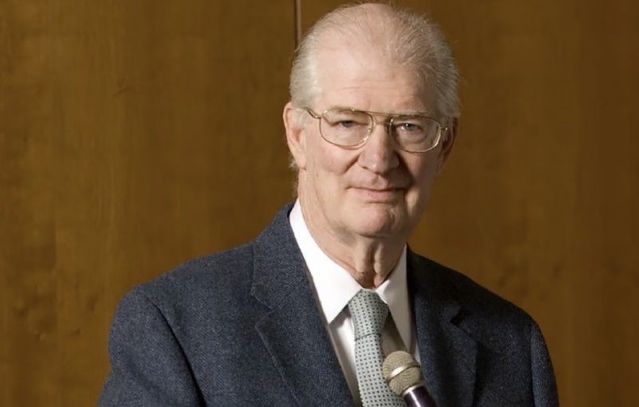 Herman Daly, who served as the Senior Economist at the World Bank from 1988 to 1994 and developed the theory of the steady-state economy. Photo by The Guardian
Is it possible to create an economic system that operates on energy rather than money? Herman Daly, who served as Senior Economist at the World Bank from 1988 to 1994, was among those who explored the possibilities of an energy-based economy early on.
Daly believed that fiat currency, which a nation can issue through its central bank, leads to moral hazard and speculative growth, resulting in repeated cycles of economic overheating and recession. To prevent these side effects, he proposed a new economic model that would limit the issuance of currency according to the "total amount of energy." Since the production of all goods and services consumes electricity, he suggested that if a country restricts its currency issuance to less than the total amount of energy it actually consumes, it can maintain a state without excess.
Based on these arguments, he put forward the theory of the "steady-state economy." This theory asserts that a national economy must maintain a stable state without excessive overheating in order to achieve sustainable development. In a past interview, Daly said, "Energy is the only thing that cannot be substituted by anything else," and pointed out, "Modern economics considers labor, capital, and productivity, but there has been no discussion of energy. Governments must study the relationship between energy use and the economy."
Envisioning a Sustainable World Through the Energy Economy
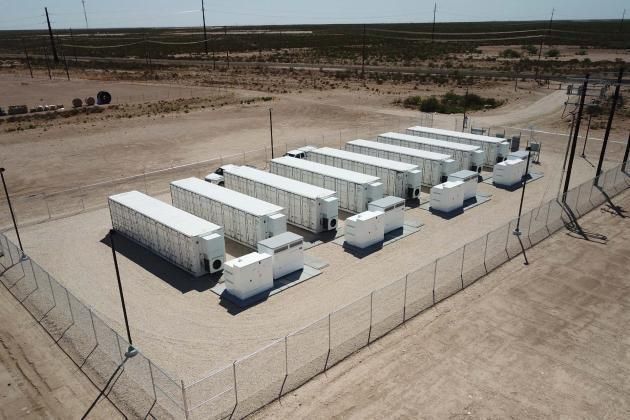
However, there are fundamental differences between Daly's steady-state economy and CEO Musk's vision. CEO Musk anticipates that money will become obsolete due to technological advancement, while Daly argued that the existing monetary economy needs improvement because it causes side effects such as environmental destruction, overconsumption of Earth's resources, and polarization. Daly's steady-state economy theory has since evolved into what is now called "ecological economics," and it has strengthened calls to focus on balanced development, improvement of quality of life, and resource recycling rather than simply expanding the size of the economy.
In an essay written before his death in 2022, Daly warned, "The world's population has quadrupled from 2 billion to 8 billion, and demand for cars, housing, cell phones, and other goods has surged accordingly," adding, "As the population grows, more energy and resources are consumed just to maintain supplies." He emphasized, "This is the fundamental message of ecological economics: the economy, which is only a subsystem of the ecosystem, has grown so large that it has become unmanageable," and stressed, "We must distinguish between quantitative expansion, or 'growth,' and qualitative improvement, or 'development,' and strive to maintain a balance between the two."
© The Asia Business Daily(www.asiae.co.kr). All rights reserved.
!["The Woman Who Threw Herself into the Water Clutching a Stolen Dior Bag"...A Grotesque Success Story That Shakes the Korean Psyche [Slate]](https://cwcontent.asiae.co.kr/asiaresize/183/2026021902243444107_1771435474.jpg)


















