Korean Chamber of Commerce and Industry Analyzes 'CB Insights' Unicorn List
1,276 Unicorns Worldwide... US Accounts for More Than Half
China Maintains 2nd Place Despite Decline... Korea Adds Only Two
It Takes 9 Years for Korean Unicorns vs. 7 Yea
South Korea has been found to have 13 unicorns-privately held startups valued at over 1 trillion won (approximately 1 billion dollars)-ranking 11th in the world as a benchmark of innovative growth. However, while the United States produced 229 additional unicorns after the COVID-19 pandemic, South Korea only added two, indicating that the pace of unicorn creation and growth in South Korea lags behind that of other advanced economies.
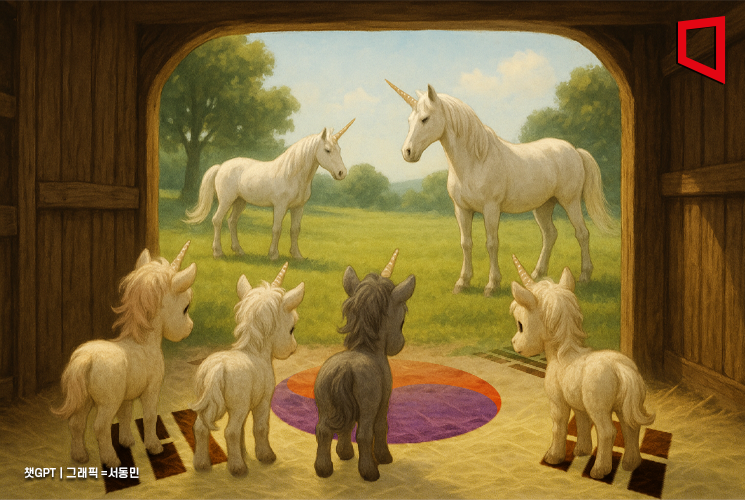
On December 3, the Korean Chamber of Commerce and Industry announced these findings after analyzing the global unicorn list from CB Insights. A unicorn refers to a privately held company estimated to be worth more than 1 billion dollars.
As of October, there were a total of 1,276 unicorns worldwide, with U.S. companies accounting for the largest share at 717, or 56.2%. Notably, since the COVID-19 pandemic, the number of unicorns in the United States increased by 229, accounting for 72.2% of the global increase. During the same period, South Korea added two unicorns, while China saw a decrease of 19, marking the lowest performance in unicorn creation among major countries.
An official from the Korean Chamber of Commerce and Industry pointed out, "Positive regulations that block entry into new industries and the so-called 'growth penalty,' where regulations increase as companies grow, are holding back startup growth. In addition, a limited domestic market and insufficient overseas expansion and global capital attraction are also hindering the creation of unicorns."
In contrast, Israel and Singapore have established innovation ecosystems that attract investors by leveraging active government policy funding and talent, placing them within the top 10 globally. Israel ranked 7th with 23 unicorns, while Singapore ranked 10th with 16 unicorns, one place ahead of South Korea.
Despite being the only country among the top 10 to see a decline, China maintained its second-place position with 151 unicorns. The decline is attributed to the U.S.-China tech rivalry and the contraction of the Chinese venture market, including the U.S. ban on investments in Chinese startups in artificial intelligence, quantum computing, and semiconductor sectors since January. According to global corporate data platform Crunchbase, the size of venture investment in China last year was 33.2 billion dollars, which is only one-third of the 95.5 billion dollars recorded in 2021.
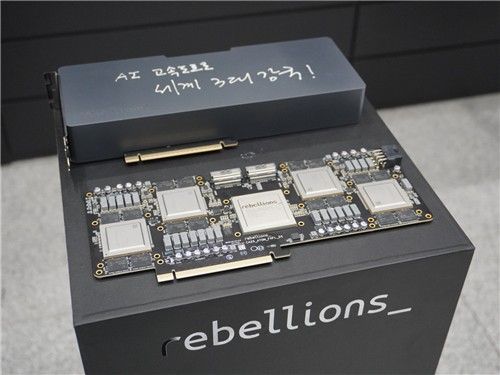
In South Korea, AI semiconductor startup Rebellion was listed as a unicorn for the first time in July. Megazone Cloud, a cloud and AI company, became a unicorn in just 4.12 years, marking the fastest growth among Korean unicorns.
However, the overall growth rate of Korean unicorns is significantly slower compared to other countries. A comprehensive analysis of the time taken from company founding to unicorn status revealed that it took Korean unicorns an average of 8.99 years. China was the fastest at 6.27 years, followed by Germany (6.48 years), the United States (6.70 years), and Israel (6.89 years), all averaging in the 6-year range. The average period for the top 10 countries with the most unicorns was 6.97 years. By company, OpenAI (3.62 years), Anthropic (2.02 years), Perplexity (1.72 years), and xAI (1.22 years) achieved unicorn status in a relatively short period, thanks to large-scale, AI-focused venture investments. Among Chinese unicorns, ByteDance (operator of TikTok), which has the highest corporate value, took 5.07 years to become a unicorn.
The industries to which unicorns belong also differ between South Korea and the top 10 countries. In the top 10 countries, the 'AI and IT solutions' sector accounted for the largest share at 36.3%. In contrast, nearly half (46.1%) of Korean unicorns were in the 'consumer goods and distribution' sector.
As a result, there are growing calls within the Korean business community for the urgent development of promising startups in the 'AI and IT solutions' sector, where global competition is fierce in advanced strategic industries. The Korean Chamber of Commerce and Industry proposed intensively fostering innovation hub cities in this regard, drawing attention to the U.S. example of building an innovation ecosystem centered around the Bay Area, including Silicon Valley. Of the 717 U.S. unicorns, 325 (45.3%) are located in this region. At a seminar hosted by the Korean Chamber of Commerce and Industry in October, Sean Randolph, Director of the Bay Area Council Economic Institute, stated, "The Bay Area's innovation thrives on active industry-academia cooperation, a culture that tolerates failure, and networks of diverse talent, creating a virtuous cycle where investors are drawn in and innovation is further activated."
The Korean Chamber of Commerce and Industry further argued that a large-scale innovation ecosystem combining major corporations and unicorns should be created in these innovation hub cities, and that a 'mega sandbox'-a policy experimentation zone-should be introduced early. The idea is to establish 'special zones' where companies can experiment freely without regulatory constraints.
In terms of investment, the Chamber cited Israel, a leading unicorn nation, as an example, emphasizing the need for proactive government seed investments. In Israel, the government acted as an anchor investor through initiatives like the Yozma Fund, attracting private and foreign venture capital, focusing on early-stage startups, and then selling its stake to the private sector at a certain stage. This model quickly took root, enabling the venture ecosystem to become self-sustaining.
Kim Hyunsoo, Head of Economic Policy at the Korean Chamber of Commerce and Industry, stated, "The slowdown in unicorn creation, a symbolic indicator of corporate growth, signals a decline in the overall vitality of the Korean startup ecosystem. We must radically improve both institutional innovation and the inflow of abundant capital to rebuild the unicorn nurturing ecosystem."
© The Asia Business Daily(www.asiae.co.kr). All rights reserved.
![Clutching a Stolen Dior Bag, Saying "I Hate Being Poor but Real"... The Grotesque Con of a "Human Knockoff" [Slate]](https://cwcontent.asiae.co.kr/asiaresize/183/2026021902243444107_1771435474.jpg)

















