Homeplus Considering Closure of Five Stores This Year
Various Acquisition Plans Proposed, but Feasibility Remains Low
Creditors Must Be Persuaded Through Restructuring Measures
Homeplus, which has been struggling with a pre-approval merger and acquisition (M&A), is now being pushed to the point where it must consider the possibility of liquidation. Although various rescue scenarios are being proposed by political circles, concerns over liquidation are mounting due to their low feasibility and financial viability.
The Fading Flame of Homeplus
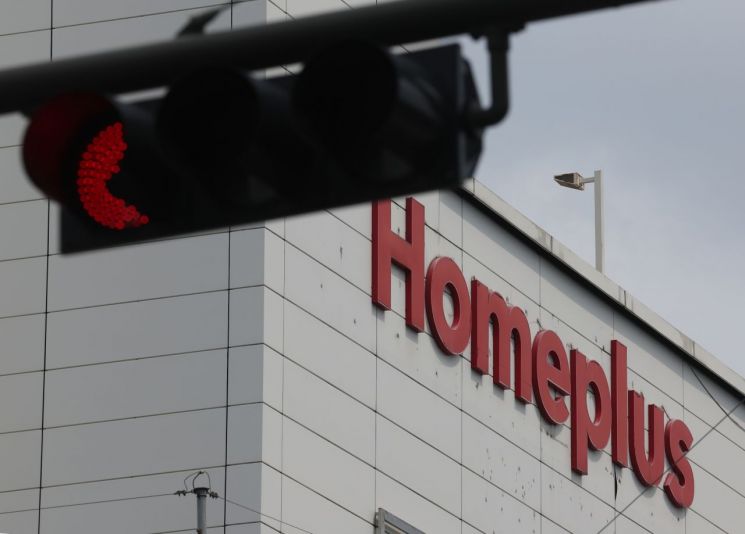
According to the investment banking (IB) industry on December 3, Homeplus is considering closing five stores nationwide by the end of the year. This is an unavoidable measure due to worsening cash liquidity.
Homeplus has been unable to find a new owner for six months, and its management crisis is deepening, with sales dropping by double digits. This is a result of major suppliers reducing the supply of goods.
Various utility bills and national pension payments are also overdue. The company has failed to pay a total of 70 billion won in taxes, including comprehensive real estate tax, value-added tax, local taxes, and property tax. When adding unpaid electricity bills of around 2 billion won, the total amount of unpaid expenses reaches 92 billion won.
The previous stance of Byungju Kim, Chairman of MBK Partners and major shareholder of Homeplus, who said, "We will postpone store closures until the M&A is completed," now appears to be wavering.
Rescue Scenarios with Low Feasibility
As Homeplus faces the risk of suspending operations due to the crisis of wage arrears for employees, various rescue plans are being discussed in political and market circles, but their feasibility remains low.
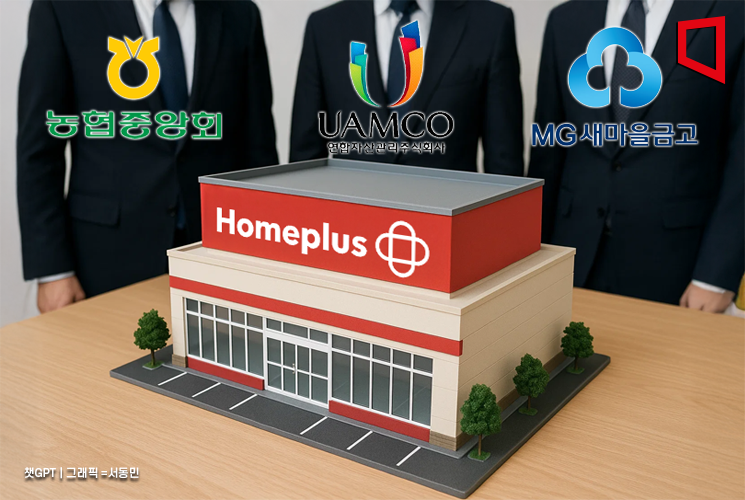
The most actively discussed plan among politicians is for the National Agricultural Cooperative Federation (Nonghyup) to acquire Homeplus. The logic is that a public institution should take responsibility, considering the potential collapse of local commercial districts and large-scale employment issues.
However, Nonghyup is already facing its own restructuring challenges in its distribution sector and considerable financial burdens. Additionally, the structure of Nonghyup and Hanaro Mart, which purchase agricultural products to protect farmers and stabilize prices, differs from the procurement process of large discount stores, raising further concerns.
A restructuring scenario through United Asset Management Corporation (UAMCO) is also being discussed. Byungki Kim, Floor Leader of the Democratic Party of Korea, stated last month, "The government and the party will work together to have public restructuring companies like UAMCO adjust the opaque debt structure and facilitate the acquisition by a company specializing in retail management."
However, UAMCO is a specialized platform for handling non-performing loans held by financial institutions and does not purchase bonds held by non-financial institutions. Since a significant portion of Homeplus's bonds are held by non-financial institutions or have a complex structure, UAMCO's ability to intervene is limited.
Recently, Jaegon Jang, Chairman of Jongno Square Saemaeul Geumgo and a candidate in the Saemaeul Geumgo Central Association presidential election, drew attention by pledging to acquire Homeplus. However, the industry sees little feasibility in this scenario, viewing it as more of a campaign message. Given the current concerns over the soundness of Saemaeul Geumgo, it would be difficult to secure the necessary funds and make the strategic decisions required to acquire a large retail company.
Will the Creditors Step In?
The court's deadline for submitting a rehabilitation plan is December 29. The absence of a potential acquirer does not mean all options have been exhausted. If the creditors agree and submit a rehabilitation plan containing restructuring measures, and the court approves it, the rehabilitation process can continue.
Ultimately, the industry believes that the creditors must create favorable conditions for potential buyers to revive the possibility of an M&A. From the creditors' perspective, maintaining the current situation is burdensome, as it is expected to take more than 10 years to recover their claims through the sale of Homeplus's real estate assets after bankruptcy.
The court believes that the acquisition price must exceed Homeplus's liquidation value of 3.6816 trillion won. Even if all liquid assets are exhausted, about 1.7921 trillion won in short-term debt would remain, so at least 5 trillion won would need to be injected to acquire and normalize Homeplus.
An IB industry official explained, "Homeplus must persuade the creditors by implementing self-restructuring measures such as workforce adjustments and store closures in order to submit a rehabilitation plan," adding, "In reality, there does not appear to be a company willing to acquire Homeplus."
Meanwhile, in the competitive bidding for the sale of Homeplus held on November 26, no parties-including the two companies that had previously expressed interest (Harex InfoTech and Snowmad)-ultimately participated. Homeplus has stated that it will continue to accept bid proposals until the rehabilitation plan submission deadline on December 29.
© The Asia Business Daily(www.asiae.co.kr). All rights reserved.
![Clutching a Stolen Dior Bag, Saying "I Hate Being Poor but Real"... The Grotesque Con of a "Human Knockoff" [Slate]](https://cwcontent.asiae.co.kr/asiaresize/183/2026021902243444107_1771435474.jpg)

















