Initial Communication Established at Antarctic Troll Station; Satellite in Good Condition
0.3m Ultra-High Resolution Imaging for Disaster, Emergency, and Environmental Monitoring
South Korea's high-resolution optical observation satellite, Arirang No. 7, has successfully established its first communication with a ground station after launch, confirming its potential for normal operation.
At 2:21 a.m. KST on December 2, Arirang No. 7 was launched aboard the Vega-C launch vehicle from the Guiana Space Center in Kourou, French Guiana, South America. After the satellite separated from the launch vehicle, it completed its initial communication with the Troll Station ground station in Antarctica at 3:30 a.m., approximately 69 minutes after launch.
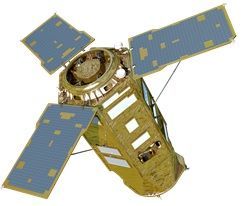 Multipurpose Practical Satellite (Arirang) No. 7. Provided by the Space Agency.
"Signal Detected 69 Minutes After Launch"... Arirang No. 7 Confirms Normal Status with First Communication
During the initial signal reception, key status information such as the deployment of the solar panels was confirmed to be normal, and the satellite is currently reported to be in good condition. The Space Agency plans to conduct a total of four additional ground station communications to complete a full functionality check, after which it will officially announce the final success of the launch.
The launch of Arirang No. 7 was carried out under Arianespace's mission name "VV28," with the schedule confirmed after passing the Launch Readiness Review (LRR). The process from separation from the launch vehicle to initial orbit insertion proceeded as designed.
Arirang No. 7 was designed to enter a sun-synchronous orbit (SSO) at an altitude of 576 km approximately 44 minutes after launch, and the actual operation proceeded without significant issues. The satellite weighs about 1,810 kg and is a high-resolution reconnaissance-grade optical observation satellite developed to enhance domestic satellite observation capabilities and support public policy.
"Ultra-High Resolution 0.3m Eye"... Core Asset for Land, Disaster, and Environmental Monitoring
Arirang No. 7 is equipped with a 0.3-meter class ultra-high-resolution optical camera and infrared sensors, providing precise imaging data required for government policies and on-site responses, such as monitoring land changes, disaster and emergency situations, analyzing urban heat island effects, and tracking environmental changes. In particular, in the event of emergencies such as wildfires or floods, it can support damage assessment and response decisions, making it significant in terms of securing satellite information sovereignty.
The satellite development project began in August 2016, and final assembly and space environment testing were completed in December 2023. However, the launch schedule was delayed by about four years from the original plan due to component manufacturing defects and the impact of COVID-19.
The launch vehicle that carried Arirang No. 7 into space was the Vega-C, developed by Italy's Avio. It is a medium-sized launch vehicle composed of three solid stages and one liquid stage. It can carry up to 2.3 tons at an altitude of 700 km, offering performance similar to South Korea's Nuri launch vehicle, which can carry 2.2 tons at the same altitude. With its re-ignition capability, it can deploy up to three satellites into different orbits.
This mission marks Arianespace's sixth launch of the year and the sixth mission for Vega-C. Including Arirang No. 7, Arianespace has now launched a total of nine Korean satellites into space.
Based on the success of the initial communication, the Space Agency plans to proceed with satellite functionality checks and the establishment of operational systems. Once all verifications are complete, full-scale mission operations will commence.
Once Arirang No. 7 enters normal operation, the precision of imaging information available for national key sectors, such as disaster response at home and abroad, land management policies, and urban environmental analysis, is expected to be significantly enhanced. In addition, Arianespace is scheduled to carry out the launch mission for Arirang No. 6 in the first half of next year, further expanding South Korea's high-resolution satellite operational capabilities.
© The Asia Business Daily(www.asiae.co.kr). All rights reserved.
















