Bitcoin Plunges to $85,000 Range; Tech Stocks Slide
Japan Hints at Rate Hike, Raising Concerns Over Carry Trade Unwinding
Focus on Next Fed Chair Selection and December Rate Cut Prospects
The three major indices of the New York Stock Exchange started the first trading day of December on a downward trend. Investor sentiment has weakened due to a sharp drop in virtual asset prices, and the possibility of a rate hike by the Bank of Japan (BOJ), Japan's central bank, is pushing up global bond yields, adding pressure to the stock market.
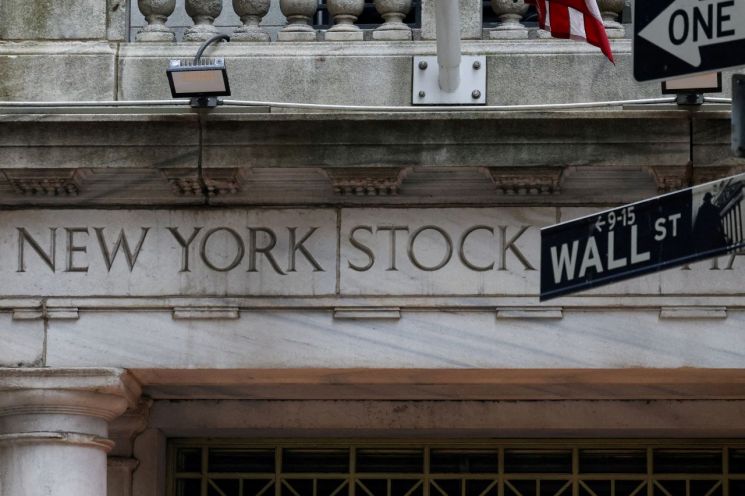
As of 9:41 a.m. local time on December 1, the Dow Jones Industrial Average, which focuses on blue-chip stocks, was down 224.3 points (0.47%) from the previous session at 47,492.12. The S&P 500 index, which tracks large-cap stocks, slipped 45.13 points (0.66%) to 6,803.96, while the tech-heavy Nasdaq index fell 230.427 points (0.99%) to 23,135.258.
By stock, leading artificial intelligence (AI) company Nvidia was down 0.41%. On this day, Nvidia announced it would invest 2 billion dollars (approximately 2.93 trillion won) in Synopsys, a semiconductor software (SW) design company. Synopsys shares rose 2.92%. Advanced Micro Devices (AMD) and Broadcom were also both down, by 1.01% and 4.19%, respectively. Oracle was down 2.18%.
According to CoinMarketCap, a global virtual asset market data site, the leading virtual asset Bitcoin plunged 5.82% from the previous day to 86,035.17 dollars. Since last month, when the 90,000-dollar mark was broken for the first time since April this year, Bitcoin has continued to show weak performance.
The possibility of a BOJ rate hike is also weighing on the market. Kazuo Ueda, Governor of the BOJ, suggested the possibility of a policy shift at an event on this day, saying, "After reviewing the pros and cons of a rate hike (this month), we will make an appropriate decision." He explained that since the real interest rate remains low, a rate hike would be an adjustment to the degree of monetary easing.
Given that the BOJ is a key pillar of global liquidity supply, concerns are growing in the market about the unwinding of the "yen carry trade," where investors borrow low-interest yen to invest in high-yield overseas assets.
The global government bond market reacted immediately. The yield on Japan's two-year government bond surged to its highest level since 2008 following Governor Ueda's comments. The yield on the U.S. 10-year Treasury note, the global benchmark, rose 2 basis points (1bp = 0.01 percentage point) from the previous session to 4.04%, while the yield on the U.S. 2-year Treasury, which is sensitive to monetary policy, was up 1bp to 3.50%.
Alexandre Baradez, Chief Market Analyst at IG, commented, "This is a structural change in global markets that investors will have to adapt to."
Andrea Tueni, Head of Sales Trading at Saxo Bank France, said, "The decline in Bitcoin and the BOJ's comments are weighing on investor sentiment," adding, "The market remains somewhat hesitant, caught between upcoming macroeconomic indicators and expectations for a Christmas rally."
Investors are also closely watching the appointment of Jerome Powell's successor as Chair of the U.S. Federal Reserve (Fed). Kevin Hassett, Chairman of the White House National Economic Council (NEC), is being mentioned as a strong candidate to succeed Powell, whose term ends in May 2026. In an interview with Fox News the previous day, Hassett said he would gladly accept the position if nominated by President Donald Trump.
Attention is also focused on how the market, which saw extreme volatility in November as AI bubble concerns and optimism alternated, will perform in December. Stock market analysis firm Stock Trader's Almanac noted that the S&P 500 index has shown a seasonal tendency to rise by more than 1% on average in December.
Wall Street's outlook is divided.
Mark Newton, Technical Strategist at Fundstrat, said, "After overcoming difficulties in early November, the market rebounded, making the outlook for December even more constructive," adding, "As the possibility of a rate cut in December grows, the stock market appears to be stabilizing further."
On the other hand, Ipek Ozkardeskaya, Senior Analyst at Swissquote, predicted, "December could be more difficult than many expect, especially for those who viewed last month's decline as a long-awaited correction phase," and added, "With the rate futures market pricing in a 90% chance of a 0.25 percentage point Fed rate cut next month, there may not be many additional dovish factors."
© The Asia Business Daily(www.asiae.co.kr). All rights reserved.

















