Disciplinary Action Reconsidered by Prime Minister's Order
10-Day Confinement Upgraded to Demotion
The Ministry of National Defense has imposed a heavy disciplinary action on Army Judge Advocate General Kim Sanghwan, who had previously received a light penalty for boarding the "martial law bus" during the December 3 Martial Law.
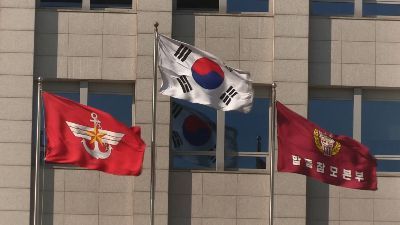
On November 28, the Ministry of National Defense announced that Kim Sanghwan, Army Judge Advocate General, has been demoted as a disciplinary measure. The ministry had recently imposed a 10-day confinement, a minor disciplinary action just above a warning, but Prime Minister Kim Minseok canceled the penalty the previous day, stating that it was too lenient and ordered a strict review.
Article 18, Paragraph 2 of the Government Organization Act stipulates that the Prime Minister, if recognizing an order or disposition by the head of a central administrative agency as illegal or unjust, may suspend or revoke it with the approval of the President.
Accordingly, the Ministry of National Defense reconvened the disciplinary committee for Kim Sanghwan that afternoon and decided on demotion. The reason cited was a violation of the duty of loyalty under the Military Personnel Basic Act.
Kim Sanghwan is scheduled to retire on November 30 and, due to the demotion, will retire as a colonel instead of a brigadier general. Military disciplinary actions are categorized as warning, confinement, pay reduction, suspension, demotion, dismissal, and removal from office. From suspension upward, the penalties are considered severe. For generals, heavy disciplinary actions such as demotion or higher require the approval of the President, who is the appointing authority.
Previously, the bus carrying Kim Sanghwan and 34 other Army Headquarters staff departed from the Army Headquarters at Gyeryongdae to Seoul at around 3 a.m. on December 4 last year, after the National Assembly voted to lift martial law, but returned after 30 minutes.
When ordering the cancellation of the disciplinary action, Prime Minister Kim pointed out, "As the Army Judge Advocate General, who bears significant responsibility for upholding legal order within the military, you had a duty to recommend or advise General Park Ansu, then Chief of Staff and Martial Law Commander, on the 'immediate lifting of martial law,' but you failed to fulfill this duty."
At the National Assembly Defense Committee the previous day, suspicions were also raised regarding Kim Sanghwan's alleged disregard for the "military judge group chat room."
Assemblyman Boo Seungchan of the Democratic Party of Korea released the chat room messages, claiming that after the declaration of martial law, military judges from subordinate units inquired about follow-up actions, such as "The proclamation prohibits political activities, is this permissible?" but Kim Sanghwan did not respond.
The heavy disciplinary action imposed on Kim Sanghwan is expected to serve as a benchmark for future disciplinary measures. Since August 19, the Ministry of National Defense's Audit Office has been reviewing the missions and roles of units that were mobilized or involved during the martial law period.
Based on the audit results, those deemed in need of investigation or disciplinary action will be referred to investigative agencies or their respective units for disciplinary measures. Given Kim Sanghwan's case, there are concerns that both the scope and severity of disciplinary actions may increase.
© The Asia Business Daily(www.asiae.co.kr). All rights reserved.

















