Average Monthly Payment Exceeds 1.12 Million Won for Over 20 Years of Contributions
Number of High-Value Recipients Rising... "Pension Asset Management" in the Spotlight
As the National Pension System, introduced in 1988, enters its maturity phase, there are now cases where recipients receive more than 3 million won per month in old-age pension. While the average monthly payment stands at around 680,000 won, there is a significant gap in pension amounts depending on the length of enrollment, leading analysts to conclude that “how long and consistently you contribute” is the key factor in securing financial stability after retirement.

According to the “National Pension Official Statistics as of July 2025,” released by the National Pension Service on the 28th, the highest monthly pension currently received by a subscriber is 3,185,040 won. This amount exceeds the level of a basic living allowance and is sufficient to cover actual living expenses in retirement. It is attributed to strategies such as applying for deferred pension and maintaining long-term enrollment, which have increased the total pension amount.
On the other hand, the average monthly payment for all old-age pension recipients is only 679,924 won, so the pension is still often seen as little more than pocket money. Some point out that this amount does not even reach the basic living allowance standard for single-person households (about 770,000 won), raising questions about the effectiveness of the pension system.
However, a closer look at the detailed statistics reveals a different picture. The National Pension is structured so that the amount received increases in proportion to the period and amount of contributions. In fact, recipients of “full old-age pension,” meaning those who have contributed for more than 20 years, receive an average of 1,120,539 won per month-far above the overall average. In contrast, those with 10 to 19 years of contributions receive only 442,177 won on average. Consistent contributions over time are thus the key variable in determining one’s standard of living after retirement.
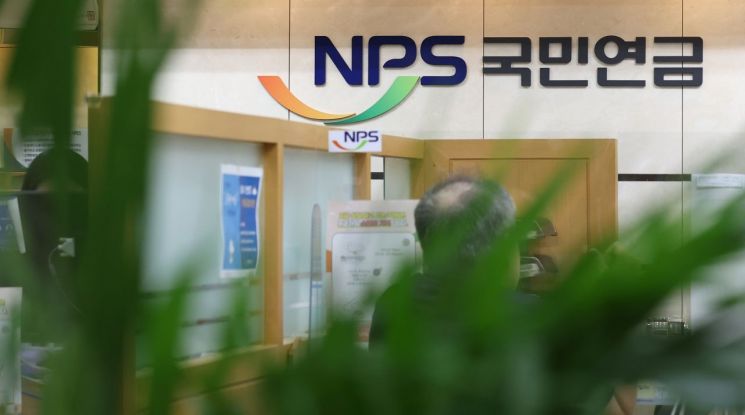 A citizen receiving pension consultation at the Seoul Northern Regional Headquarters of the National Pension Service. Photo by Yonhap News
The distribution of pension amounts among recipients is also changing. While the largest group consists of those receiving between 200,000 and 400,000 won per month (2.17 million people), there are also about 850,000 people receiving more than 1 million won per month, and 82,484 people receiving more than 2 million won per month, indicating a steady increase in high-value pension recipients.
The total number of recipients is also continuously expanding. As of the end of July 2025, the cumulative number of National Pension recipients reached 7,544,930, with 7,338,371 people receiving monthly payments. By benefit type, old-age pension accounted for the majority at about 6.2 million people, followed by survivors’ pension (1.07 million) and disability pension (68,000).
The financial base of the National Pension has also grown stronger. The fund’s reserves have surpassed 1,304.4637 trillion won, exceeding the 1,300 trillion won mark, and from January to July this year alone, investment returns amounted to 84.1658 trillion won. With overseas equity investments (467 trillion won) now more than double the amount invested in domestic equities (199 trillion won), global investment performance is being recognized as the main driver of pension fund growth.
Experts advise that the pension should be approached from an investment perspective-as a way to secure future income rather than as a tax. They recommend “pension asset management” strategies, such as utilizing the additional payment system and premium support credits, to extend the enrollment period and maximize benefits.
© The Asia Business Daily(www.asiae.co.kr). All rights reserved.
![Clutching a Stolen Dior Bag, Saying "I Hate Being Poor but Real"... The Grotesque Con of a "Human Knockoff" [Slate]](https://cwcontent.asiae.co.kr/asiaresize/183/2026021902243444107_1771435474.jpg)

















