October Industrial Activity Trends
In October, overall industrial production turned negative within just one month, as semiconductor production plummeted. Semiconductor output saw its largest decline in 43 years since October 1982. While retail sales rose by 3.5% from the previous month, driven by the extended Chuseok holiday and the distribution of government consumption coupons aimed at revitalizing the economy, both facility investment and construction performance posted double-digit declines due to the impact of the long holiday.
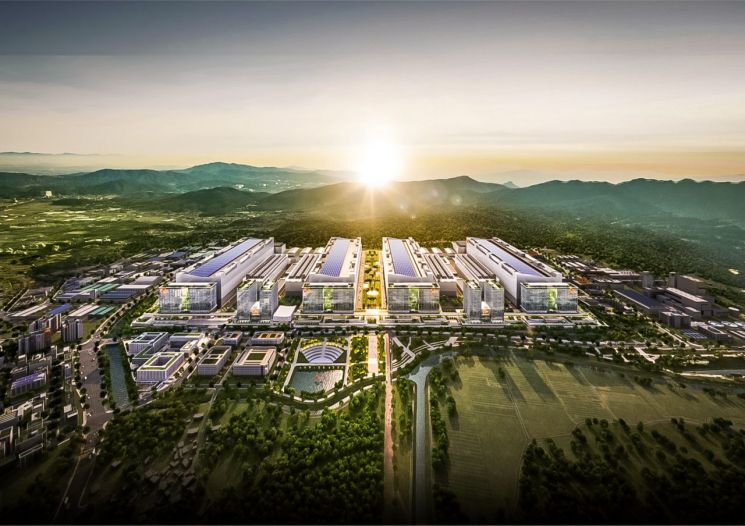
According to the "October 2025 Industrial Activity Trends" released by the National Data Office on November 28, overall industrial production decreased by 2.5% from the previous month. This was due to declines in mining and manufacturing, construction, and services, despite increased output in public administration. This marks the largest drop since February 2020 (-2.9%). Mining and manufacturing production fell by 4.0% from the previous month, mainly due to a 26.5% decrease in semiconductor output.
Notably, semiconductor production experienced its steepest drop in 43 years, since October 1982 (-33.3%). The decline was largely attributed to reduced output of memory semiconductors such as DRAM and flash memory. Lee Dowon, Director of Economic Trend Statistics at the National Data Office, explained, "However, there was a base effect from last month's record-high semiconductor production, as well as a recent surge of nearly 20% in semiconductor prices, which also played a role. Although the numbers show a significant decrease, the overall semiconductor market conditions are still considered favorable." He added, "Since industrial production is measured by output volume, a sharp increase in semiconductor prices can have the effect of reducing the overall volume."
Looking specifically at manufacturing within mining and manufacturing, output dropped by 3.9% from the previous month. Compared to the same month last year, manufacturing output fell by 8.3%. Manufacturing shipments also declined by 2.2% from the previous month. However, manufacturing inventories decreased by 1.9% month-on-month. Service sector production increased in health and social welfare (1.7%) and arts, sports, and leisure (9.4%), but declined in wholesale and retail (-3.3%), resulting in an overall decrease of 0.6% from the previous month. In wholesale and retail, the declines were particularly pronounced in building materials and other specialized wholesale sectors.
Last month, facility investment dropped by 14.1% from the previous month. Investments in machinery, including semiconductor manufacturing equipment (-12.2%), and in transportation equipment such as automobiles (-18.4%), both declined.
Construction performance also fell by 20.9% from the previous month, with both building construction (-23.0%) and civil engineering (-15.1%) recording declines. This is the largest decrease since statistics began in July 1997. After rebounding by 12.3% in September, construction performance turned negative again within just one month. Director Lee commented, "Given the overall weakness in the construction sector and the impact of the long holiday, the reduction in actual working days likely contributed to the decline."
Retail sales increased by 3.5% from the previous month, marking the largest increase in 32 months since February 2023 (6.1%). The National Data Office explained that the effect of the Chuseok holiday in October, along with government stimulus measures such as consumption coupons, contributed to this result. While sales of durable goods such as passenger cars fell by 4.9%, sales of nondurable goods such as food and beverages (7.0%) and semi-durable goods such as clothing (5.1%) increased, resulting in overall growth from the previous month.
The coincident composite index, which reflects the current economic trend, fell by 0.4 points from the previous month to 99.0 (with 2020 as the base year at 100). The leading composite index, which forecasts future economic trends, remained unchanged from the previous month at 102.2.
© The Asia Business Daily(www.asiae.co.kr). All rights reserved.

















