2.3-Ton Steel Plate Falls, Killing Nearby Welder
"Control Required Even If Not the Employee's Work Area in Case of Danger"
Appellate Court: "Worksite Scope Cannot Be Narrowly Defined"
Supreme Court Upholds Lower Court's Guilty Verdict
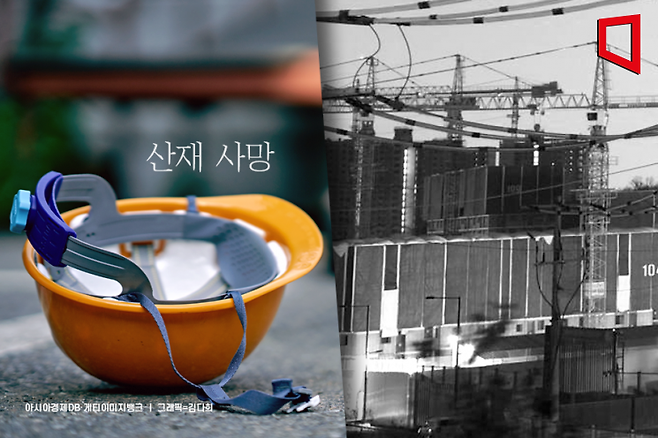
Regarding the fatal accident at the Hyundai Heavy Industries shipyard, where a 2.3-ton steel plate toppled over and killed a welder working in a different area, the appellate court ruled that "even if it is not the actual location where the employee was working, safety measures such as access control must be implemented if the worksite is expected to be hazardous." The Supreme Court has also upheld the lower court's decision.
This decision rejected the defendants' argument that they could avoid responsibility by narrowly interpreting the boundaries of the worksite, and broadly recognized the scope of safety management obligations at large shipyard sites.
According to the legal community on the 28th, the Supreme Court's third division (Presiding Justice Shin Sookhee) dismissed all appeals filed by the head, manager, team leader, and team member of the HD Hyundai Heavy Industries Shipbuilding & Offshore Business Division, as well as the corporation itself, who were charged with violating the Occupational Safety and Health Act and occupational negligence resulting in death. The original guilty verdict-six months in prison suspended for one year for the individuals and a fine of 20 million won for the corporation-was upheld as is.
The incident occurred in February 2021 at the steel plate arrangement workshop of the Shipbuilding & Offshore Business Division in Dong-gu, Ulsan. At that time, a steel plate weighing approximately 2.3 tons, which had not been properly secured, tipped over and fell on a worker in his 40s who was preparing for welding nearby, resulting in death from crushing and head injuries. The key issue was that the accident did not occur in the deceased worker's "own work area."
The defendants argued, "There is no legal obligation to designate restricted areas in locations where employees are not working." However, both the first and second trials rejected this claim. The appellate court stated, "Just because Article 14 of the Rules on Occupational Safety and Health Standards is stipulated under the 'worksite' section, it does not mean the scope should be limited to the actual location where the employee is working," and ruled, "If an area is constantly hazardous, safety measures must be implemented regardless of the type of work or area distinction."
The Supreme Court concurred with this interpretation, stating, "There is no misunderstanding of legal principles in the lower court's ruling," and dismissed the defendants' appeals.
© The Asia Business Daily(www.asiae.co.kr). All rights reserved.

















