Final Approval at Board Meeting on the 26th:
80 Trillion Won Payment Network and Upbit Trading Infrastructure to Be Integrated
Lee Haejin and Song Chi-hyung to Appear Together at Naver Headquarters on the 27th to Present Future Strategies
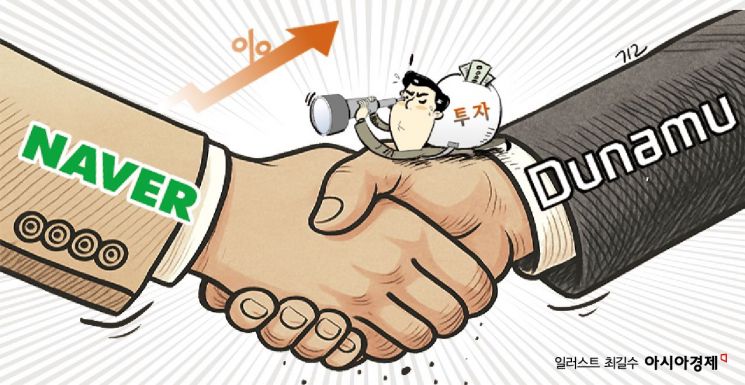
With Naver's acquisition of Dunamu, the operator of the virtual asset exchange Upbit, industry observers say that Naver founder and board chairman Lee Haejin has made a decisive move toward competing in the global asset market. The board meeting on November 26, where Naver Financial decided to make Dunamu a wholly owned subsidiary through a stock swap, is also being interpreted as the moment when Lee's global and fintech strategy, built over the years, was finally confirmed. Naver has signaled its intent to go beyond simply investing in a virtual asset exchange, aiming to embed blockchain-based financial infrastructure at the very center of its ecosystem, which already spans search, commerce, content, and payments.
Since returning to the front lines of management in the first half of this year, Lee has accelerated global investment and new business expansion. His moves have been clear: establishing a tech business division in May, founding the U.S. subsidiary Naver Ventures and investing in Twelve Labs in June, and fully acquiring the Spanish secondhand trading platform Wallapop in August. Analysts say that in order to overcome the growth limits of a domestic portal and commerce-focused model, a new pillar was needed-and that final piece was "digital assets."
Naver Financial already leads the online easy payment market with Naver Pay, which processes annual payments of up to 80 trillion won. Dunamu, through Upbit, is the dominant player in the domestic market, accounting for over 80% of trading volume. If the functions of these two companies are combined, the largest digital wallet and the most powerful virtual asset trading infrastructure in Korea will be unified into a single ecosystem. This goes far beyond simply "connecting payments and coins"; it effectively creates an integrated financial platform for won-based stablecoins in one stroke.
Industry insiders mention a likely scenario in which Dunamu issues won-linked stablecoins through its "Kiwachain" and connects them to the Naver Pay payment system. Stablecoins, which are digital assets with low volatility and are pegged to fiat currencies, have been attracting attention as a payment standard across global platforms. If stablecoins can be used as a means of payment within Naver's vast ecosystem, a user base will naturally be established, and if this expands to overseas services, a global experiment with digital won will become possible.
By layering Naver Pay's payment network onto Naver's content and commerce ecosystem and adding Dunamu's technology, Naver can become involved in users' everyday consumption and financial activities. Since payments, asset transfers, point accumulation, and digital reward structures all operate within a single ecosystem, Naver can secure new revenue streams beyond advertising, increase user engagement time, and strengthen platform dependency-all at once.
This combination also creates scalability in the field of artificial intelligence (AI). Naver is currently working to strengthen its proprietary AI models, and Dunamu's blockchain technology can enhance the utility of generative AI services. Furthermore, there is speculation that agent models, where AI autonomously executes payments, settlements, and contracts, could be realized. This represents not just a financial expansion, but a redefinition of the technological structure of Naver's entire suite of services.
However, the Fair Trade Commission's review of the business combination remains a variable in this merger. Since this is a merger between the top players in domestic easy payments and virtual asset trading, issues such as increased market dominance or potential monopoly must be considered. However, as neither company is a traditional financial institution, regulations on the separation of finance and industry, or the separation of finance and virtual assets, are not expected to apply directly, according to industry experts. Ultimately, the key issue will be whether the merger restricts competition.
Meanwhile, Naver and Dunamu will officially present their merger plan on November 27 at Naver's second headquarters in Seongnam, Gyeonggi Province. As both Chairman Lee Haejin, who rarely appears in public, and Dunamu Chairman Song Chi-hyung are scheduled to appear together, this is being interpreted as a sign that both companies see the merger as central to their future strategies. Observers say this is less a simple merger and acquisition and more a declaration that Naver intends to take a leading role in the global asset market and digital financial system.
© The Asia Business Daily(www.asiae.co.kr). All rights reserved.

















