Ruling Party Focuses on Public Housing, Opposition Emphasizes Easing Loan Regulations
Significant Reduction in Homebuyer Loans in Next Year's Budget
Legislation on Real Estate Measures Faces Continued Deadlock
As instability in the real estate market intensifies in parts of the Seoul metropolitan area, the ruling and opposition parties are presenting sharply contrasting solutions for "housing price stabilization." The Democratic Party of Korea is focusing on expanding public and rental housing, while the People Power Party is emphasizing easing loan restrictions and increasing private sector supply. As a result, conflicts continue to arise over the handling of next year’s budget bill and real estate-related legislation.
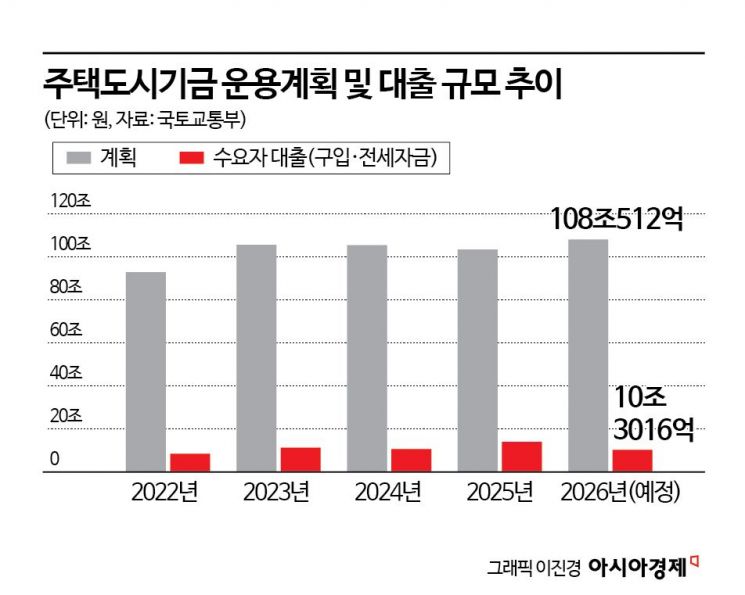
According to political sources on November 26, the ruling and opposition parties have failed to narrow their differences regarding the real estate loan segment of next year’s budget bill. Previously, the government increased the operational scale of the Housing and Urban Fund for next year to 108.0512 trillion won, nearly 5 trillion won more than this year. However, the budget for policy loans for low-income households, such as the Didimdol and Bogeumjari programs, was drastically reduced to 10.3016 trillion won, a decrease of 3.7556 trillion won (26.7%). In response, the People Power Party has protested, saying, "The housing ladder for young people and low-income households has been kicked away."
The budget bill is currently undergoing final adjustments in the subcommittee of the Special Committee on Budget and Accounts, after preliminary reviews by each standing committee and the main budget subcommittee. However, the reduced budgets for home purchase and jeonse (key money deposit) loans have not been restored. On the contrary, during the review by the Land, Infrastructure and Transport Committee, budgets for public and rental housing, such as the multi-family purchase and rental loan project (315.758 billion won) and the integrated public rental investment project (112.191 billion won), which are priorities for the government and ruling party, have been significantly increased.
In response, members of the People Power Party on the budget committee insisted, ahead of this week’s small-scale subcommittee sessions, that 4 to 5 trillion won in unnecessary expenditures should be cut and that budgets for programs like the "Special Home Purchase Loan" should be increased. The party leadership also set out a plan to raise the loan limit, secure 30 trillion won for related budgets, and establish a new 300 billion won budget for interest rate support. Kim Eunhye, Senior Deputy Floor Leader for Policy, said in a phone call, "To raise the loan limit from 100 million won to 200 million won, we need 30 trillion won," adding, "We will also establish a new 300 billion won budget for interest rate subsidies to bridge the gap between market and policy rates."
This confrontation over the real estate budget stems from the parties’ differing prescriptions for stabilizing housing prices. The Democratic Party aims to curb loans to stabilize prices while expanding public housing supply. In contrast, the People Power Party believes that easing loan restrictions will open the path to homeownership for young people and low-income households, and that housing prices should be controlled by expanding private sector supply through deregulation.
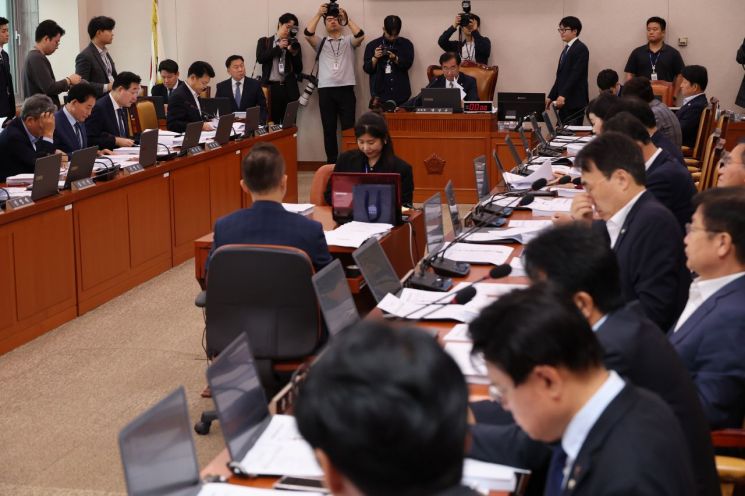
With this ongoing divergence between the parties, amendments to related laws aimed at expanding housing supply and stabilizing the market are also making little progress. Currently, the chairperson of the Land, Infrastructure and Transport Committee is from the Democratic Party, but the chair of the Land Law Subcommittee is Kwon Youngjin of the People Power Party. Even at the subcommittee meeting held on November 24, the parties fiercely debated a proposed amendment to the Real Estate Transaction Reporting Act, which would grant the authority to designate land transaction permit zones not only to provincial governors but also to the Minister of Land, Infrastructure and Transport. A committee official explained, "The People Power Party argued that allowing the government to designate all regulated areas would be an overreach that could infringe on property rights, but the Democratic Party’s position is that only the ministry can ensure security."
© The Asia Business Daily(www.asiae.co.kr). All rights reserved.


















