Trump Administration's "America First" Policy Now Impacts Tourism
Annual National Park Passes to Cost More for Foreign Visitors
Free Admission on Holidays Limited to U.S. Residents; Industry Voices Concern
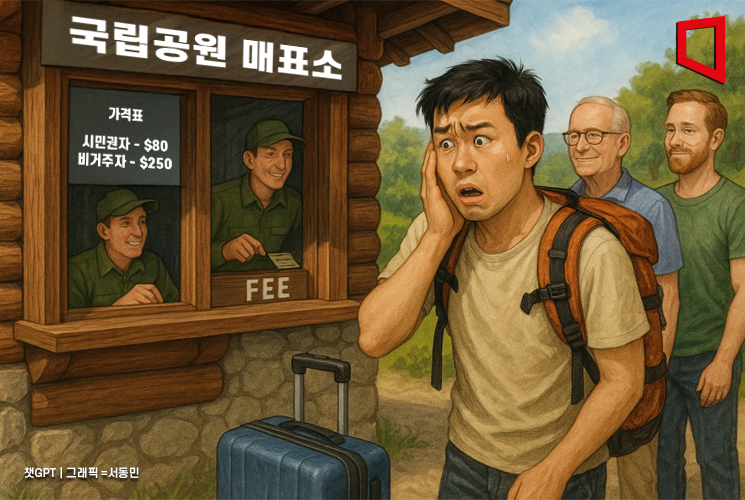
Starting next year, foreign visitors to U.S. national parks will have to pay more than three times the price that U.S. citizens pay for an annual pass. On November 25 (local time), Yonhap News reported, "The U.S. Department of the Interior announced that only U.S. citizens and permanent residents will be able to purchase an annual unlimited access pass to national parks at the existing price of $80 (about 110,000 won), while non-residents will see the price increase to $250 (about 360,000 won)."
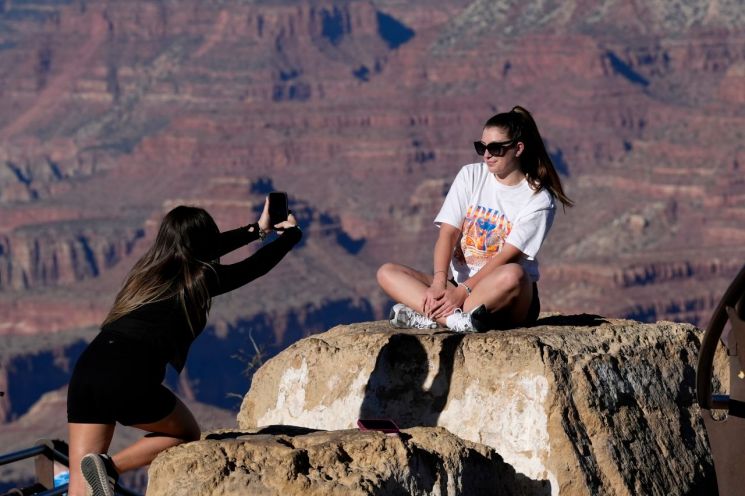 Last October, tourists were taking photos at Mather Point in Grand Canyon National Park, USA. Photo by AP Yonhap News
For the 11 most-visited national parks, non-residents without an annual pass will have to pay an additional $100 (about 140,000 won) on top of the standard entrance fee. These parks include Acadia, Bryce Canyon, Everglades, Glacier, Grand Canyon, Grand Teton, Rocky Mountain, Sequoia & Kings Canyon, Yellowstone, Yosemite, and Zion National Parks. Free admission on major public holidays, which has been offered in the past, will also be limited to citizens and permanent residents.
This change in entrance fees will take effect immediately from January next year, and the entrance fees paid by non-residents will be used for the management and maintenance of the parks. The newly issued annual passes and physical cards will feature a new design displaying the faces of President Donald Trump and George Washington side by side.
Doug Burgum, Secretary of the Interior, stated, "President Trump's leadership always puts American families first," adding, "These policies will allow international visitors to contribute their fair share to maintaining and improving our parks for future generations, while American taxpayers, who already support the national park system, will continue to enjoy affordable access."
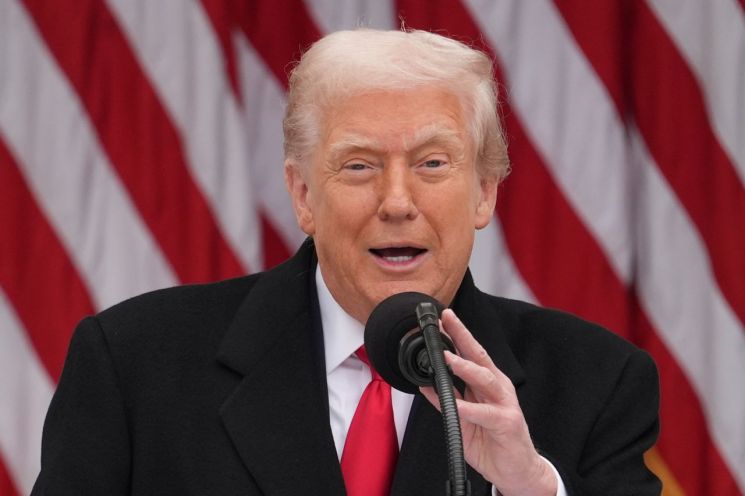
This move is seen as an extension of the Trump administration's 'America First' policy, reaching beyond trade and immigration into tourism policy. Previously, during Trump's first term, then-Secretary of the Interior Ryan Zinke attempted to raise entrance fees during peak seasons, but the plan was scrapped due to strong public opposition.
According to the National Park Service (NPS), the United States has 433 national park sites across all 50 states, covering more than 85 million acres (about 3.44 million square kilometers). Last year alone, more than 3.31 million people visited these parks.
Regarding this measure, U.S. outdoor media outlet Backpacker cited data from the economic analysis agency Tourism Economics, stating, "International visitors to the U.S. are already expected to decrease by 11% in 2025," expressing concern that the number of tourists could decline even further.
© The Asia Business Daily(www.asiae.co.kr). All rights reserved.



















