Board Meetings for Both Companies Today...
Chairman Lee Haejin to Announce Merger Plan
Merger Ratio and Proposal to Be Disclosed in the Afternoon
Joint Press Conference Expected on the 27th
The merger between Naver Financial and Dunamu is entering its final stages. If Naver Financial, which operates the country’s leading online simple payment service, merges with Dunamu, which runs Upbit, the largest virtual asset exchange in Korea, the combined entity is expected to seek dominance in emerging financial ecosystems such as the Korean won-based stablecoin market.
According to the IT industry on November 26, Naver Financial and Dunamu are scheduled to each hold board meetings on this day at undisclosed locations to discuss the merger proposal and the merger ratio. Naver, the parent company of Naver Financial, is also set to convene its own board meeting on the same day to discuss the merger plan. It is anticipated that the boards of both companies will deliberate on the comprehensive stock swap ratio between the two firms.
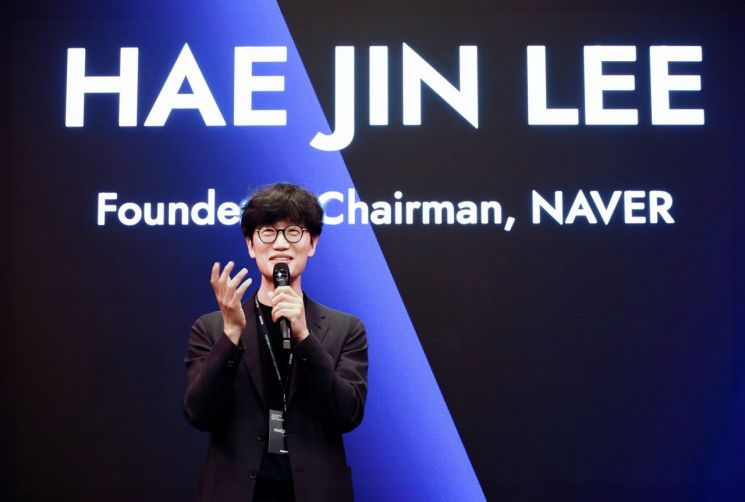
Lee Hae-jin, Founder and Chairman of the Board of Naver, is expected to attend the board meeting in person to present the merger plan with Dunamu. The industry believes that the merger proposal, which involves a comprehensive stock swap between Naver Financial and Dunamu, will be smoothly approved by the boards of both companies. The resolutions passed at each board meeting are expected to be released to the public through an official announcement later in the day.
Given the scale of both companies, the industry expects that the stock swap ratio for the merger between Naver Financial and Dunamu will likely be 1 to 3. However, the exact ratio and detailed merger procedures will be determined by the board meetings. For the merger to proceed, a special resolution at a shareholders’ meeting must follow the board approvals. This special resolution requires the approval of at least two-thirds of the shareholders present and at least one-third of the total issued shares.
After the merger is completed, the ownership structure of Naver Financial will also change. Song Chihyung, Chairman of Dunamu, is expected to become the largest shareholder of Naver Financial, with Naver likely becoming the second-largest shareholder.
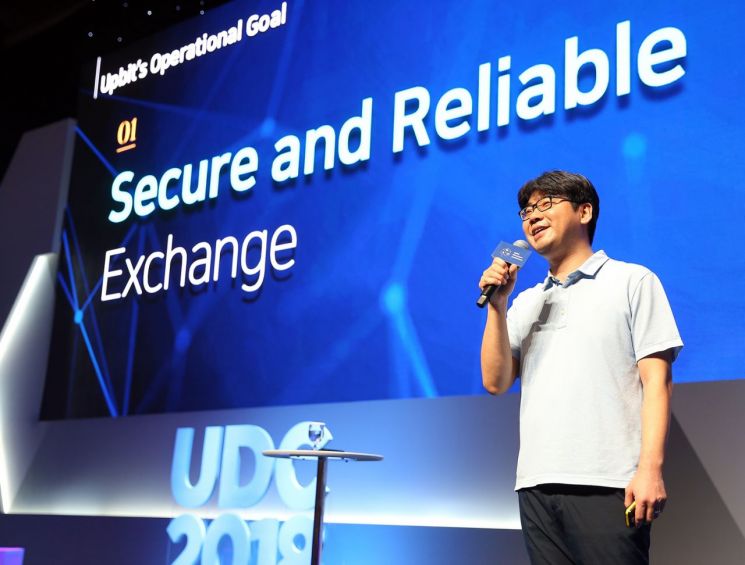
On November 27, the day after the merger proposal is approved, both companies are expected to jointly announce the merger. Lee Hae-jin and Song Chihyung are anticipated to attend the event and participate in a Q&A session. As both executives rarely make public appearances and are often referred to as “reclusive entrepreneurs,” their direct involvement underscores the significance both companies place on this merger. Lee Hae-jin and Song Chihyung are also alumni of the Computer Science Department at Seoul National University. Top executives from both companies, including Choi Sooyoun, CEO of Naver; Oh Kyungseok, CEO of Dunamu; and Park Sangjin, CEO of Naver Financial, are also expected to attend.
Through this merger, the two companies are expected to pursue new revenue streams such as the Korean won-based stablecoin. This would combine the commerce and simple payment ecosystem of Naver and Naver Pay with Dunamu’s strength in virtual asset trading. The two companies could jointly issue a Korean won-based stablecoin, which could then be used for payments via Naver Pay. By merging to preempt the Korean won stablecoin market, the two firms could rapidly secure market leadership by establishing an integrated platform encompassing simple payments, virtual assets, and digital wallets. For Naver, this also represents an opportunity to expand its business beyond its core areas of search and shopping into the virtual asset sector.
However, regulatory reviews during the merger process are expected to be a key variable. Since both companies are the leading players in Korea’s online simple payment and virtual asset exchange markets, their merger could spark concerns over market monopoly. As a result, the Korea Fair Trade Commission is expected to closely examine whether the merger would restrict market competition.
© The Asia Business Daily(www.asiae.co.kr). All rights reserved.
![Clutching a Stolen Dior Bag, Saying "I Hate Being Poor but Real"... The Grotesque Con of a "Human Knockoff" [Slate]](https://cwcontent.asiae.co.kr/asiaresize/183/2026021902243444107_1771435474.jpg)

















