Fostering Dodo-dong as a Hub for the Local Food Value Chain
On November 25, the city of Jeonju, North Jeolla Province, announced that it will begin establishing a future-oriented agriculture cluster in the Dodo-dong area in the northwest, aiming to develop it as a hub for a virtuous cycle of local food.
The Jeonju Agricultural Technology Center plans to create a future agriculture model by integrating the construction of the Food Integration Support Center, the Agricultural Products Comprehensive Processing Support Center, and a public integrated government office in the Deokjin-gu Dodo-dong area, bringing together production, processing, distribution, and administrative functions in one place.
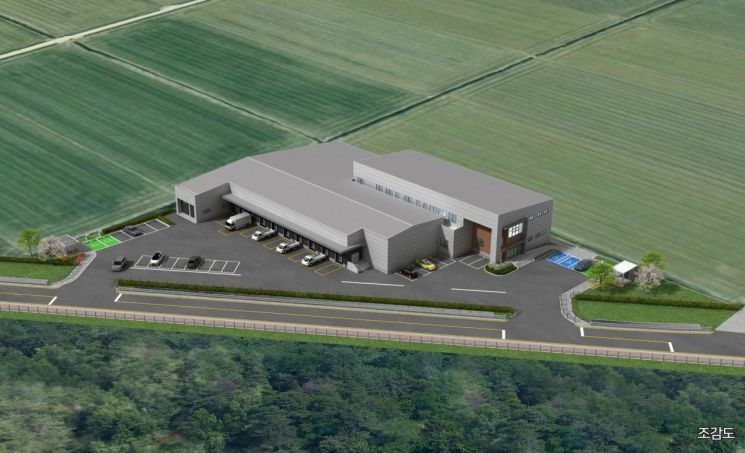
The Food Integration Support Center will serve as a key infrastructure for the integrated management of planned production, selection, storage, and logistics of local agricultural products. It is scheduled to be built on a 4,624-square-meter site at 491-4 Dodo-dong, with two floors above ground and a total floor area of 2,937 square meters.
The city expects that, once the center is completed next year, the supply system for fresh and safe local ingredients needed for school and public meal services will be strengthened. It will also replace the current meal service center inside the World Cup Stadium, which is limited in space, and significantly increase supply capacity from 17 tons to 30 tons.
The construction of the Agricultural Products Comprehensive Processing Support Center, which is being promoted at 488-2 Dodo-dong, is also scheduled for completion next year.
The Agricultural Products Comprehensive Processing Support Center will function as a specialized processing platform equipped with sanitary facilities and professional equipment such as preprocessing rooms, processing rooms, drying and grinding rooms, and bakery and gelato manufacturing rooms. It will serve as an "agri-food startup incubator," providing practical support for local farmers in processing and entrepreneurship.
A total of 2.46 billion won will be invested in the establishment of the center. The city plans to utilize this facility as a central space for creating added value for agricultural products and fostering young farmers by producing a variety of products such as jams, beverages, bread, and liquid teas, as well as developing prototypes, offering technical training, and operating startup support programs.
In addition, a new public integrated government office for the Agricultural Technology Center will be established in the Dodo-dong area, further strengthening the administrative foundation of the future agriculture cluster.
The integrated government office will be built on a 27,678-square-meter site in Dodo-dong, with a total floor area of 7,857 square meters. It is scheduled for completion by 2030. The city plans to secure the land next year and begin the design competition process in 2027.
The city expects that, once the public integrated government office is established, research and guidance functions as well as public infrastructure management will be consolidated in one location, dramatically improving the efficiency and expertise of agricultural administration.
The city anticipates that, once these facilities are clustered in Dodo-dong, a "Jeonju-style urban agriculture ecosystem" connecting the production, processing, distribution, and consumption of local agricultural products will be realized.
The core of the Jeonju-style urban agriculture ecosystem is to ensure stable sales channels and processing opportunities for farmers, provide consumers with safe and trustworthy local food, and secure a sustainable foundation for agriculture and rural communities in the city.
The city plans to proceed smoothly with the construction procedures for each facility and, at the same time, develop inter-facility programs and integrated operation strategies to foster Dodo-dong as the new center of Jeonju agriculture.
Kang Segwon, Director of the Jeonju Agricultural Technology Center, stated, "The Dodo-dong future agriculture cluster is not just about gathering individual projects, but about building a comprehensive platform that actually implements the local food strategy. Through a systematic foundation that encompasses production, processing, distribution, and administration, we will take the competitiveness of Jeonju agriculture to the next level."
© The Asia Business Daily(www.asiae.co.kr). All rights reserved.

















