First Phone Call Since October Summit
Trump: "Discussed Ukraine, Fentanyl, Soybeans, and More"
Xi: "Return of Taiwan to China Is a Core Element of the Postwar International Order"
U.S. President Donald Trump announced on the 24th (local time) that he will visit China in April next year after a phone call with Chinese President Xi Jinping. He also mentioned the possibility of President Xi making a state visit to the United States in the second half of next year, signaling two major "big events" involving reciprocal visits by the leaders of the United States and China. During the call, the two sides discussed a wide range of key issues, including not only trade but also ending the war in Ukraine and the Taiwan issue.
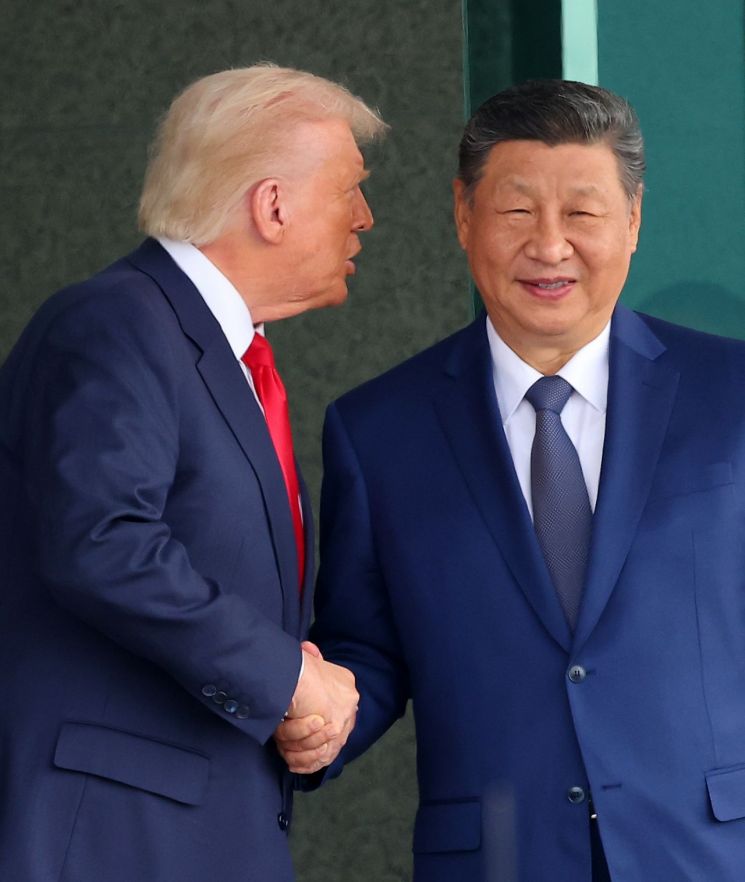
On his self-created social networking service, Truth Social, President Trump said, "I had a very good phone call with President Xi." He revealed, "We discussed a variety of topics, including Ukraine-Russia, fentanyl, soybeans, and other agricultural products," and disclosed that the two leaders coordinated mutual visits for next year.
President Trump stated, "President Xi requested a visit to Beijing in April next year, and I accepted. I also invited President Xi to the United States as a state guest in the latter half of next year." In effect, this signals that two U.S.-China summits will be held next year. He also emphasized, "Relations with China are very strong."
Regarding the implementation of the trade agreement reached last month in Korea, he said, "Both sides have made significant progress in keeping the agreement current and accurate," adding, "Now we are able to see the big picture."
This call marks the first direct communication between the two leaders since they agreed to a trade truce in Korea at the end of October. The Chinese government also confirmed the call and stated that, in addition to the war in Ukraine, the Taiwan issue was also discussed.
According to the Chinese Ministry of Foreign Affairs, President Xi stressed during the call that "the return of Taiwan to China is a core element of the international order established after World War II." In relation to this, China's state-run Xinhua News Agency reported that President Trump said, "China played an important role in the victory of World War II. The United States understands how important the Taiwan issue is to China."
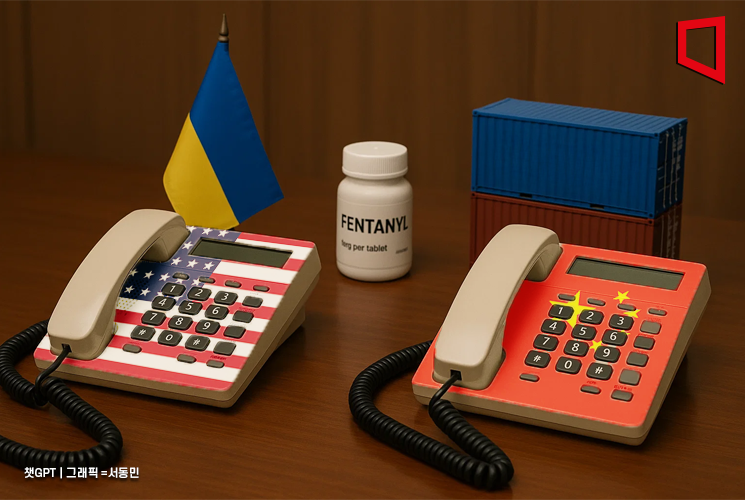
The Taiwan issue is a recurring topic in U.S.-China summits, but the two leaders did not mention it during last month's meeting in Busan. President Xi's remarks this time are interpreted as China reiterating the necessity of Taiwan's return, particularly toward the United States, its largest ally in Japan, amid heightened tensions following Japanese Prime Minister Sanae Takaichi's recent suggestion of intervention in the event of a Taiwan contingency.
Regarding the war in Ukraine, President Xi also stated, "Both sides hope to conclude a binding peace agreement as soon as possible." He further mentioned the need to continue the positive momentum from last month's summit in Korea and to expand cooperation.
Under last month's trade agreement, the United States agreed to reduce tariffs on all Chinese imports of fentanyl from 20% to 10%, while China agreed to suspend rare earth export restrictions for one year and to resume imports of U.S. soybeans.
This call took place as both countries were conducting detailed negotiations regarding the resumption of China's rare earth exports. The United States is also considering whether to allow the sale of Nvidia's advanced artificial intelligence (AI) chips to China. On this matter, U.S. Secretary of Commerce Howard Lutnick said in a Bloomberg TV interview, "The President is listening to the opinions of various advisors to make a potential decision on resuming exports," adding, "The final decision is on President Trump's desk."
© The Asia Business Daily(www.asiae.co.kr). All rights reserved.
![Clutching a Stolen Dior Bag, Saying "I Hate Being Poor but Real"... The Grotesque Con of a "Human Knockoff" [Slate]](https://cwcontent.asiae.co.kr/asiaresize/183/2026021902243444107_1771435474.jpg)

















