'2025 Roundtable on Workers Outside the Scope of Rights' Concludes
Low Wages and Job Insecurity Persist... Calls for Stronger Legal Protections
"What is the point of working for 20 or 30 years? Even when the main contractor achieves record-high operating profits, we subcontracted workers only receive 30 to 40 percent of the regular employees' wages," said subcontracted worker A.
"Price competition is too intense. When new freelancers lower their rates for survival, it drags down the overall market rates," said digital freelancer B.
A recent survey found that so-called "workers outside the scope of rights"-including special-type workers, platform workers, and freelancers-identified wage issues as their biggest hardship. On November 21, the Ministry of Employment and Labor announced the conclusion of the "2025 Roundtable on Workers Outside the Scope of Rights," which was conducted together with the Korea Labor Foundation over a four-month period from July to October. The roundtable, comprised of 25 subcommittees and a total of 605 vulnerable workers, served as a field communication platform to listen to their difficulties and reflect them in actual policy improvements.
Biggest Hardship: Low Wages
Although the workers participating in the roundtable faced a variety of challenges, workers in all three categories-special-type workers, those at small businesses, and daily or dispatched workers-cited "wages and welfare benefits" as their top concern.
Specifically, 32.6 percent of special-type, platform, and freelance workers identified wage issues as their most urgent difficulty. Among workers at small businesses, 41.9 percent pointed to wage and welfare issues, while 34.3 percent of daily, fixed-term, contract, and dispatched workers reported hardships in the area of wages and welfare.
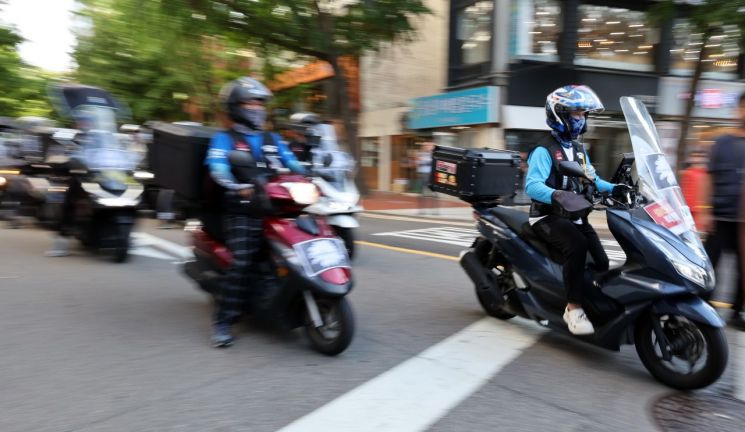
Platform-based workers, in particular, highlighted the problem of unstable income structures. One delivery worker lamented, "The platform's brokerage fees are so high that, even after working hard, nothing is left." Fierce price competition is also a serious threat to their livelihoods. When new freelancers lower their rates to survive, it affects the entire market, leading to a persistent state of low wages.
The next most frequently cited issue after wages was the "basic order of labor." This includes the absence of written employment contracts, unfair changes to contract terms, and unilateral contract terminations. Workers reported that, in reality, they have no choice but to accept frequent changes to contract terms by clients if they want to continue working. One freelance instructor appealed, "It's hard to prove my non-employment status, so I can't even receive unemployment benefits."
"Job Insecurity, Harassment, and Emotional Labor Overlap"
For daily, dispatched, fixed-term, and contract workers, the main hardships were "job insecurity and insufficient welfare." One part-time worker said, "Employers split workers' hours to only 15 per week, so to make a living, I have to work another 15 hours elsewhere."
A security guard said, "Even after repeatedly signing three-month short-term contracts, I have to sign again out of fear of being dismissed." A care worker shared, "Even when the center manager abuses their power over the schedule, I have no choice but to endure it because my income depends on it."
Emotional labor is also a major concern. A call center worker requested protective measures, saying, "I've never not experienced verbal abuse, threats, or sexual harassment." A cleaning worker complained, "There is no women's break room, so I was told to use the men's break room, which was basically a storage room."
"System Fails to Keep Up with Modern Labor Realities"
Participants commonly identified the failure of the current system to reflect "real-world labor" as the biggest cause of these issues. In fact, many of them are not protected by the Labor Standards Act or are excluded from social insurance such as employment and industrial accident insurance. With new forms of labor-such as project-based work, platform-based work, and multiple employment arrangements-spreading rapidly, the gap between the law and actual labor practices is widening.
In response, the Ministry of Employment and Labor plans to propose the enactment of the "Basic Act on the Rights of Working People" in the National Assembly next year, based on the roundtable findings. The ministry also intends to ensure that the budget review process in the National Assembly sufficiently reflects fiscal projects for the welfare and dispute resolution of vulnerable workers. New fiscal projects will include "support for the recovery of unpaid wages for workers outside the scope of rights" (200 million won) and "on-site protection of vulnerable workers' rights" (1.3 billion won). Additionally, the support rate for the "workplace improvement for vulnerable workers" project by local governments will be expanded from 50 percent to 70 percent.
© The Asia Business Daily(www.asiae.co.kr). All rights reserved.

















