A Turning Point for Gwangyang's Leap Toward a Future-Oriented Steel City
Gwangyang, known as the heart of South Korea's steel industry, is rising again.
On November 20, Gwangyang City announced that it has been officially designated as a "Preemptive Industrial Crisis Response Area" following the results of the "Industrial Crisis Response Committee" review, which was held by the Ministry of Trade, Industry and Energy from November 17 to 19.
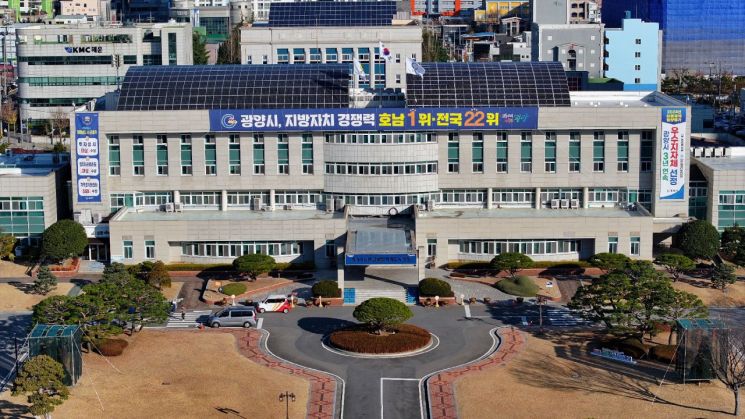
With this designation, Gwangyang will receive extensive government support over the next two years, including emergency management stabilization funds, preferential local investment promotion subsidies, financial support for small and medium-sized enterprises (such as maturity extensions and repayment deferrals), and financial assistance for partner companies and small business owners. This is expected to serve as a crucial turning point for overcoming the challenges facing the steel industry and for transforming the industrial structure toward a future-oriented direction.
Since the beginning of this year, Gwangyang City has established a proactive response system to address the difficulties in the steel industry and has systematically strengthened these efforts. In February, the city held an emergency meeting with Pohang and Dangjin, issued a joint statement, participated in a roundtable on responding to the Trump administration's second-term tariff policies, submitted a joint proposal with the Gwangyang and Suncheon Chambers of Commerce, and made a joint declaration with Yeosu, Suncheon, and Gwangyang to overcome the economic crisis. The Gwangyang City Council also issued a statement urging action to overcome the steel industry crisis, consolidating the region’s determination to respond.
In addition, Gwangyang has closely cooperated with Jeollanam-do Province, the office of National Assembly member Kwon Hyangyeop, and government ministries to launch the Jeonnam Steel Industry Crisis Response Council, promote crisis response support projects, and hold multiple working-level consultations with the Ministry of Trade, Industry and Energy, actively explaining the policy necessity. These efforts played a significant role in the designation.
As a result of these efforts, Gwangyang City submitted its application for designation to the Ministry of Trade, Industry and Energy on September 30. On October 21, an on-site inspection team from the ministry visited the Gwangyang National Industrial Complex to comprehensively review the city's dependence on the steel industry, employment conditions, and the management status of small and medium-sized enterprises.
The city thoroughly prepared for the review process by promptly and accurately submitting supplementary materials in response to the inspection team's questions, thereby demonstrating the validity of the designation.
With the designation as a "Preemptive Industrial Crisis Response Area," additional ordinary grant tax funds will be allocated to Gwangyang starting in 2026. The city plans to reflect this in the first supplementary budget of 2026 and to actively implement regional industrial crisis response projects.
Jung Inhwa, Mayor of Gwangyang, stated, "We will turn the crisis in the steel industry into an opportunity for industrial transformation, allowing Gwangyang to once again emerge as the heart of Korea's manufacturing industry. We are committed to realizing a sustainable global city of the future where companies are respected and citizens grow together."
Meanwhile, the city is actively pursuing the "Gwangyang-Style Industrial Crisis Response Package Project" to strengthen industrial competitiveness and lay the foundation for future growth, and is also preparing for the designation as a "Preemptive Employment Crisis Response Area" to address potential deterioration in employment indicators.
© The Asia Business Daily(www.asiae.co.kr). All rights reserved.
![Clutching a Stolen Dior Bag, Saying "I Hate Being Poor but Real"... The Grotesque Con of a "Human Knockoff" [Slate]](https://cwcontent.asiae.co.kr/asiaresize/183/2026021902243444107_1771435474.jpg)
















