National Research Institute of Cultural Heritage Analyzes Sixty-Three National Treasures and Treasures
Exploring Regional Characteristics and Artistic Value
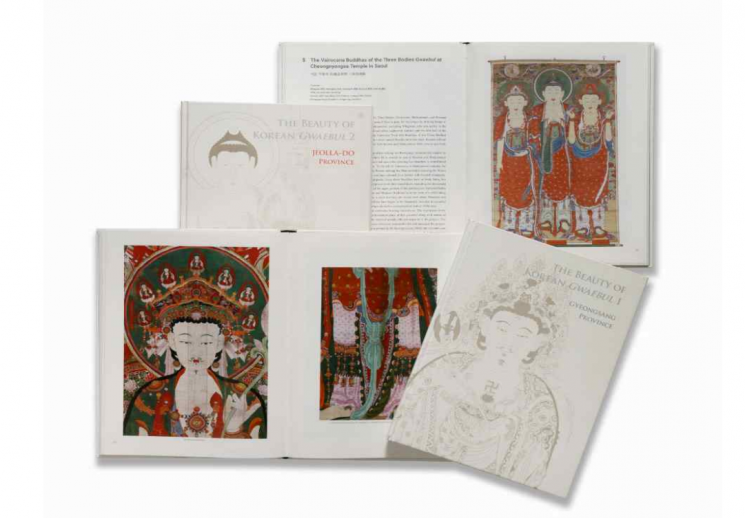
The National Research Institute of Cultural Heritage announced on November 21 that it has completed the publication of all four volumes of the English academic series "The Beauty of Korean Gwaebul," which explores the regional characteristics and artistic value of Korean gwaebul (large Buddhist banner paintings).
Since 2022, the institute has conducted an in-depth study of sixty-three gwaebul paintings designated as National Treasures and Treasures. Based on the results of art historical analyses, the institute first published the four-volume Korean edition, "The Beauty of Korean Gwaebul," organized by region. The English edition began with the first volume in 2023, and now volumes 2 through 4 have been released.
Gwaebul are large Buddhist paintings created for outdoor temple ceremonies. Those produced in Korea measure between 5 and 14 meters in length and are known for their unique iconography.
The first volume, published in 2023, covers twenty-six gwaebul from the Gyeongsang region, where production was most active during the late Joseon period. These works are characterized by scenes of offering flowers to the Buddha, as if flower petals are raining down, and by the placement of Sanskrit characters along the borders of the painting in their original script.
The second volume highlights fifteen gwaebul and one preparatory sketch from the Jeolla region. This volume features early works, including the oldest extant piece, "Buddha Sakyamuni Gwaebul from Jukrimsa Temple" (1622). In the eighteenth century, masters such as Cheonsin, Uigyeom, and Saengmin actively produced works based on the "Ojongbeomeumjip" (Collection of Five Types of Buddhist Chants).
The third volume introduces fifteen gwaebul from the Chungcheong region, where there are more seventeenth-century works than in other regions. Many of these are Shakyamuni gwaebul depicting numerous figures, suggesting that group compositions may have been preferred over single-figure paintings in the early period.
The fourth volume covers six gwaebul from the Seoul and Gyeonggi regions. Of the approximately 120 gwaebul produced up to the first half of the twentieth century, forty-one remain in this area. Due to anti-Buddhist policies, production was limited during the early Joseon period. However, from the nineteenth century onward, high-quality works were created, inheriting the tradition of royal Buddhist paintings.
The English academic series will be distributed mainly to overseas Korean studies research institutions. It is also available for viewing on the institute's National Heritage Knowledge Sharing website. The "Gwaebul Gallery" section of the website provides high-resolution images and related information on nationally designated gwaebul. An institute representative stated, "We plan to launch English-language services next year."
© The Asia Business Daily(www.asiae.co.kr). All rights reserved.

















