"Market Will Be Dominated by a Few... The Race to Secure Leading Positions Has Begun"
"Profits Will Materialize Once Competitors Are Eliminated"
Massive Big Tech Investments Are a Strategy to Secure Market Dominance
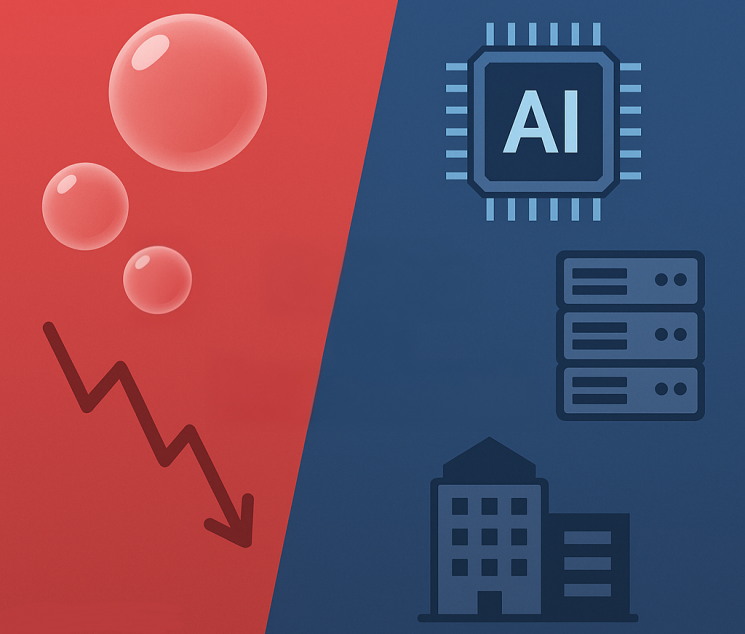
As Nvidia prepares to announce its earnings, stock prices-particularly among technology companies-have plummeted, fueling an intensifying debate over the so-called "AI bubble" in the industry. The growing volatility in the share prices of major information technology companies, combined with mounting questions about the returns on AI investments, has spread skepticism across the market about whether AI is truly driving corporate growth. The domestic market has also been affected, with the KOSPI remaining below the 4,000 mark on the morning of November 19, continuing its unstable trend from the previous day. However, those working on the front lines of AI development see the current situation not as a bubble, but as the opening round of a winner-takes-all game. Just as in the software industry, they predict that the AI sector will ultimately be dominated by a handful of platforms, and that the current phase is marked by fierce competition to secure those dominant positions.
Kim Yucheol, Head of Strategy at LG AI Research Institute, stated, "Experts believe that, like software, the AI market is highly likely to become a winner-takes-all environment," adding, "Once the challengers and competitors are eliminated from the investment race, the winners will begin to generate substantial profits." He further explained, "Even the major tech companies are currently in an investment phase, expanding their market dominance by investing in advanced graphics processing units (GPUs) and lowering application programming interface (API) fees from an economies of scale perspective, while postponing monetization."
From this perspective, the current massive investments are not a bubble, but rather a strategic choice to secure market dominance. Seong Nakho, Chief Technology Officer at Naver Cloud, commented, "Market dominance is a driving force to attract capital," and noted, "The United States, which currently leads in AI, is best equipped to mobilize its capital markets, enabling rapid deployment of urgently needed infrastructure and talent." He added, "People call it a bubble when there is no visible substance, but the truth is that industries have grown by leveraging concentrated investment. Looking back at the past five years of the AI industry, it is hard to deny that it has grown despite the cyclical ups and downs."
The core of the recent global debate over an AI bubble is the imbalance between investment and returns. According to JP Morgan, at least 5 trillion dollars in investment will be required over the next five years to meet the data center construction plans of AI giants such as Amazon and Google. Despite the astronomical sums being poured in, only a handful of companies are reportedly generating visible profits from AI. This has fueled the bubble narrative, particularly among securities analysts, as profitability fails to keep pace with large-scale AI investments.
Contrary to concerns in the stock market, domestic AI companies are actually ramping up their investments. Kim Yuwon, CEO of Naver Cloud, mentioned at Team Naver's integrated conference "Dan25" earlier this month that even the 60,000 GPUs supplied by Nvidia are insufficient. Naver plans to invest over 1 trillion won solely in GPUs next year. The company is preparing a diverse lineup of AI models, ranging from large-scale models for cloud applications to lightweight models for physical AI, to drive innovation across industries. Naver is also accelerating commercialization by building cloud AI services in overseas markets such as Saudi Arabia and Thailand.
This is also why there has been a recent focus on developing lightweight models. CEO Kim emphasized regarding the AI bubble debate, "We have always been vigilant, and we have prepared to deflate the bubble," adding, "To create value through actual services, we must establish a sound structure where the value generated exceeds the costs invested, and to achieve that, prioritizing lightweight models is essential."
The efforts and investments of companies are already yielding results. At LG AI Research Institute, for example, the active use of AI has dramatically shortened the process of developing ingredients for cosmetics. Tasks that previously took researchers about two years have been accomplished in a single day using AI, leading to successful commercialization. The institute is also being recognized for its technological capabilities through joint research with the Jackson Laboratory, a global bio research institution in the United States, to discover genes responsible for Alzheimer's disease.
While the lack of visible results is fueling the bubble debate, the consensus in the IT industry is that time will ultimately resolve the issue. A senior official at a domestic AI development organization, who requested anonymity, said, "Skepticism arises because people cannot directly perceive the effectiveness relative to the astronomical investment costs," but added, "Once AI-developed services begin to explicitly contribute to corporate revenues, the concerns will disappear." He continued, "If we fail to invest now and fall behind in cost efficiency, it will be difficult to recover," emphasizing, "That is why the investment race is bound to continue for the foreseeable future."
Experts diagnose the AI bubble debate as a "short-term overheating phenomenon driven by investment fever," but maintain that the growth potential of the AI industry remains valid. Global investment banks also predict that the AI-driven boom cycle will continue, with ups and downs, through the year after next. Although the bubble narrative will likely resurface repeatedly, analysts believe that upward revisions in corporate earnings will ultimately drive higher valuations. However, they also note that a shakeout is inevitable, with many companies expected to be eliminated from the competition along the way.
© The Asia Business Daily(www.asiae.co.kr). All rights reserved.
![User Who Sold Erroneously Deposited Bitcoins to Repay Debt and Fund Entertainment... What Did the Supreme Court Decide in 2021? [Legal Issue Check]](https://cwcontent.asiae.co.kr/asiaresize/183/2026020910431234020_1770601391.png)















