The Fourth Regional Economy Symposium Focuses on Jeju
Discussions on Climate Change and Energy Transition
"Climate Response Is a Structural Challenge...
Supply Chains, Specialized Companies, and Skilled Talent Needed"
Lee Changyong, Governor of the Bank of Korea, stated on the 18th, "If the transition to a low-carbon economy is delayed or if climate shocks accumulate, growth potential may weaken," adding, "To turn the climate crisis into a growth opportunity, we must go beyond simply supplying renewable energy and restructure the economic system."
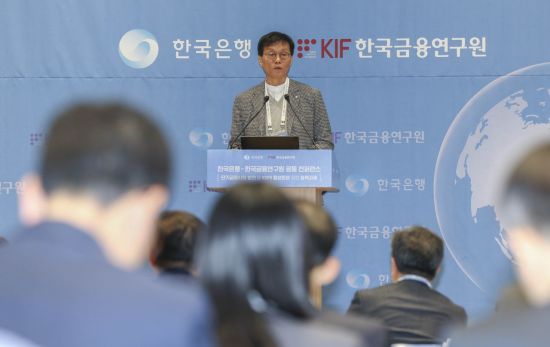
Governor Lee made these remarks during his opening address at the 'BOK Regional Economy Symposium' held in Jeju Island on this day.
He emphasized, "Climate change is a structural challenge that affects all regional industries, including agriculture, tourism, and manufacturing," and added, "For the expansion of renewable energy to drive new industries, jobs, and investments, we must look beyond simply increasing power supply. We need to establish supply chains that account for upstream and downstream industries and foster specialized companies and skilled workers, thereby seeking a restructuring of the economic system."
He also pointed out that climate response is a challenge that involves both the costs of delay and the burdens of moving too quickly. Governor Lee said, "If our response is slow, growth potential may weaken, but at the same time, we must also carefully consider the impact that the carbon reduction process could have on our industrial competitiveness and export base," adding, "Because the impact of climate change can differ depending on the circumstances and industrial structures of each region, a balanced transition strategy that reflects regional characteristics is necessary."
Governor Lee further stated that innovative solutions are needed to address the intermittency of renewable energy, such as actively utilizing demand resources like electric vehicles and heating/cooling systems, along with energy storage systems (ESS, hydrogen, etc.). He also suggested that to ensure policies take root in local communities, it is essential to establish mutually beneficial models in which residents and businesses share the benefits.
In particular, he highlighted Jeju's role as a 'test bed' for climate response. Governor Lee noted, "As of last year, the share of renewable energy in Jeju stood at about 20%, significantly higher than the national average of 10.5%. This is a representative achievement that shows Jeju is leading Korea's carbon neutrality efforts," and emphasized, "Jeju's energy transition is not just a challenge for Jeju alone, but a challenge and opportunity directly linked to Korea's sustainable growth."
At the symposium, which was held under the theme 'Exploring Development Strategies through Renewable Energy Transition,' Professor Kim Deokpa of Korea University's Department of Economics analyzed the 'Economic Effects of Climate Change' in his session presentation. Professor Kim explained, "Regional gross production, agricultural income, and manufacturing labor productivity generally reach their peak at an average annual temperature of about 13 degrees Celsius," and pointed out, "Given the current regional average temperatures in Korea, if temperatures rise further, productivity is likely to increase in central regions but decrease in southern regions."
By industry, he estimated that agricultural productivity in the southern regions, which have higher temperatures than the central regions, has declined due to recent temperature increases on the Korean Peninsula. In manufacturing, labor productivity in traditional sectors such as chemicals and machinery, which involve a lot of outdoor work and are affected by weather conditions, has been relatively more impacted by climate change. Extreme weather events such as heatwaves and heavy rains have also caused crop damage and construction delays, leading to supply shocks.
In a session presentation titled 'Analysis of the Economic Ripple Effects of Jeju's Energy Transition,' Lee Suji, Manager of the Sustainable Growth Planning Team at the Bank of Korea's Sustainable Growth Office, analyzed that installing 7.5GW of wind and solar power facilities in Jeju would increase local production by up to 24.3 trillion won and generate up to nearly 40,000 jobs annually.
According to the research, the manufacturing and construction sectors would, depending on the local procurement rate over the next 10 years, generate 3 trillion to 6.2 trillion won in local production and create 23,000 to 39,000 jobs annually. The operation and maintenance sectors are expected to generate 17.9 trillion to 24.3 trillion won in local production and 11,000 to 14,000 jobs between 2027 and up to 2065, depending on the electricity market situation.
Manager Lee stated, "Renewable energy is well-suited for distributed generation and has a significant ripple effect on local economies, but if the manufacturing supply chain or related industry foundations such as companies and skilled workers are weak, the economic effects may be limited," adding, "We need to support local companies so they can gain sufficient experience and track records, and systematically train specialized personnel who can be deployed on-site."
© The Asia Business Daily(www.asiae.co.kr). All rights reserved.
![Clutching a Stolen Dior Bag, Saying "I Hate Being Poor but Real"... The Grotesque Con of a "Human Knockoff" [Slate]](https://cwcontent.asiae.co.kr/asiaresize/183/2026021902243444107_1771435474.jpg)
















