Government Uncovers 210 Cases of Suspicious Foreign Housing Transactions Through Special Investigation
The government has uncovered numerous cases of violations of laws and regulations after reviewing the status of domestic housing transactions by foreigners. In addition to investigating transactions involving real estate other than housing, the government has also decided to consider raising the level of sanctions for illegal activities.
On November 17, the Real Estate Supervision Task Force under the Office for Government Policy Coordination held the second meeting of the Real Estate Illegal Activity Response Council and examined cases of foreign housing transactions detected by the Ministry of Land, Infrastructure and Transport. According to the ministry's investigation, there were 438 suspicious transactions among housing deals by foreigners between June of last year and May of this year. Of these, 210 cases were deemed to involve suspected illegal activity and will be reported to the relevant authorities. In other words, one out of every two suspicious transactions is estimated to have violated regulations, with the number of such acts totaling 290.
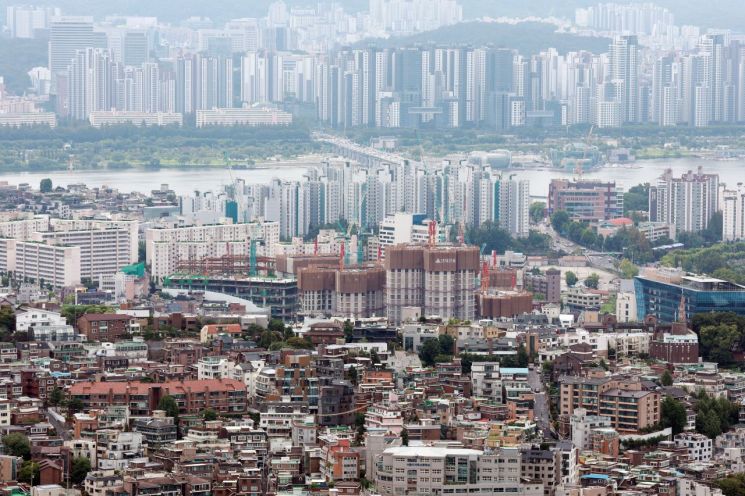 Apartment complexes and residential areas in downtown Seoul as seen from Namsan, Seoul. Photo by Yonhap News
In one case, a foreign national purchased four apartments in Seoul, paying 570 million won in cash out of a total transaction amount of 1.735 billion won. This case is suspected of either failing to report the import of foreign currency or illegally bringing in funds through "hwanchigi" (an underground remittance method that bypasses foreign exchange banks) with the help of an acquaintance of the same nationality. Another case involved a foreigner in their 30s, earning about 90 million won annually, who purchased a detached house in Seoul for 12.5 billion won. The entire amount was funded from their own bank deposits, with income earned overseas first transferred to a third-country bank and then deposited into a Korean bank account. Since the overseas income was not properly explained, the case will be reported to the National Tax Service.
There was also a case where a foreigner entered Korea on an H2 (Visit and Employment) visa, which does not permit rental business activities, but nevertheless purchased an apartment in Incheon and earned rental income by leasing it to another foreigner. Another foreigner bought an apartment in Seoul for 6.8 billion won, using a loan of 4.6 billion won from a company in which they are a shareholder. There were also cases where a foreigner bought and sold seven apartments in a short period, earning capital gains, and in the process, brokers either paid the purchase price on the buyer's behalf or received the sale proceeds, raising suspicions of transactions under borrowed names.
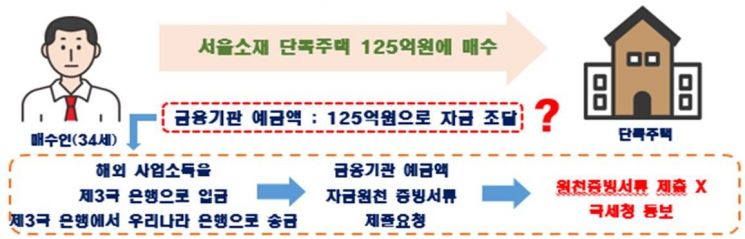 Overview of housing transactions by foreigners with unclear sources of funding. Provided by the Ministry of Land, Infrastructure and Transport
The government plans to notify relevant agencies such as the Ministry of Justice, the National Tax Service, the Korea Customs Service, the National Police Agency, and local governments about these suspected illegal transactions, depending on the nature of the violation, and to proceed with follow-up measures such as tax investigations, criminal investigations, or referral to the prosecution. In addition, the government will consider raising the level of sanctions and penalties to eradicate illegal real estate transactions by foreigners, with further discussions scheduled for the next meeting. Kim Yongsoo, head of the Real Estate Supervision Task Force (Second Vice Minister of Government Policy Coordination), stated, "Illegal transactions by foreigners can disrupt the domestic housing market order and cause serious distress to the public due to market instability. Therefore, all relevant agencies, including the Ministry of Justice, the National Tax Service, the Korea Customs Service, and the National Police Agency, will take the strictest possible measures."
When breaking down the suspected illegal transactions detected in this investigation by the nationality of the buyers, Chinese nationals accounted for the largest number with 125 cases, followed by Americans with 78 cases, Australians with 21, and Canadians with 14. In terms of the proportion of suspicious transactions to total transactions, Americans accounted for 3.7% and Chinese for 1.4%. By region, there were 88 cases in Seoul, 61 in Gyeonggi Province, 48 in South Chungcheong Province, and 32 in Incheon. Kim Gyucheol, Director of Housing and Land Policy at the Ministry of Land, Infrastructure and Transport, said, "We will continue to make every effort to establish order in the real estate market by ensuring that ongoing special investigations into suspicious housing transactions in the Seoul metropolitan area and suspicious non-housing and land transactions by foreigners are carried out without delay through the end of the year."
© The Asia Business Daily(www.asiae.co.kr). All rights reserved.


















