Aimed at Lowering Consumer Prices
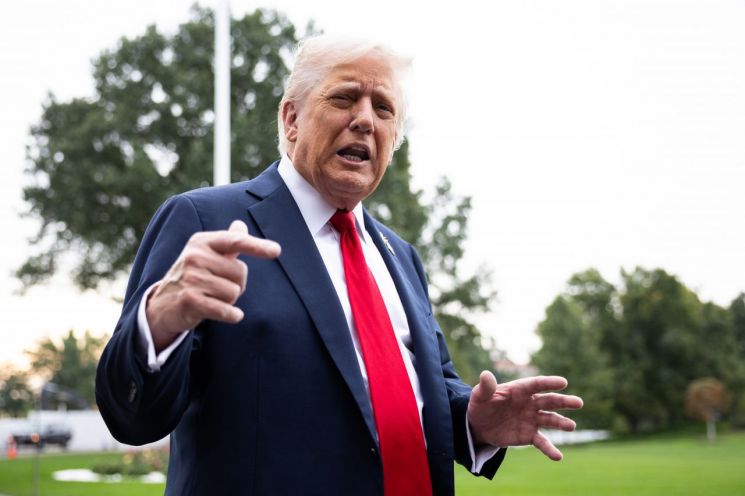 Donald Trump, President of the United States, is speaking at the White House residence last September. Photo by UPI
As President Donald Trump of the United States moved to eliminate reciprocal tariffs on more than 200 types of agricultural and livestock products, including beef, exporting countries such as Australia, New Zealand, and India welcomed the decision and expressed expectations for increased exports.
Penny Wong, Australia's Minister for Foreign Affairs, stated on the 16th (local time), "We welcome the elimination of tariffs," adding, "This is good news for Australian beef producers."
Previously, on the 14th, President Trump signed an executive order exempting reciprocal tariffs on over 200 agricultural and livestock products, including beef, coffee, tomatoes, tropical fruits such as bananas and pineapples, nuts, and spices.
According to Reuters, Australia exports between 150,000 and 400,000 tons of beef to the United States annually, leveraging lower prices compared to American beef. Last year, Australia became the largest exporter, shipping beef worth 4.4 billion Australian dollars (approximately 4.2 trillion won) to the United States. Australian beef is especially popular at fast-food chains and similar outlets.
Back in April, President Trump raised concerns that Australia was not importing enough American beef and other agricultural products. In response, the Australian government eased restrictions on imports of American beef, which had been in place since 2003 due to concerns over bovine spongiform encephalopathy (BSE, or mad cow disease).
Todd McClay, New Zealand's Minister for Trade, also issued a statement, saying, "This decision to eliminate tariffs is a step in the right direction," and emphasized, "It will be welcomed by (New Zealand agricultural) exporters who have faced months of uncertainty and high costs."
In India, there are also expectations that agricultural exporters will benefit from this measure. Ajay Sahai, Secretary General of the Federation of Indian Export Organisations (FIEO), told Reuters that the decision "opens up opportunities for premium, specialty, and high value-added products (to be exported to the United States)," and anticipated that annual exports to the United States worth between 2.5 billion and 3 billion dollars (approximately 3.7 trillion to 4.4 trillion won) would benefit from the reciprocal tariff exemption.
Indian exporters of tea, coffee, spices, and cashew nuts have suffered significant setbacks in exports to the United States due to the reciprocal tariff burden, which soared to 50% since August. Following the tariff hike, India's exports to the United States in September dropped to 5.43 billion dollars (approximately 7.9 trillion won), down about 12% from the same period last year.
© The Asia Business Daily(www.asiae.co.kr). All rights reserved.

















