Sharp Decline in European Exports from Xinjiang, China, a Major Tomato Producer
Export Value Down 82% Year-on-Year, 700,000 Tons Stockpiled
Controversy Over Uyghur Forced Labor and False Country-of-Origin Labeling
Attention is being drawn to the reasons behind the halt in exports of tomatoes, a major crop from the Xinjiang region of China, to Italy. On the 15th (local time), Yonhap News, citing the Financial Times (FT), reported, "According to industry analysts, tomato cultivation and processing in Xinjiang have expanded significantly in recent years, but exports to Italy and Western European countries have dropped sharply."
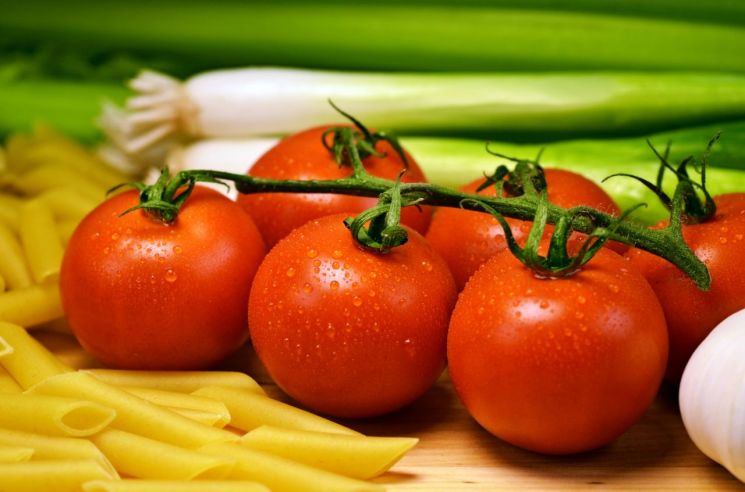
According to the tomato information website "Tomato News," China's exports of tomato paste (concentrate) in the third quarter of this year fell by 9% compared to the same period last year. During this period, exports to the European Union (EU) decreased by 67%, and in particular, exports to Italy plummeted by 76%. According to Chinese customs, the value of Chinese tomato exports to Italy between January and September this year was less than 13 million dollars, a decline of over 82% compared to the same period last year (75 million dollars).
Under the leadership of state-owned enterprises, China has transformed the Xinjiang Uyghur Autonomous Region into a low-cost, export-oriented hub for tomato paste production. Last year, China's tomato paste production reached 11 million tons, more than doubling from 4.8 million tons in 2021. However, due to a sharp drop in European demand this year, China's tomato paste production is expected to reach only 3.7 million tons. It is estimated that China currently has a stockpile of 600,000 to 700,000 tons of tomato paste, which is equivalent to six months' worth of the country's exports.
The rapid decline in demand for Chinese tomatoes in such a short period is attributed to two main reasons: the controversy over forced labor in Xinjiang and allegations that some Italian companies falsely labeled the origin of their products. According to Yonhap News, there have been ongoing allegations of forced labor involving Uyghurs in Xinjiang's tomato industry, and the United States banned imports of tomato paste from Xinjiang in 2021. In December last year, reports emerged that tomato products linked to forced labor were being imported into Europe and sold as if they were produced in Italy, sparking further controversy.
European retailers, concerned about the false labeling controversy, have urged Italian tomato processors to stop using Chinese tomatoes. Additionally, "Coldiretti," Italy's largest farmers' association, launched a large-scale campaign against Chinese products, which are priced at less than half the cost of domestic products.
The Chinese authorities have claimed that allegations of forced labor in Xinjiang are "complete lies fabricated by anti-China forces." On the other hand, Francesco Mutti, CEO of the Italian tomato processing and manufacturing company Mutti SpA, described the situation as "an important victory and a positive signal."
© The Asia Business Daily(www.asiae.co.kr). All rights reserved.

![Clutching a Stolen Dior Bag, Saying "I Hate Being Poor but Real"... The Grotesque Con of a "Human Knockoff" [Slate]](https://cwcontent.asiae.co.kr/asiaresize/183/2026021902243444107_1771435474.jpg)















