Supreme Court: "Claim for Delivery of Bowling Alley Equipment Not Permitted
Even If Not Covered by Factory Mortgage Act"
...Overturns Lower Court and Remands Case
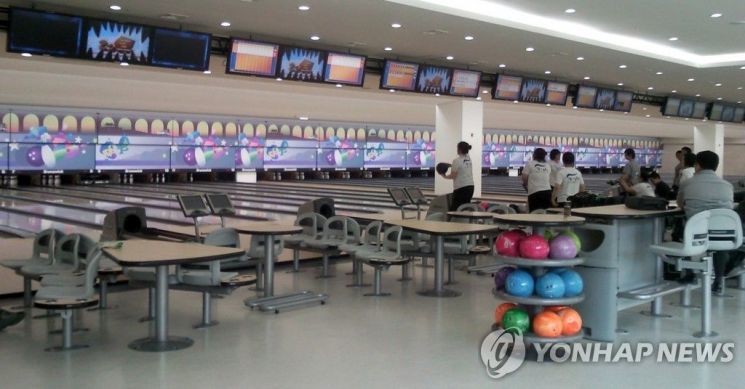
The Supreme Court has ruled that machines such as bowling alley equipment constitute "accessory property" (facilities that must be attached for the economic function of a building) of real estate. Therefore, the effect of a mortgage established on the bowling alley building also extends to these machines. This means that a third party who purchases the machines after the mortgage has been established cannot claim ownership of them.
According to the legal community on the 17th, the Supreme Court's Second Division (Presiding Justice Kwon Youngjun) overturned the lower court's partial ruling in favor of the plaintiff in a lawsuit seeking delivery of bowling alley machines, and remanded the case to the Seoul Western District Court.
The case is as follows: Party A registered a mortgage under the Factory Mortgage Act on a bowling alley building he owned, as well as all the machines inside. Subsequently, a decision was made to commence a voluntary auction on the real estate and the machines, and an appraisal report was prepared. During the auction process, Parties B and C jointly purchased the real estate and machines, completed the registration of ownership transfer, and the defendant has since been operating the bowling alley and machines by leasing them from B and C.
On the other hand, the plaintiff claimed to have purchased the machines from Party A after the mortgage had been established, arguing that the machines are movable property separate from the real estate and thus the effect of the mortgage does not extend to them. Based on this, the plaintiff filed a claim for delivery of the machines against the defendant. Both the first and second instance courts partially accepted the plaintiff's argument and ruled partially in favor of the plaintiff.
However, the Supreme Court overturned the lower court's decision. The Court found that bowling alley machines are essential facilities required for the economic utility of a bowling alley, and therefore constitute accessory property of the real estate. The Supreme Court stated, "The effect of a mortgage extends to the accessory property of the mortgaged real estate, and the purchaser at a real estate auction acquires ownership of the accessory property as well." On this legal basis, the Court held that even if the machines do not fall under the scope of Article 4 of the Factory Mortgage Act, the general effect of a mortgage under the Civil Act naturally extends to both the mortgaged real estate and its accessory property.
The Supreme Court further stated, "Even if the plaintiff acquired ownership of the machines by purchasing them after the mortgage was established, since Parties B and C acquired ownership of both the real estate and the accessory machines in the auction process, the plaintiff cannot claim delivery of the machines from the defendant on that basis." The Court concluded that "the lower court misunderstood the legal principles regarding accessory property and the scope of a mortgage's effect."
© The Asia Business Daily(www.asiae.co.kr). All rights reserved.

















