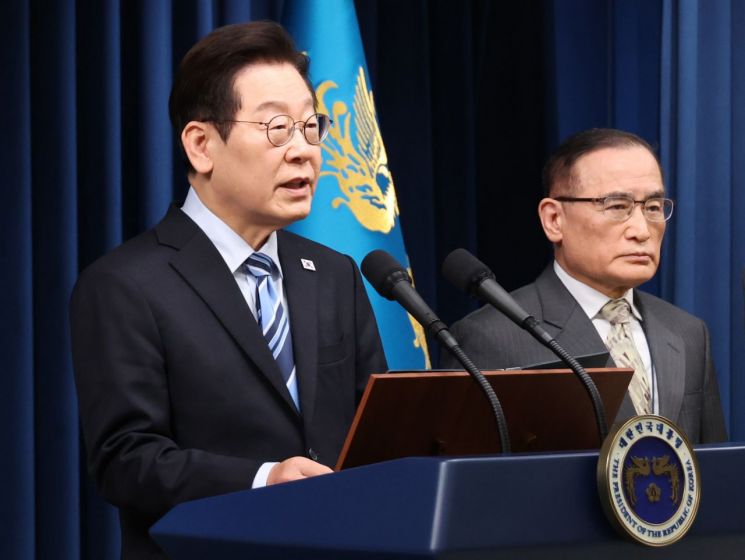
On November 16, it was confirmed that the administration of former U.S. President Donald Trump had notified the South Korean government of its plan to impose costs related to weapons development, among other expenses, when selling military equipment to major allies, including South Korea.
According to Yonhap News Agency on this day, the Trump administration informed South Korea last August of its decision to abolish the exemption for "non-recurring costs" (NC) that had previously been granted when selling weapons through the Foreign Military Sales (FMS) program, which is a government-to-government contract.
This policy change also applies to other Indo-Pacific allies such as Japan and Australia, as well as NATO member countries.
NC refers to one-time costs incurred by U.S. defense contractors during the development or production of weapons, including initial development, design, and testing expenses. Under the U.S. Arms Export Control Act, the Department of Defense is required to recover NC for certain major weapons sold to foreign countries through the FMS program.
However, exemptions have been allowed for certain allied or friendly countries for strategic reasons, or to ensure that the United States is not at a disadvantage in international arms procurement competitions.
Until now, South Korea had been treated as an ally equivalent to NATO member states by the U.S. government and had benefited from NC exemptions. However, going forward, South Korea is expected to be required to pay a certain amount each time it acquires U.S.-made weapons through the FMS program.
This is likely to place a significant financial burden on South Korea, especially given that, during the South Korea-U.S. summit between President Lee Jaemyung and President Trump held in Gyeongju on October 29, South Korea agreed to purchase U.S. weapons worth $25 billion (approximately 37 trillion won) by 2030.
The joint fact sheet released on November 14 also included the statement: "South Korea has committed to spending $25 billion on the purchase of U.S. military equipment by 2030."
© The Asia Business Daily(www.asiae.co.kr). All rights reserved.
![Clutching a Stolen Dior Bag, Saying "I Hate Being Poor but Real"... The Grotesque Con of a "Human Knockoff" [Slate]](https://cwcontent.asiae.co.kr/asiaresize/183/2026021902243444107_1771435474.jpg)
















