"Shadow of Totalitarianism Looms"
Direct Criticism of Government and Ruling Party
"Strengthening Control in the Name of the Constitution...
Intent to Dominate the Civil Service Apparent"
Lee Nak-yeon, Standing Advisor of the New Future Democratic Party, criticized the current government's push for public official investigations and the ruling bloc's legislative moves related to the prosecution, stating, "The constitutional order is being shaken." He pointed to both the government's "Constitutional Respect Government Innovation Task Force" and the controversy over the bill on prosecutor dismissal proposed by the Democratic Party of Korea, saying, "Efforts to trample on the rule of law in order to exonerate the defendant (President Lee Jaemyung) have already been ongoing."
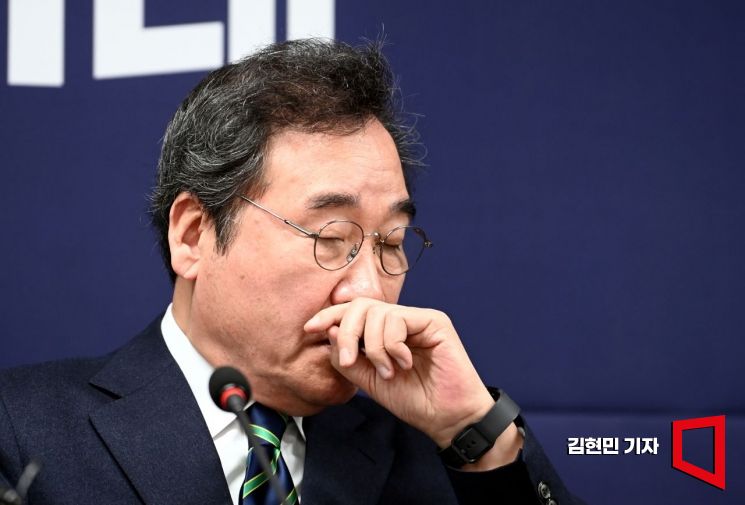 Lee Nak-yeon, Standing Advisor of the New Future Democratic Party, delivered strong criticism of the recent actions of the government and ruling party.
On November 15, Lee posted on social media, describing the government's operation of the "Constitutional Respect Government Innovation Task Force" as "a serious crack in Korean democracy." He raised concerns over the government's recent mention of potentially accessing the mobile phones and personal computers of about 750,000 public officials as part of its investigation into martial law-related allegations. He stated, "There is a clear intention to place people favorable to the administration and control the public sector."
The government has launched the "Constitutional Respect Government Innovation Task Force" to investigate the martial law allegations and plans to review related materials from most central administrative agencies. Prime Minister Kim Minseok has indicated that, if necessary, public officials may be asked to submit their personal mobile phones, and that personnel measures may be considered if they refuse to cooperate.
Lee argued that such measures are unlikely to secure constitutional legitimacy. He said, "Given the nature of public officials' positions, certain restrictions exist, but the core areas of fundamental rights cannot be infringed upon." He emphasized, "There is a significant risk of conflict with Article 17 of the Constitution, which stipulates the protection of personal information and privacy." He further pointed out, "Although the government claims it is based on consent, in reality, it is a system that makes refusal virtually impossible."
He also expressed concern that the blurring of boundaries between the public and private spheres reflects a trend toward totalitarianism. "Totalitarianism is not a distant issue," he stated, adding, "The policy of inspecting public officials' personal devices casts its shadow."
Lee continued his criticism of the government's and ruling party's actions regarding the prosecution. He questioned the logic of holding prosecutors accountable for "insubordination"-to the extent of considering dismissal-over their criticism of the decision to drop the Daejang-dong appeal, asking, "How can insubordination be discussed when there was no order in the first place?" He also warned, in response to Justice Minister Jeong Seongho raising doubts about the prosecutor status guarantee system, "In a democratic country, the independence of prosecutors is a crucial safeguard. If status guarantees are undermined, it will create a structure vulnerable to political pressure."
Lee concluded his post by saying, "Signs of democratic disorder are recurring. The current warnings should not be taken lightly."
© The Asia Business Daily(www.asiae.co.kr). All rights reserved.

















