BBC Chinese Edition: "Chinese Youth Focus on Cutting Expenses"
Money-Saving Content Gains Popularity on Local Social Media
Although Chinese authorities are striving to boost consumption and investment with the goal of reviving domestic demand, foreign media reports indicate that Chinese youth are instead focused on cutting back on living expenses such as food costs.
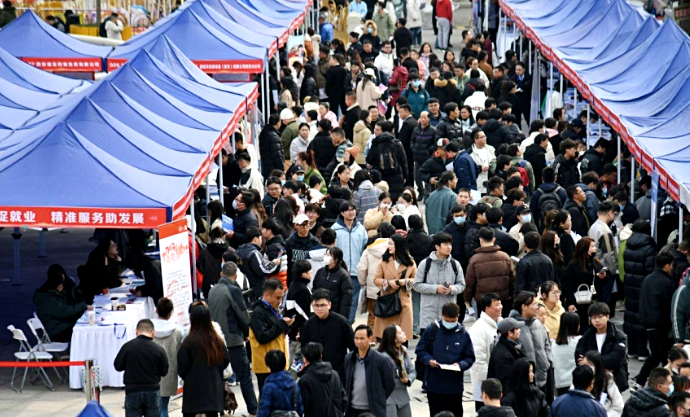
On November 13 (local time), the BBC Chinese edition reported that content sharing ways to live on less money is rapidly spreading on Chinese social networking services (SNS). Amid economic uncertainty, it appears that young people in China are tightening their belts even further.
An influencer known as "Rice Grain Zhang," who has 97,000 followers, introduced herself as someone who creates content centered on a life of minimal consumption. She uploads videos on topics such as how to wash the entire body with just a regular bar of soap instead of expensive cleansing products. Even in videos introducing bags and clothing at shopping malls, she emphasizes durability and cost-effectiveness.
In an interview with the BBC, she said, "I hope more people understand the pitfalls of consumption and learn to save. That way, stress is reduced and you feel more at ease."
Content sharing tips on how to eat at ultra-low cost is also popular. A 29-year-old influencer active under the name "Little Grass Wandering in Beijing" uploads videos on Douyin showing how to cook simple meals with little money. He says that with about 7 yuan (approximately 1,400 won), he can cover two meals, and thanks to this lifestyle, he has managed to save over 1.3 million yuan (about 270 million won) over six years.
Reportedly working at an online sales company, he said, "I come from an ordinary rural background. I have neither a good educational background nor influential connections, so I have to work hard for a better life."
Experts have pointed out that if China fails to increase domestic consumption, it will face significant long-term challenges. The Chinese government has pledged for years to boost household consumption, but household consumption accounts for only 39% of gross domestic product (GDP). This is much lower compared to most advanced economies, where the consumption share reaches 60%.
However, the BBC noted that the real issue is that Chinese youth are more pessimistic about the future now than they were in the 1990s or early 2000s. The youth unemployment rate in China is close to 20%, and even those with jobs live in constant fear of losing them. The high youth unemployment rate also creates an environment where companies can easily lower wages, forcing young people to either accept low pay or re-enter the fiercely competitive job market.
A man in his twenties said that while low-level jobs are available, it is difficult to find quality employment in his field of study. He added, "My friends majored in everything from finance to sales at university, but many of them are still unemployed and continue their job search while living at their parents' homes." He confessed, "I hope the economy improves quickly so that we can live better lives," but admitted he is "not optimistic" about the prospects for improvement.
© The Asia Business Daily(www.asiae.co.kr). All rights reserved.
![From Bar Hostess to Organ Seller to High Society... The Grotesque Con of a "Human Counterfeit" [Slate]](https://cwcontent.asiae.co.kr/asiaresize/183/2026021902243444107_1771435474.jpg)
















