Rapid Spread of World War I-Era Gas Gangrene Among Ukrainian Forces
Evacuation of the Wounded Delayed by Drone Threats, Worsening the Situation
'Gas gangrene,' a disease considered virtually eradicated since World War I, is being reported again on the battlefields of Ukraine. As the war drags on and drone threats intensify, the evacuation of wounded soldiers has been severely delayed, causing the infection to spread rapidly.
Delayed Evacuation of Wounded Soldiers Due to Drone Threats...Accelerated Spread
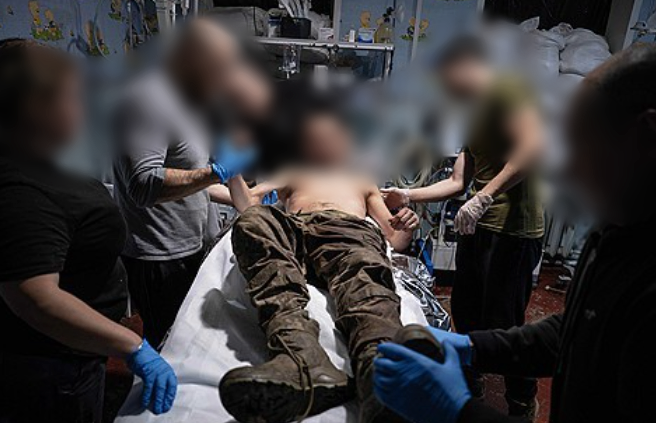
According to the UK’s Telegraph on the 13th (local time), Ukrainian medical personnel are reporting cases of gas gangrene, a disease believed to have been virtually eliminated in Europe. Medical staff explained that with drone attacks becoming constant, evacuating wounded soldiers from the front lines has become extremely difficult. As a result, trauma patients who require treatment within hours are now often forced to remain in temporary underground shelters for days or even weeks.
Alex, a foreign volunteer medic working in the Zaporizhzhia region, said, “We are seeing types of wound complications that no one alive has ever witnessed during war,” adding, “Evacuation delays of this magnitude may be the first since the past 50 years, or perhaps since World War II.” He stressed, “Moving outdoors makes you a target for drones. This is not an exaggeration,” and appealed, “Every day, we witness wounded soldiers who could be saved dying because they cannot be transported in time.”
"If Treatment Is Delayed, Mortality Rate Nearly 100%...A Nightmare from World War I Returns"
Gas gangrene occurs when anaerobic bacteria of the Clostridium genus invade deep wound tissue. These bacteria rapidly proliferate in oxygen-poor environments, producing gas and toxins that destroy muscle and soft tissue. Patients experience severe pain, swelling, and skin discoloration, and if left untreated, can deteriorate to a fatal condition within hours. Dr. Lindsay Edwards of King’s College London warned, “Gas gangrene requires both surgical removal of necrotic tissue and aggressive intravenous antibiotics,” emphasizing, “If not treated in time, the mortality rate is almost 100%, making it an extremely lethal infection.”
Gas gangrene was one of the most horrific infections faced by military doctors during World War I. Soldiers fought in muddy, damp trenches and fields often fertilized with manure, where Clostridium bacteria thrived. When soldiers received deep wounds from bullets or shrapnel in these environments and could not be evacuated quickly, infections spread rapidly. At that time, antibiotics had not yet been discovered, and wound hygiene was at a very rudimentary level.
Alastair Bevan, a British medical officer, said, “Historically, this disease is considered a phenomenon of the World War I era. Since then, early wound debridement, timely surgery, antibiotics, and improved wound care have made it much rarer.” Bevan emphasized, “However, all these measures require significant resources, such as medical support, logistics, and the ability to transport the wounded quickly.”
© The Asia Business Daily(www.asiae.co.kr). All rights reserved.

















