Bessent: "Tariff Cuts on Items Not Produced in the U.S."
Trump Also Says, "We Will Lower Coffee Tariffs"
Full Focus on 'Cost-of-Living Stabilization' After Mini Local Election Defeat
The Donald Trump administration in the United States has announced plans for significant tariff reductions on consumer goods, including food products. Following recent poor results in local elections, the administration has been prioritizing the stabilization of prices and the cost of living as key policy objectives.
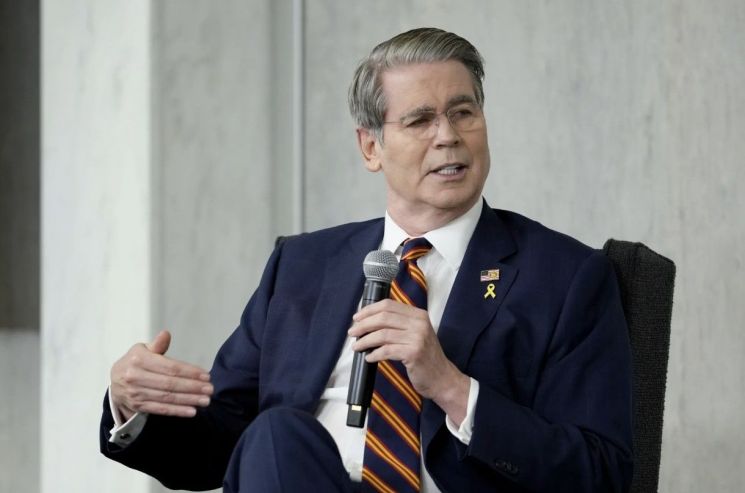
Scott Bessent, U.S. Secretary of the Treasury, stated in a Fox News interview on the 12th (local time), "While it is difficult to address all the details, there will be tariff reductions on items that are not produced domestically in the United States."
He mentioned coffee, bananas, and various fruits as items subject to tariff cuts, but did not provide further specifics.
Previously, President Trump also confirmed the plan to lower food tariffs in a Fox News interview the day before, stating, "We will lower tariffs on coffee," and "We will import more coffee."
Secretary Bessent added, "This measure will bring prices down very quickly," and "Americans will feel that inflation has improved during the first and second quarters of 2026."
Kevin Hassett, Chairman of the White House National Economic Council (NEC), also raised the possibility of food tariff reductions.
At an Economic Club event held in Washington, D.C. that day, he said, "Over the past few days, people have been discussing adjusting food tariffs," and added, "I believe there will be more changes in the area of food tariffs."
After the Republican Party's poor performance in the recent mini local elections, the Trump administration is focusing its efforts on stabilizing prices and the cost of living. In particular, Zohran Mamdani, who was elected as the Democratic candidate for New York City mayor, highlighted the issue of 'skyrocketing prices' to gain support from younger and low-income voters, bringing the issue of 'affordability' to the forefront of the political agenda.
Amid these developments, Secretary Bessent, who leads the U.S. economic team, has repeatedly emphasized messages about price stability in recent media interviews.
In an MSNBC interview the previous day, he also stated that the administration had "inherited an affordability crisis from the previous Joe Biden administration," and added, "We have reduced the inflation rate, and this will continue to slow down in the future." He also highlighted President Trump's manufacturing restoration policy, saying, "Real wages will rise," and "This will resolve the affordability issue."
However, despite the Trump administration's claims of declining inflation, prices remain at elevated levels. In September, the Consumer Price Index (CPI) rose by 3.0% year-on-year, slightly below the market forecast of 3.1%, but still significantly above the Federal Reserve's target of 2%.
Some critics argue that after fueling tariff-driven inflationary pressures, the Trump administration's move to cut food tariffs amounts to a "bait-and-switch" policy. Federal Reserve Chair Jerome Powell pointed out after the Federal Open Market Committee (FOMC) meeting on October 29 that "the rise in goods prices is a result of tariff increases," and stated, "If the effects of tariff increases are removed, the inflation rate will approach the target of 2%."
In addition, President Trump has recently proposed a plan to provide a "tariff dividend" of $2,000 per person. With the Supreme Court reviewing the legality of the tariff policy, analysts say that both the aim of securing favorable public opinion and the justification of easing the cost-of-living burden are at play. However, if the administration first causes price pressures through tariffs and then distributes cash payments, it will likely face criticism for policy inconsistency.
© The Asia Business Daily(www.asiae.co.kr). All rights reserved.
![Clutching a Stolen Dior Bag, Saying "I Hate Being Poor but Real"... The Grotesque Con of a "Human Knockoff" [Slate]](https://cwcontent.asiae.co.kr/asiaresize/183/2026021902243444107_1771435474.jpg)
















