SNE Research: Global Anode Material Market Survey for January-September 2025
37.4% Year-on-Year Growth... Chinese Companies Hold 94% Share
"Structural Changes Driven by Intensifying Supply Chain Risks and Technological Transition"
Opportunities Lie in Technological Innovation and Supply Chain Independence
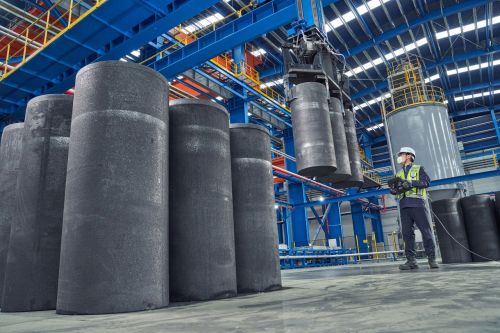
Chinese companies continue to dominate the global anode material market for secondary batteries, accounting for more than 94% of the total share. However, as the United States intensifies its efforts to keep China in check, there is growing anticipation that opportunities for domestic companies will expand.
According to SNE Research, a market research firm specializing in the energy sector, the volume of anode materials used in the global electric vehicle market (including plug-in hybrid and hybrid vehicles) from January to September 2025 reached 958 kilotons (K ton), up 37.4% from the same period last year. Excluding China, the market grew 30.9% year-on-year to 369 kilotons, maintaining moderate but stable growth.
By company, Shanshan (221 kilotons) and BTR (168 kilotons) ranked first and second, respectively, leading the global market. Both companies count major battery manufacturers such as CATL and BYD of China, as well as LG Energy Solution of Korea, among their clients.
Other leading companies include Kaijin (102 kilotons), Shangtai (101 kilotons), Shinzoom (75 kilotons), and Jichen (70 kilotons). In terms of nationality, Chinese companies account for more than 94% of the total market share.

SNE Research stated, "China's dominance is being solidified through expanded production capacity and technological advancement," adding, "With the expansion of the electric vehicle market and the increasing adoption of silicon composite anode materials (Si-Anode), collaboration with major battery manufacturers is also strengthening."
Korean companies hold a market share of around 3.3%, but are seeking full-scale entry into the market by expanding cooperation with major battery cell manufacturers, centering on POSCO Group and Daejoo Electronic Materials.
Japanese companies have a 2.6% market share. Firms such as Hitachi and Mitsubishi are maintaining a conservative strategy by relying on their existing customer base, which is gradually weakening their competitiveness.
SNE Research analyzed that the anode material market in 2025 has entered a structural inflection point, with supply chain risks and technological transitions intensifying simultaneously.
Vianode, a Norwegian graphite manufacturer, and Northern Graphite, headquartered in Canada, are currently working to expand synthetic graphite production. In contrast, China has begun to implement export controls on artificial graphite from November, aiming to maintain its market dominance and further heightening geopolitical tensions.
Amid these developments, silicon composite anode materials are emerging as a next-generation alternative, accelerating global investment and commercialization competition.
SNE Research predicted, "Ultimately, future market leadership will depend on how well external risks such as tariffs and export controls can be transformed into technological innovation and supply chain independence," adding, "Korean material companies can use this period of upheaval as a new entry opportunity."
© The Asia Business Daily(www.asiae.co.kr). All rights reserved.


















