The “Big Blur” Trend Sweeps Restaurant Franchises
Exposure Now Trumps Brand Identity in the Competition
Franchises Seek Survival Through Multi-Menu Strategies
The boundaries within the restaurant franchise industry are breaking down. The market, once divided into chicken, pizza, and burgers, is being reorganized around the concept of “one meal competition,” effectively erasing distinctions between brands. As consumer behavior shifts around delivery platforms and diversifying revenue streams becomes a challenge amid sluggish domestic demand, a “hybrid strategy” is spreading throughout the industry, with chicken brands selling burgers and pizza brands selling chicken.
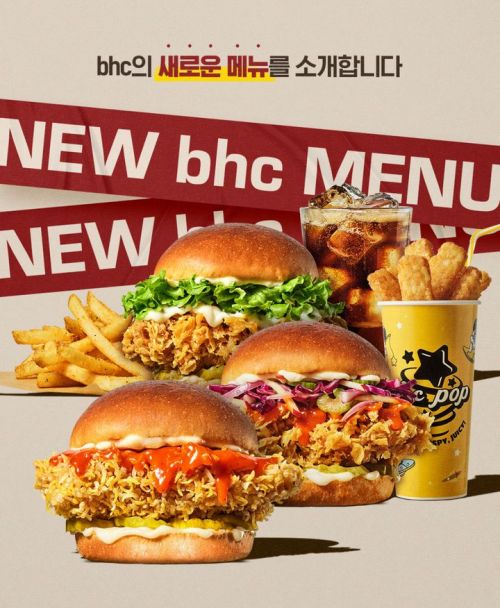
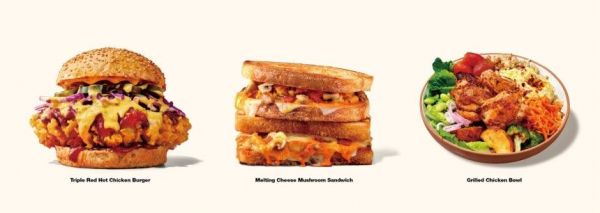
According to industry sources on November 16, bhc began selling three types of chicken burgers this month at its Gaepo Jaisequare branch in Gangnam-gu, Seoul. The company has processed its existing chicken menu into burger patties, transforming them into lunch menu items. Since chicken sales are typically concentrated in the evening, bhc’s strategy is to boost store profitability by increasing turnover during daytime hours.
Kyochon F&B has also recently launched a new brand, “Sosit,” and started selling hamburgers. Since most of Kyochon Chicken’s main menu items use chicken parts, the company has introduced a new product lineup utilizing surplus chicken breast. Through Sosit burgers, Kyochon plans to increase chicken breast consumption and, in the long term, transition to a whole-chicken supply system to improve raw material efficiency.
Mom’s Touch, which has focused on burgers and chicken, has been expanding its “Mom’s Pizza” business since last year. The expansion is taking place in the form of shop-in-shop outlets within Mom’s Touch stores. As of September, there were 187 Mom’s Pizza stores, 154 of which were shop-in-shop locations. The company plans to expand to 260 stores by the end of the year. A Mom’s Pizza representative explained, “Quick Service Restaurant (QSR) platform-type stores that offer burgers, chicken, and pizza record about 45% higher sales than regular stores. Pizza accounts for up to 20% of total sales, and Mom’s Pizza has established itself as a medium- to long-term growth engine for Mom’s Touch.”
Korea Papa John’s has also launched its own chicken brand, “Mama Chicken,” and started operating hybrid stores. The company recently opened a branch at Korea University, and is currently operating three stores, including those at Dongnimmun and Mapo.
The domestic franchise market is already saturated. With around 40,000 chicken restaurants and more than 20,000 coffee shops competing nationwide, expanding solely within existing business categories is not easy.
Amid this, the shift in market structure centered on delivery platforms has accelerated the breakdown of boundaries between franchises. On delivery apps, exposure algorithms matter more than brand identity. To appear in searches for the “burger” keyword, a brand must have burger menu items; to gain visibility in the “chicken” category, it must sell chicken. In other words, if a brand does not enter multiple categories, it will inevitably lose out in the competition for consumer searches.
The fading of the stereotype that “chicken restaurants only sell chicken and pizza restaurants only sell pizza,” especially among Millennials & Gen Z, has also played a role. Consumers now choose based on review ratings and menu variety rather than brand. The broader the menu selection a brand offers, the higher the consumer satisfaction, which directly translates into sales.
From a franchise headquarters perspective, the efficiency of producing a variety of menu items using the same equipment is also attractive. Fryers, ovens, sauces, and patties can be shared across the cooking line, so adding new menu items requires little additional investment in equipment and helps reduce supply chain costs. Selling hamburgers, chicken, and pizza-each consumed at different times of the day-at a single store enables both maximum franchisee sales and efficient operations.
The industry defines this trend as the “Big Blur” phenomenon. Analysts say that as domestic demand weakens and consumer preferences diversify, franchises are pursuing both revenue diversification and survival strategies through menu hybridization.
An industry insider commented, “With domestic demand sluggish and consumer tastes becoming increasingly diverse, growth is stagnating for brands that only sell a single menu item. As competition in the franchise industry intensifies, we can expect to see even more diverse and unique menu offerings in the future.”
© The Asia Business Daily(www.asiae.co.kr). All rights reserved.



















