"When One More Post-Retirement Worker Is Hired, 1.5 Fewer Young Workers Are Employed"
Seniority-Based Wage System Increases Employment Burden
The business community has argued that "as the number of older workers benefiting from retirement age extension increases, the youth unemployment problem could worsen," insisting that, instead of a 'statutory retirement age extension,' labor market flexibility should be enhanced and a 'post-retirement re-employment' system should be introduced.
Recently, as labor unions have demanded the enactment of a retirement age extension bill within the year, discussions on extending the retirement age are accelerating, particularly within the ruling Democratic Party of Korea. The business sector opposes a uniform retirement age extension, arguing that it would not only deepen the dual structure of the labor market but also exacerbate youth unemployment.
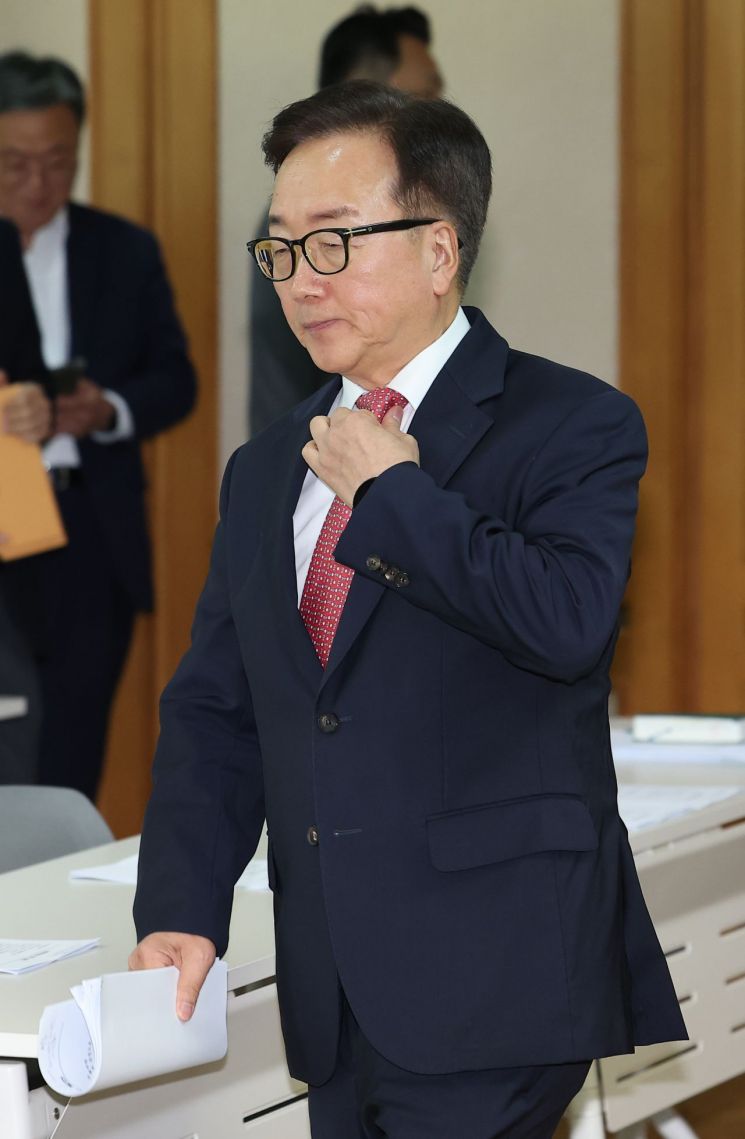
On November 11, Lee Donggeun, Vice Chairman of the Korea Employers Federation, stated, "Numerous studies have already shown that extending the retirement age has a negative impact on youth employment," adding, "It is not the business community, but the government and society that should be most seriously concerned about the decline in youth employment."
According to a survey by the Bank of Korea, after the mandatory retirement age was set at 60, for every one additional older worker (aged 55-59), the number of young workers (aged 23-27) decreased by as many as 1.5. Furthermore, an analysis by the Korea Labor Institute found that workplaces that adopted a re-employment system increased youth employment, whereas those that implemented retirement age extension or abolition saw a decrease in youth employment.
Vice Chairman Lee further pointed out, "The benefits of retirement age extension, as demanded by labor unions, will go to workers in some large corporations or the public sector, while the rest will not receive such benefits," adding, "Given the significant disparities in working conditions such as wages depending on company size and employment type in Korea's labor market, retirement age extension could be concentrated among a select few."
The National Assembly Futures Institute recently reported that less than 20% of all wage workers remain employed until the retirement age, and that many older workers at workplaces without a retirement age system are being excluded from the current policy discussions.
Vice Chairman Lee also expressed concern that the social controversy brought about by retirement age extension could lead to unforeseen problems. He said, "Currently, the retirement age for elementary school teachers is 62, but if it is extended to 65, there may be demands to further increase it to 67," adding, "We need to honestly consider how many parents will want their children to be taught by teachers in their 60s in the coming era of artificial intelligence."
He also predicted, "If the retirement age for public officials is raised to 65, the number of new hires will inevitably decrease, ultimately harming young people preparing for civil service exams," and "the increased wage costs for public officials will directly become a burden for the government."
Vice Chairman Lee presented Japan's case, where measures to secure employment for older workers focus on re-employment rather than statutory retirement age extension, as an alternative.
Japan made it mandatory in 2004 for companies to secure employment for workers up to age 65, allowing them to choose among re-employment, retirement age extension, or abolition of the retirement age. However, the statutory retirement age has been maintained at 60. According to the Japanese Ministry of Health, Labour and Welfare, as of the end of 2024, 67.4% of Japanese companies with 21 or more employees had adopted the re-employment system.
The Japanese government also operates a 'Continued Employment Benefit for the Elderly' system, under which, if the wage of an older worker falls below 75% of their pre-retirement (age 60) wage, 10% of their wage is subsidized through employment insurance until age 65.
In response, the Korea Employers Federation proposed enacting a 'Special Act on Post-Retirement Re-employment' (tentative name), to guarantee companies the right to choose re-employment and to broadly specify government support measures. The proposal includes giving companies discretion to select re-employed workers within the scope of necessary work and personnel, and expanding wage subsidies and tax benefits for companies that adopt re-employment.
Vice Chairman Lee emphasized, "We need to consider the reality that, in some industries such as automotive and steel, post-retirement re-employment is already being naturally established," adding, "If retirement age extension is implemented without labor market flexibility in a situation where labor rigidity is high, it will inevitably become increasingly difficult for companies to sustain themselves."
© The Asia Business Daily(www.asiae.co.kr). All rights reserved.