National Data Agency Releases This Year's Social Survey Results
Social Trust Relatively Low Among Those in Their 20s and 30s
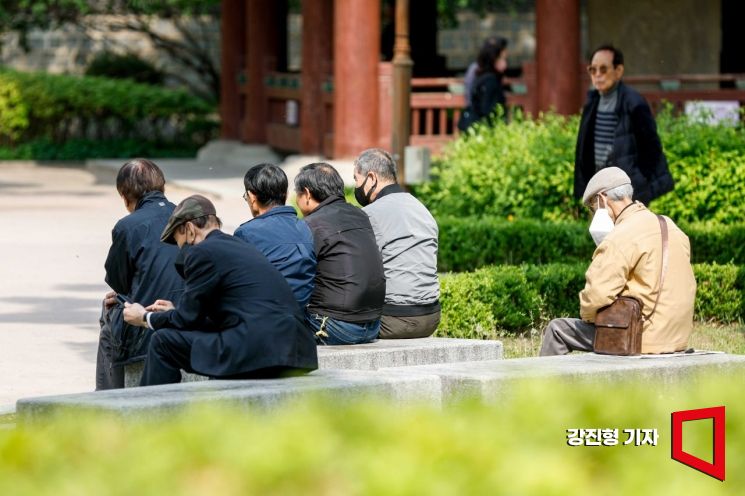
Four out of ten seniors aged 60 and older reported feeling lonely on a regular basis. The proportion of those aged 60 and above who go out less than once a week or rarely leave their homes was 6.4%, higher than any other age group.
Loneliness Increases with Age... 43.4% for Those Aged 65 and Older
According to the "2025 Social Survey Results (Welfare, Social Participation, Leisure, Income and Consumption, Labor)" released by the National Data Agency on November 11, a newly included "loneliness" category in the social participation section showed that 38.2% of respondents said they usually felt lonely. Notably, 4.7% answered that they "often" feel lonely. The survey targeted approximately 34,000 household members aged 13 and older living in sample households nationwide.
By age group, the older the respondents were, the more likely they were to feel lonely. Among those aged 13-19 (30.3%), 20-29 (32.2%), 30-39 (33.8%), and 40-49 (38.8%)-groups primarily engaged in school or work-the proportion reporting loneliness gradually increased into the high 30% range. For those aged 60 and older, the figure was 42.2%. When limited to those aged 65 and older, the proportion rose to 43.4%.
Additionally, those without a social network (meaning they have no one to turn to for help in specific situations and no regular social interactions) were much more likely to feel lonely. Of all respondents, 5.8% said they lacked a social network, and among them, 56.0% reported feeling lonely. This was 18.9 percentage points higher than the 37.1% of those with a social network who reported feeling lonely.
Looking at how often respondents go out, 65.9% said they go out five or more days a week. The proportions of those who go out less than one day a week or almost never go out were 1.7% and 1.0%, respectively. Among those aged 60 and older, 6.4% said they go out less than once a week or almost never, a markedly higher rate than other age groups. For those in their 20s (1.3%) and 40s (1.2%), the rates were in the 1% range.
Among people aged 19 and older, 75.1% said they could get help with household chores if they were ill, an increase of 1.1 percentage points from two years ago. The average number of people they could turn to for help was 2.3. The proportion who said they could get help if they suddenly needed to borrow a large sum of money also rose by 0.4 percentage points to 51.4%. In contrast, the proportion who said they could get help when feeling discouraged or depressed and needing someone to talk to fell by 1.0 percentage point to 78.8%.
Social Trust at 54.6%... Lower Among Those in Their 20s and 30s
Among people aged 19 and older, perceptions of their own socioeconomic status-considering income, occupation, education, and assets-were divided into high (3.8%), middle (61.6%), and low (34.6%). Compared to two years ago, the high category increased by 0.8 percentage points, the middle remained unchanged, and the low category decreased by 0.8 percentage points. More than 70% of those with household incomes of 4 million won or more considered their status to be middle or higher.
Among people aged 19 and older, 29.1% believed that it is likely for individuals to improve their socioeconomic status within their own generation through effort, a 2.7 percentage point increase. The proportion who thought their children's generation would be able to move up the social ladder was 29.9%, up 0.8 percentage points. The higher people rated their current socioeconomic status, the more likely they were to believe in upward mobility for both themselves and their children.
The proportion of people who said they trust Korean society was 54.6%, down 3.5 percentage points from two years ago. This is the first decline in social trust since this survey began. By age group, trust was highest among teenagers (59.7%), while trust among those in their 20s (52.0%) and 30s (49.1%) was lower than in other age groups. Those in their 40s (55.5%), 50s (57.2%), and 60 and older (55.3%) showed similar levels of trust.
'Living Conditions About the Same' 47.2%... High Demand for Healthcare Facilities
In the welfare section, 47.2% responded that overall living conditions in Korean society had not changed compared to two years ago. This was followed by "improved" (40.0%) and "worsened" (12.9%). When asked about public facilities and welfare services that should be expanded in the future, healthcare facilities (29.1%), parks, green spaces, and walking trails (15.8%), and social welfare facilities (15.1%) were most frequently mentioned. Notably, demand for healthcare facilities-especially high among older respondents-increased by 1.2 percentage points compared to two years ago.
Among people aged 19 and older, 71.5% said they are preparing or have prepared for old age. By age group, the proportion was highest among those in their 50s (83.8%), followed by those in their 40s (81.2%) and 30s (76.0%). The main reasons for not preparing for old age were lack of ability to do so (37.9%), plans to prepare in the future (35.2%), and not having thought about it yet (19.0%).
As for preferred ways to spend old age, 42.4% chose hobbies. A significant proportion also hoped to engage in travel and tourism (28.5%) or income-generating activities (14.3%). However, among seniors aged 60 and older, the most common current way of spending old age was income-generating activities (34.4%), followed by hobbies (32.2%) and caring for family members (10.9%). Among those aged 60 and older, 79.7% said they or their spouse primarily provide for living expenses.
© The Asia Business Daily(www.asiae.co.kr). All rights reserved.
![Clutching a Stolen Dior Bag, Saying "I Hate Being Poor but Real"... The Grotesque Con of a "Human Knockoff" [Slate]](https://cwcontent.asiae.co.kr/asiaresize/183/2026021902243444107_1771435474.jpg)

















