Bipartisan Effort by Republicans and Democrats in the U.S. House
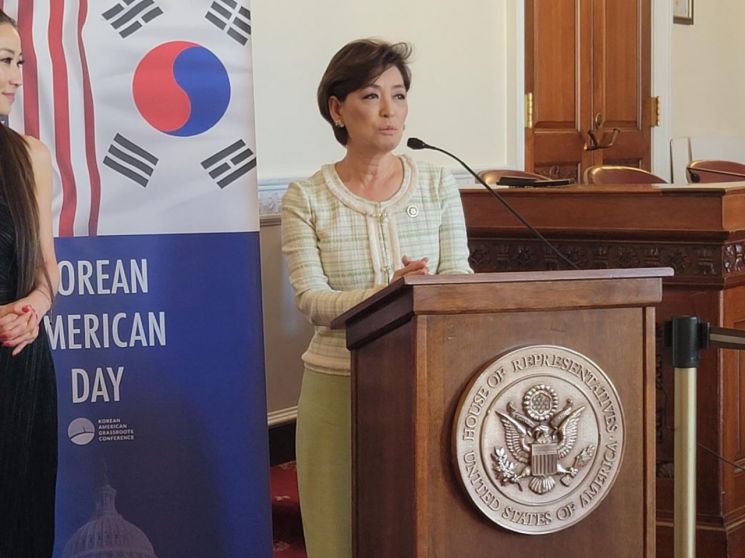
A bipartisan bill aimed at reviving the North Korean Human Rights Act, which has remained in legislative limbo for over three years, has been introduced in the U.S. House of Representatives.
On November 7 (local time), Young Kim (Republican, California), Chair of the House Foreign Affairs Subcommittee on East Asia and the Pacific, introduced a bill to reauthorize the 2004 North Korean Human Rights Act. Ami Bera (Democrat, California), the ranking member of the subcommittee and a leading pro-Korea advocate, joined as a co-sponsor.
The North Korean Human Rights Act, enacted in 2004 as a temporary measure, includes provisions for efforts to reunite Korean American families separated by the Korean War, the appointment of a Special Envoy on North Korean Human Rights, support for broadcasting media to promote freedom of information within North Korea, and humanitarian assistance for North Korean residents.
Subsequent reauthorization bills were passed three times-in 2008, 2012, and 2018-but the legislation expired on August 30, 2022. Although several lawmakers have since introduced reauthorization bills, none have passed due to legislative backlogs, resulting in a legislative gap that has persisted for more than three years.
The North Korean Human Rights Act, established in 2004 during the George W. Bush administration, passed with bipartisan consensus. It was introduced by Republican Senator James Risch and co-sponsored by Democratic Congressman Tom Lantos. Robert R. King, former U.S. Special Envoy for North Korean Human Rights, wrote in a contribution to the Center for Strategic and International Studies (CSIS) that the bill was "regarded at the time as a model case of bipartisan cooperation on human rights."
However, it is expected that passing the bill will not be easy under a potential second Trump administration. During his first term (2017-2021), President Trump did not appoint a successor after former Special Envoy King stepped down in January 2017. Julie Turner, who was appointed as Special Envoy during the Biden administration, was reassigned to serve as Acting Deputy Assistant Secretary for Democracy, Human Rights, and Labor at the State Department immediately after the launch of the second administration.
© The Asia Business Daily(www.asiae.co.kr). All rights reserved.
![Clutching a Stolen Dior Bag, Saying "I Hate Being Poor but Real"... The Grotesque Con of a "Human Knockoff" [Slate]](https://cwcontent.asiae.co.kr/asiaresize/183/2026021902243444107_1771435474.jpg)











