'2050 Carbon Neutrality and Green Growth Commission' Approves New Targets
Prime Minister Kim Minseok: "We Will Reduce the Burden on Companies"
The government has finalized a new Nationally Determined Contribution (NDC), aiming to reduce net greenhouse gas emissions by 53% to 61% compared to 2018 levels by 2035. Unlike a single target, this new goal is presented as a range, taking into account realistic conditions such as industrial structure and the pace of technological advancement, as well as the reduction levels demanded by the international community and the burden on future generations.
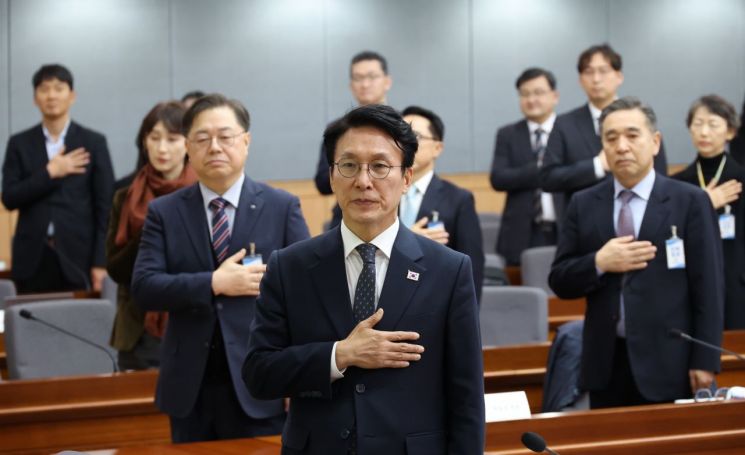
The 2050 Carbon Neutrality and Green Growth Commission, directly under the President, held its 5th plenary session on November 10, chaired by Prime Minister Kim Minseok, where it deliberated and approved the draft of the 2035 national greenhouse gas reduction target. This target is the NDC that must be submitted to the United Nations (UN) within this year under the Paris Agreement. The government plans to officially announce it at the 30th Conference of the Parties (COP30) to the United Nations Framework Convention on Climate Change, which will be held in Belem, Brazil, later this month.
Based on the net emissions of 742.3 million tons in 2018, the government set the 2035 emissions target at 348.9 million tons (53% reduction) to 289.5 million tons (61% reduction). Unlike the previous 2030 NDC, which presented a single reduction rate, this new target provides both a lower and an upper bound, reflecting uncertainties such as the speed of technological progress and investment. The lower bound serves as the practical reduction baseline linked to regulations and systems such as the emissions trading scheme, while the upper bound represents the aspirational level the nation should achieve if the commercialization and support of innovative technologies are expanded in parallel.
Based on this target, the government plans to sequentially implement sector-specific reduction plans and strategies to support industrial transition. Sectoral strategies will be redesigned for electricity, industry, buildings, transportation, waste, and agriculture, livestock, and fisheries.
For the electricity sector, the government set a maximum reduction target of 75.3% compared to 2018, focusing on reducing coal-fired power generation and increasing the share of renewable energy. In the industrial sector, reflecting concerns about the reduction burden, the target was set at a moderated 24.3% to 31.0% reduction compared to previous goals. The government stated that it will simultaneously promote transition finance, tax support, and process restructuring to accelerate the spread of reduction technologies.
For buildings, the target is a maximum reduction of 56.2% through the expansion of zero-energy construction, the introduction of green remodeling for old buildings, and the electrification of heating and heat supply. In transportation, the target is a maximum reduction of 62.8% through the expansion of electric and hydrogen vehicles, improvement of internal combustion engine efficiency, and a shift to public transportation. In the waste and agriculture/livestock sectors, the government aims to gradually decrease emissions by reducing waste generation and increasing the rates of recycling and energy recovery.
In particular, the government announced that it will introduce the "K-GX (Green Transformation) Industrial Strategy" in the first half of next year to alleviate the burden on the industrial sector, which has limited reduction potential, and to turn green transition into an opportunity to upgrade the industrial ecosystem. The plan includes systematizing financial, tax, and investment support for promising green industries such as solar power, wind power, power grids, energy storage systems (ESS), electric vehicles, and batteries, as well as promoting the demonstration and commercialization of key carbon-neutral technologies such as carbon capture, utilization, and storage (CCUS) and hydrogen-based steelmaking.
Meanwhile, the government also approved the national emissions allowance allocation plan for the fourth planning period, which will apply from 2026 to 2030. The proportion of paid allocation in the power generation sector will be gradually increased to 50% by 2030, while industries with high export competitiveness and carbon leakage risk, such as steel, petrochemicals, cement, and refining, will continue to receive free allocations. However, flexibility measures, such as easing the criteria for emissions allowance carryover and borrowing, will be implemented in parallel to reduce the compliance burden on companies.
The government believes that this decision will serve as an intermediate ramp toward achieving both the 2035 reduction target and 2050 carbon neutrality. However, the actual achievement of the targets will depend on the pace of renewable energy deployment, the rate of transition to zero-emission vehicles, and the speed of industrial structural transformation.
At the meeting, Prime Minister Kim stated, "We will ensure that companies striving to reduce greenhouse gas emissions receive benefits, while also enhancing their willingness to invest in reduction efforts, thereby contributing to the achievement of the 2030 greenhouse gas reduction target."
© The Asia Business Daily(www.asiae.co.kr). All rights reserved.

















