Yutong, the Leading Electric Bus Manufacturer in Europe
SIM Cards Enable Theoretical Remote Control of Vehicles
Security Concerns Raised... Yutong Claims "For Maintenance Purposes Only"
Remote control features installed by the manufacturer have been identified in Chinese-made electric buses operating in Europe, raising concerns about cybersecurity risks such as hacking. On November 6 (local time), the Associated Press reported that “Norwegian public transport operator Ruter conducted a security experiment and discovered that Yutong electric buses were equipped with SIM cards for remote access by the manufacturer.” Yutong currently holds the largest market share in the European electric bus sector, with 850 out of approximately 1,300 electric buses operating in Norway being Yutong vehicles.
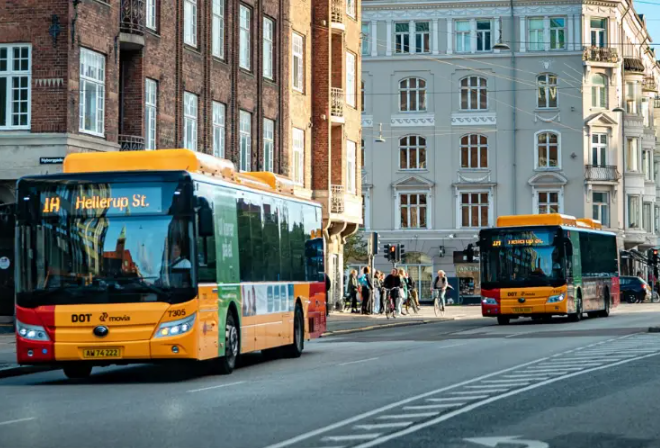 A photo of a Weitong electric bus operating in Europe to help understand the article. Official Weitong website
The SIM card in question reportedly allows for software updates and diagnostics to be performed remotely, and also enables access to the battery and power control systems. Theoretically, this means the manufacturer could halt vehicle operation or render the buses inoperable. The same test included Dutch VDL buses, but remote control access was found only in the Yutong vehicles.
Security concerns regarding Chinese-made electric buses have also been raised in Denmark. According to The Guardian, the Danish Civil Protection and Emergency Management Agency pointed out to Movia, the country’s largest transport operator, that “these electric buses are equipped not only with internet connectivity systems but also with various sensors such as cameras, microphones, and GPS, potentially exposing vulnerabilities that could be exploited to disrupt operations.” Movia currently operates a total of 469 Chinese-made electric buses, of which 262 are Yutong vehicles.
Yutong stated, “We comply with the regulations of the regions in which we operate, and related data is stored on AWS servers in Frankfurt, Germany.” The company emphasized that the data is used solely for maintenance and service improvement purposes and cannot be accessed or used without customer approval.
Although there have been no reported cases of actual remote hacking so far, the issue is expanding into a broader debate over how much European countries can trust Chinese technology. Ruter told the Associated Press, “We will significantly strengthen security standards in future electric bus procurement processes and build firewalls to ensure that systems can only be controlled locally.” The Guardian also reported that the Danish Civil Protection and Emergency Management Agency is continuing to monitor the situation and will consider additional cooperative measures if necessary.
Yutong is a major Chinese manufacturer capable of producing tens of thousands of electric and hydrogen buses annually. According to the Italian transport media outlet Sustainable Bus, Yutong ranked first in the European electric bus market in the first half of this year with a 16% market share.
According to data submitted by the office of People Power Party lawmaker Kim Sohee to the Ministry of Environment in April, titled “Performance of Domestic and Imported Electric Bus Supply and Subsidy Execution by Local Governments Over the Past Three Years,” 3,722 out of 8,505 electric buses supplied by local governments across South Korea from 2022 to 2024 were Chinese-made, accounting for 43.8%. In particular, Gyeonggi Province introduced 3,742 electric buses during the same period, of which 2,300 were Chinese-made, meaning about 61.5% of all Chinese-made electric buses in the country were concentrated in Gyeonggi Province.
© The Asia Business Daily(www.asiae.co.kr). All rights reserved.

















