It has been revealed that former President Yoon Sukyeol, who was re-arrested on charges including leading an insurrection, has received over 650 million won in prison deposits over the past 100 days.
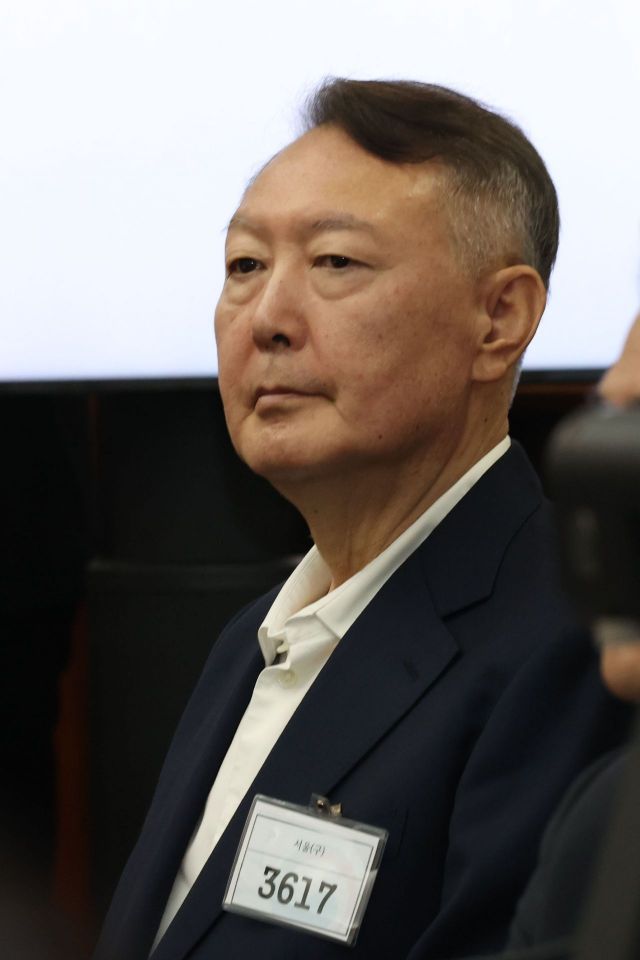 Former President Yoon Sukyeol is attending the trial on charges of obstruction of official duties held on the 26th at the Seoul Central District Court in Seocho-dong, Seoul.
 According to data submitted by Park Eunjeong, a member of the National Assembly's Legislation and Judiciary Committee from the Korea Innovation Party, as well as reports from Yonhap News and others on the 9th, former President Yoon received a total of 657.25 million won in prison deposits over 109 days, from July 10, when he was re-arrested, to September 26. This amount ranks first among all inmates at Seoul Detention Center. The number of deposit transactions reached 12,794, averaging around 100 deposits per day.
Former President Yoon withdrew a total of 651.66 million won from his prison deposit account in 180 separate transactions. The maximum amount an inmate is allowed to hold in a prison deposit account is 4 million won. If this limit is exceeded, the excess is either paid out upon release or, if requested, transferred to a personal account as needed.
Former President Yoon received prison deposits exceeding the annual salary of a president. According to the "2025 Regulations on Remuneration and Allowances for Public Officials," the president's annual salary this year is approximately 262.58 million won. In just over 100 days, Yoon received prison deposits amounting to 2.5 times the president's annual salary.
Yoon's wife, Kim Keonhee, received about 22.5 million won in prison deposits over two months after being incarcerated at the Southern Detention Center on August 12. Of this, she withdrew about 18.56 million won. Kweon Seongdong, a member of the People Power Party, received around 16.6 million won in deposits after entering the facility on September 16, withdrawing about 16.44 million won. Han Hakja, leader of the Unification Church, who was arrested on September 23, received approximately 5.64 million won and withdrew about 1.14 million won.
As former President Yoon received large sums in prison deposits during his incarceration, concerns have been raised that the deposit system is being misused as a means of personal fundraising. According to the Act on the Collection and Use of Donations, any fundraising exceeding 10 million won must be reported to the relevant authorities. Political donations are also limited: individuals may not donate more than 20 million won per year, with a maximum of 10 million won to a presidential candidate and 5 million won each to the central party and members of the National Assembly. However, for prison deposits, there is only a limit on the account balance of 4 million won, with no restrictions on the total amount deposited or withdrawn, or the number of transactions.
Prison deposits can also be used to evade taxation. Although such deposits are subject to tax, the National Tax Service faces practical limitations in collecting the necessary data, making actual taxation difficult. A proposed amendment to the Inheritance and Gift Tax Act, which would allow the Commissioner of the National Tax Service to request prison deposit records from correctional facilities, is currently pending in the National Assembly. Assemblywoman Park stated, "It is urgent to prepare institutional reforms, such as setting a limit on prison deposits, to prevent the system from being operated in ways that deviate from its original purpose."
© The Asia Business Daily(www.asiae.co.kr). All rights reserved.

















