"Businesses Without Passion or Confidence Should Find New Owners"
Most of Korea's Former Core Industries Now Require Restructuring
"A business leader must pursue work that they are passionate about and confident in. It is not right to hold onto businesses for which one lacks passion or confidence and lead employees who are dedicating their lives to that work. The right approach is to find a leader who has both passion and confidence and transfer the business to them."
In 2015, Samsung Group transferred its defense industry affiliates, Samsung Techwin and Samsung Thales, to Hanwha. As a result, Hanwha Techwin and Hanwha Thales were established. Later, Hanwha Techwin became Hanwha Aerospace, and Hanwha Thales was renamed Hanwha Systems. At that time, I met with Chairman Lee Jae-yong and asked him why the affiliates were transferred to Hanwha. Chairman Lee described the business transfer as a "duty to the employees."
However, employees who were forcibly transferred to Hanwha at the time did not see it that way. Their complaints were specific, such as higher bank loan interest rates or lower ratings when registering with matchmaking agencies. Some employees who felt they had suffered losses even demanded compensation. There was also internal opposition within Samsung regarding the business transfer. Some argued that the business was sold at a bargain price and even on installment terms.
"During meetings, I asked if anyone had visited the factories of the companies up for sale or had drinks with the employees in the evening. Only a couple of people raised their hands. Senior executives at Samsung only care about Samsung Electronics. In reality, they do not have the capacity to pay attention to anything other than the core businesses." Despite the backlash, he trusted his own judgment. "There is too much redundancy in our country's industrial structure. Only by consolidating can we achieve global competitiveness. In time, I believe people will understand the vision I had."
Now, ten years later, the defense businesses that Samsung transferred have begun to generate golden eggs. It is enough to make one wonder if Samsung regrets selling them at a bargain price and on installment terms. Let us first look back at what kind of companies Samsung Techwin and Thales were. Samsung Techwin was founded in August 1977, originally named Samsung Precision Industries. In 1987, it was renamed Samsung Aerospace Industries, and in 2000, it became Samsung Techwin. After being acquired by Hanwha Group in 2015, it was called Hanwha Techwin, and in 2018, it finally adopted the name Hanwha Aerospace.
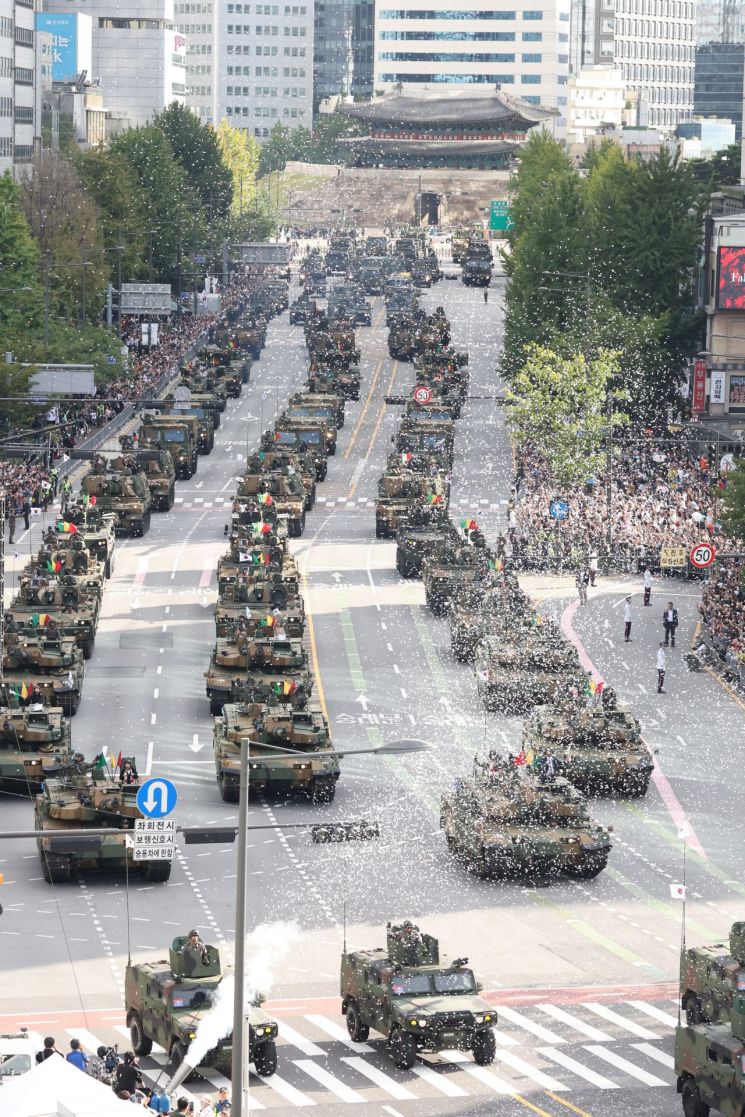
Samsung Techwin participated in the development and production of weapon systems such as self-propelled howitzers (including the K9), infantry fighting vehicles (such as the K21), and ammunition resupply vehicles (such as the K10). It was also involved in aircraft engine manufacturing, maintenance, and parts production. In addition, the company had information technology businesses, including optical technology for digital cameras and camera phone modules, as well as semiconductor materials and components.
The roots of Samsung Thales also trace back to Samsung Precision Industries. In 1999, Samsung formed a strategic partnership with France's Thales Group for defense business and established the joint venture Samsung Thales. Samsung Thales was strong in advanced electronic defense fields such as radar, communication systems, and electronic warfare. After being acquired by Hanwha, the company was reborn as Hanwha Systems.
Hanwha is an abbreviation of Korea Explosives. In other words, Hanwha, which had originally been a powerhouse in ammunition and precision-guided weapons, gained new wings in aerospace and information technology through the acquisitions of Techwin and Thales, soaring to become Korea's number one defense company. The best indicator of this is the stock price. On November 1, 2015, Techwin's stock price was in the 30,000 won range (37,300 won). However, this year, the stock price exceeded 1.12 million won.
Today, South Korea is emerging as a major player in the global defense market. The defense industry is currently the most dynamic sector in the Korean economy. As of June this year, the order backlog of the four major defense companies (Hanwha Aerospace, LIG Nex1, Hyundai Rotem, and Korea Aerospace Industries (KAI)) surpassed 100 trillion won. This means there are more than 100 trillion won worth of deliveries pending after contracts have been signed, enough to keep them busy for four to five years. Hanwha Aerospace's order backlog alone amounts to 31.7 trillion won. KAI has 26.6733 trillion won, LIG Nex1 has 23.4665 trillion won, and Hyundai Rotem has 21.637 trillion won. It is unlikely that employees of Hanwha's defense affiliates would want to return to the days under Samsung.
Korea's defense industry has not only become a driving force but also a pillar of the Korean economy. The term that symbolizes this is MASGA, which stands for "Make America Shipbuilding Great Again." Hanwha coined this term and has rolled up its sleeves to make it a reality.
Hanwha Aerospace's subsidiary Hanwha Ocean and HD Hyundai continue to win U.S. Navy ship maintenance, repair, and overhaul (MRO) contracts. The main reason the United States is so focused on shipbuilding is its competition with the Chinese navy. The U.S. Navy plans to spend over 1 trillion dollars over the next 30 years, starting in 2024, to secure military vessels. The current fleet of 295 ships is expected to increase to 390 by 2054.
Last year, seven out of the world's top ten shipyards by new orders were Chinese companies. The remaining three were Korea's HD Hyundai, Hanwha Ocean, and Samsung Heavy Industries. For the United States, which is vying with China for maritime supremacy, Korea is the only viable partner. The U.S. naval vessel market is a newly opened blue ocean for Korean shipbuilders. Yet, why has Samsung Heavy Industries not actively participated in MASGA?
First, Samsung Group has withdrawn from the defense business and lacks expertise in naval vessels. If Samsung Techwin and Samsung Thales still existed today, would things be different? It is a difficult question to answer. China has expressed its discomfort toward Hanwha, which has raised the MASGA banner. In October, the Chinese government announced sanctions against five of Hanwha Group's U.S. affiliates in the shipbuilding and shipping sectors. These include Hanwha Philly Shipyard in Pennsylvania, the heart of MASGA, and other subsidiaries established to build ships in the United States. China has completely banned all cooperation and transactions between these companies and Chinese organizations or individuals.
In reality, for Hanwha, being cut off from China is not a serious issue. Structurally, Hanwha and China are competitors, and Hanwha generates virtually no revenue from China, so there is no need to fear the sanctions. If it were Samsung, the situation would be entirely different. As of 2024, China accounts for about 30% of Samsung Electronics' revenue, while the United States accounts for about 29%. When the U.S. and China are in conflict, Samsung cannot take sides. Samsung is an organization that cannot even imagine something like MASGA.
The era of full-scale Korean defense exports began only a few years ago. In 2022, Hyundai Rotem signed a contract to export 180 K2 tanks to Poland. An executive at Hyundai Rotem said, "Although we faced many challenges at the time, the hardest part was deciding on the price." Since they had no prior export experience, they had no idea what price to quote.
In fact, advanced domestic weapons are not made by a single company. The K2 development project was led by the Agency for Defense Development. A significant portion of the electronic equipment was supplied by Hanwha Systems, which is said to account for 7% of the K2 tank's price. The engine, the heart of the tank, is a product of HD Hyundai Infracore. Under government leadership, numerous defense companies compete and cooperate to create advanced weapons. When delivering to the Ministry of National Defense, they can only add a small margin to the cost. This is the main reason it was difficult to set proper prices for initial exports.
The competitiveness of Korea's defense industry comes from its manufacturing capabilities. Korea is the best in the world at producing quickly and at low cost. Hyundai Rotem delivered the first batch of ten tanks to Poland just four months after signing the contract. In contrast, Germany's Leopard tank and the U.S. Abrams tank, which were previously considered the world's best, take years to deliver after signing a contract. Years of peace have left their manufacturing bases outdated and on the verge of collapse. Even if the main producer is ready, component suppliers cannot deliver on time. In contrast, Korea meets deadlines with precision. If necessary, they even divert products meant for domestic supply to fulfill orders early. Moreover, for the same specifications, the price is half as much.
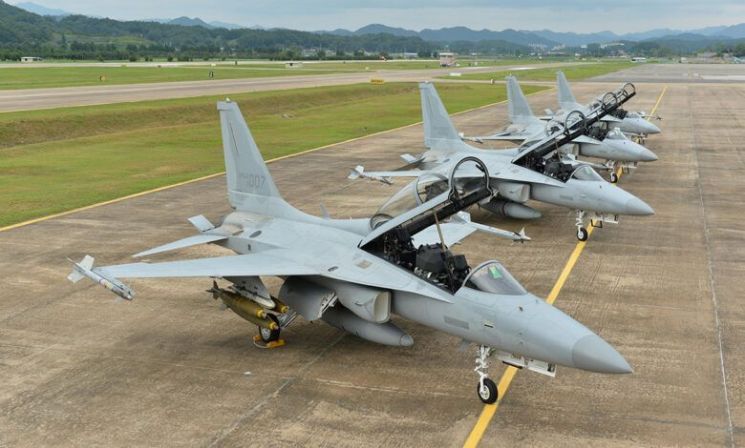
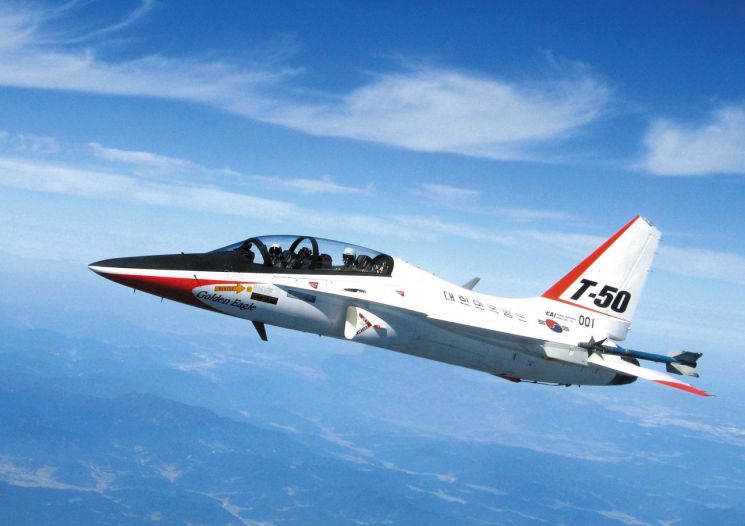
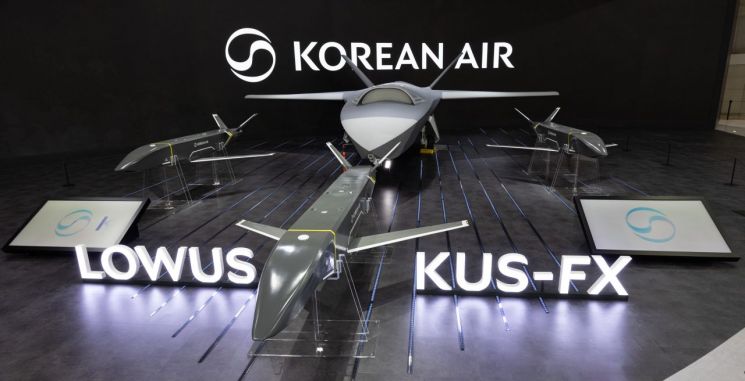
On the 20th, the "Seoul International Aerospace and Defense Exhibition (ADEX) 2025" was held at KINTEX in Ilsan, Goyang, Gyeonggi Province. The exhibition showcased how AI is transforming domestic advanced weaponry. Hanwha Aerospace unveiled the Cheonmu 3.0, a loitering precision-guided weapon. This product features an AI suicide drone that launches from a missile in flight to strike the enemy. Even when fired from 80 kilometers away, it boasts a 99% hit rate. Hanwha plans to develop Cheonmu 3.0 by 2030. Hanwha Systems unveiled, for the first time in Korea, a full-scale model of a satellite capable of precisely identifying 15-centimeter objects such as cell phones and water bottles from a very low orbit 400 kilometers above the ground.
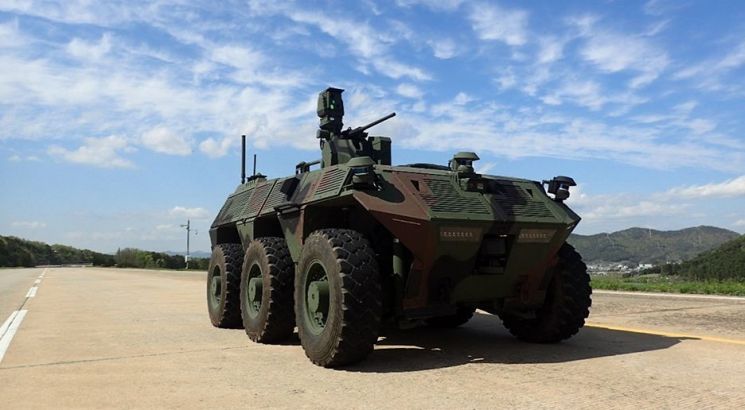
LIG Nex1 introduced its next-generation unmanned ground vehicle, "G-Sword." By swapping sensors, equipment, and software, AI can autonomously complete reconnaissance, escort, and strike missions. Hyundai Rotem unveiled the "Black Veil," an AI unmanned vehicle capable of both battlefield and disaster response. It uses hydrogen fuel cells to move silently.
Now, defense exhibitions held in Korea are seen as showcases for the future of weaponry. In September next year, DX KOREA 2026, previously known as Korea's leading ground weapons exhibition, will be held at KINTEX in Ilsan. The advancement of Korean defense technology is changing the very nature of exhibitions held in Korea. The organizers of DX KOREA explained that next year's exhibition will go beyond traditional ground forces to feature cutting-edge future weapons spanning land, sea, air, space, and even cyberspace.
Korea's defense industry now has the opportunity to leap onto the global stage. On the 4th, President Lee Jaemyung announced in his policy speech that next year's defense budget would be increased to 66.3 trillion won, laying the foundation for Korea to become one of the world's top four defense powers. The Stockholm International Peace Research Institute (SIPRI) reported that, based on 2020-2024 data, Korea's share of the global arms export market is 2.2%, ranking tenth in the world. The United States leads with 43%, followed by France (9.6%), Russia (7.8%), China (5.9%), and Germany (5.6%). In reality, Korea's defense industry is only just taking its first steps onto the world stage. There is still a long way to go to reach fourth place.
One of the reasons the defense industry has grown to become a pillar of the Korean economy is the voluntary restructuring that took place in the industry ten years ago. By efficiently allocating human and technological resources, the industry was able to build competitiveness and respond proactively when opportunities arose. Today, there are many industries in Korea that require restructuring. The most notable is petrochemicals. There is a consensus that, in its current state, Korea cannot beat China in this sector and faces the risk of mutual destruction. The government initially announced it would take preemptive action but stepped back in August, leaving it to industry self-regulation. The steel industry is also in crisis due to China's low-cost offensive and the United States' 50% tariffs. On the 4th, relevant ministers met and decided to allocate 770 billion won for financial support and other measures. Once again, restructuring seems to rely on industry self-regulation. Even shipbuilders, currently enjoying a boom, suffered massive losses just a few years ago as they lost out to China, which uses low labor costs as a weapon. In fact, all of Korea's aging core industries are now at a point where restructuring is needed. If the country does not act quickly-balancing government leadership and private sector autonomy-the future of the Korean economy could be at risk.
© The Asia Business Daily(www.asiae.co.kr). All rights reserved.



















