Selected for 47 Billion KRW National Project
Aiming to Discover Ten Antibody Drug Candidates
Samsung Bioepis is embarking on the development of AI-driven antibody therapeutics in collaboration with Proteina, a company specializing in artificial intelligence (AI)-based drug discovery.
On November 5, Proteina announced that it had been selected as the lead institution for the national project, "Development and Demonstration of Antibody Biopharmaceuticals Using AI Models," overseen by the Ministry of Health and Welfare. The project has a total budget of 47 billion KRW (approximately 35 million USD), with Samsung Bioepis and Professor Baek Minkyoung's research team from Seoul National University participating as joint research and development institutions.
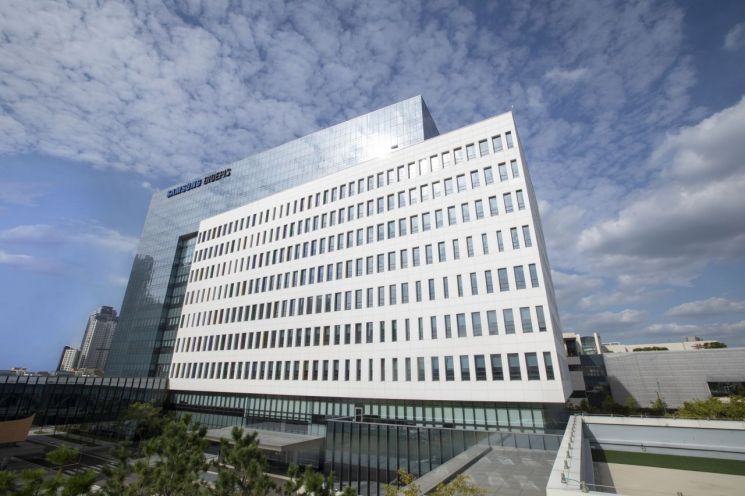
The consortium of Samsung Bioepis, Proteina, and Seoul National University aims to develop ten AI-designed antibody drug candidates over a 27-month period, by the end of 2027. Of these, three candidates will complete preclinical trials, and one will be targeted for an Investigational New Drug (IND) application for Phase 1 clinical trials.
The core technologies include "AbGPT-3D," an antibody design AI jointly developed by Proteina and Seoul National University, and "SPID (Single-Protein Interaction Detection)," an ultra-fast antibody optimization and validation platform. AbGPT-3D consists of three AI modules responsible for antigen-binding structure design, optimal sequence generation, and developability assessment. SPID enables simultaneous analysis of seven indicators, including binding affinity, stability, and aggregation, using small amounts of unpurified samples, reducing the verification period from several months to just two weeks.
Proteina has previously demonstrated its technological capabilities by using the SPID platform to improve the efficacy of "Humira" (active ingredient: adalimumab), a treatment for autoimmune diseases. Within just three months, the company identified a candidate with up to 100 times greater efficacy than the existing drug in animal studies.
Samsung Bioepis will be responsible for the entire process of advancing the candidates into clinical trials. The company will rapidly develop high-productivity cell lines using state-of-the-art automated equipment, optimize cell culture and purification processes, and oversee the production of clinical samples. Samsung Bioepis will also manage preclinical toxicity testing (GLP-tox) and the IND application process, leading the global clinical trial entry. To date, Samsung Bioepis has secured IND approvals for 11 products in 39 countries, with no rejections.
Taeyoung Yoon, CEO of Proteina, began laying the foundation for high-speed antibody screening platform technology with support from the Samsung Science & Technology Foundation-an initiative operated by Samsung Electronics to foster future scientific and technological advancements-over a five-year period from 2014 to 2018.
CEO Taeyoung Yoon stated, "This project represents Korea's first integrated antibody drug development model, combining Proteina's SPID, Seoul National University's AI, and Samsung Bioepis's global capabilities. Within 27 months, we aim to discover ten antibody drug candidates and establish a proof-of-concept model for AI-based drug development." Kim Yooncheol, Executive Director at Samsung Bioepis, added, "By leveraging our process optimization expertise accumulated through biosimilar development and integrating AI-based design and analysis, we will address unmet medical needs."
© The Asia Business Daily(www.asiae.co.kr). All rights reserved.


















