Take Subjects in the Selected Order
On the day of the 2026 College Scholastic Ability Test (CSAT), which will be held on November 13, test-takers must bring their test admission ticket and a valid photo identification, and enter the test site by 8:10 a.m. In addition, they should familiarize themselves in advance with the list of permitted and prohibited items to avoid any disadvantages.
On November 4, the Ministry of Education announced these important guidelines for the 2026 CSAT examinees.
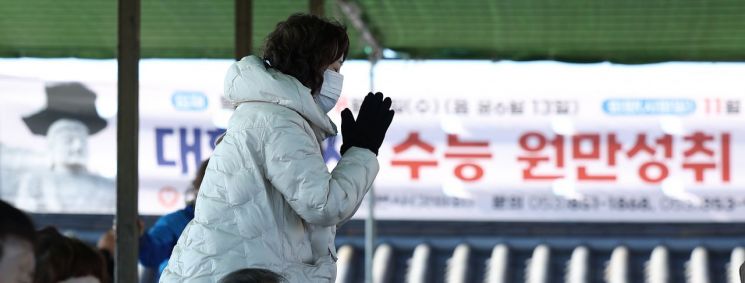
First, on the day before the CSAT, November 12, all examinees must attend the preliminary orientation to receive their test admission ticket. They should check their selected subjects listed on the ticket and confirm the location of their designated test site in advance to avoid going to the wrong venue on the test day.
On the test day, November 13, examinees are required to bring their admission ticket and identification, and enter their assigned test room by 8:10 a.m. Acceptable forms of identification include a resident registration card, driver's license, passport displaying the resident registration number, youth ID card, alien registration card, certificates confirming application for issuance of a resident registration card or youth ID card, and student ID cards that include the student's name, date of birth, and the school principal's seal. However, "mobile IDs" are not accepted.
If an examinee loses their admission ticket, they can receive a reissued ticket by bringing a photo identical to the one attached to their application form and their ID to the test administration office at the test site by 8:00 a.m. on the test day. If they do not have a photo, they can still report to the test administration office to receive a temporary admission ticket.
Items prohibited from being brought into the test site must be left at home or handed in before the start of the first period.
All electronic devices, including mobile phones, smart devices (such as smartwatches), tablet PCs, earphones with communication (Bluetooth) functions, and electronic cigarettes, are not allowed in the test site.
If examinees bring electronic devices to the test site, they must submit them to the proctor before the first period begins and can retrieve them after the test ends. Failure to submit such devices and being caught with them during the test will be considered cheating, resulting in the invalidation of the test.
As for watches, only analog watches without payment or communication functions (such as Bluetooth) and without electronic displays (such as LCD or LED) are permitted.
Items necessary for personal physical or medical reasons, such as hearing aids, magnifying glasses, or continuous glucose monitors, may be brought in after prior inspection by the proctor before each test period.
All examinees must take the Korean History section in the fourth period. If an examinee does not take the Korean History section, their test will be invalidated and no score report will be issued.
For the subsequent fourth period Social Studies/Science section, examinees must take the subjects in the order they selected, and only the test booklet for the subject corresponding to the current period should be placed on the desk and answered. The selected subjects and their order for the fourth period can be checked on the admission ticket and on the sticker attached to the top of the examinee's desk.
If an examinee who chose to take two subjects in the fourth period modifies or writes answers for the first subject during the time allocated for the second subject, it will be considered cheating.
Only the black computer-marking pen provided should be used to fill out the answer sheet, and the handwriting verification statement must also be written with the black computer-marking pen. If answers are written with a mechanical pencil or regular pencil, or if there are double markings, the examinee will be responsible for any resulting disadvantages.
When the end signal sounds, examinees must immediately put down their writing instruments, place the answer sheet on the right side and the test booklet on the left side, lower their hands, and follow the proctor's instructions.
If an unexpected situation such as an earthquake occurs during the test, each test site will promptly respond according to pre-established procedures, prioritizing the safety of examinees. Examinees should remain calm and follow the instructions of the test administration office and the proctors.
The Ministry of Education plans to produce and distribute videos and information booklets to help examinees easily understand and familiarize themselves with the key points of these guidelines.
© The Asia Business Daily(www.asiae.co.kr). All rights reserved.

















