US Department of Energy Clarifies: "No Nuclear Explosions"
Will the US Break Its 33-Year Nuclear Explosion Moratorium?
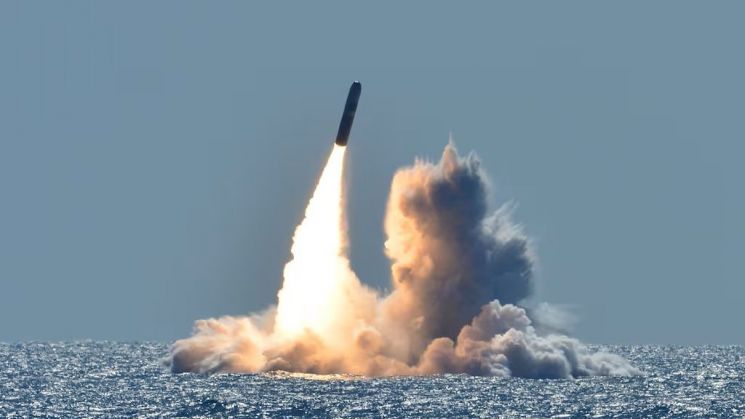
With President Donald Trump announcing plans to resume nuclear testing, there are growing expectations both inside and outside the United States of an expanded nuclear arms race. Since the United Nations banned nuclear explosion tests in 1996, such tests have been considered taboo in the international community, with North Korea being the only country to have conducted public tests since then. While the US Department of Energy has drawn a clear line, stating that there will be no nuclear explosion tests like those in the past, if President Trump breaks this international taboo, it could open the door for China, Russia, and other nuclear-armed countries to resume nuclear explosion tests as well.
US Department of Energy Responds to Trump’s Nuclear Test Remarks: “No Nuclear Explosions”
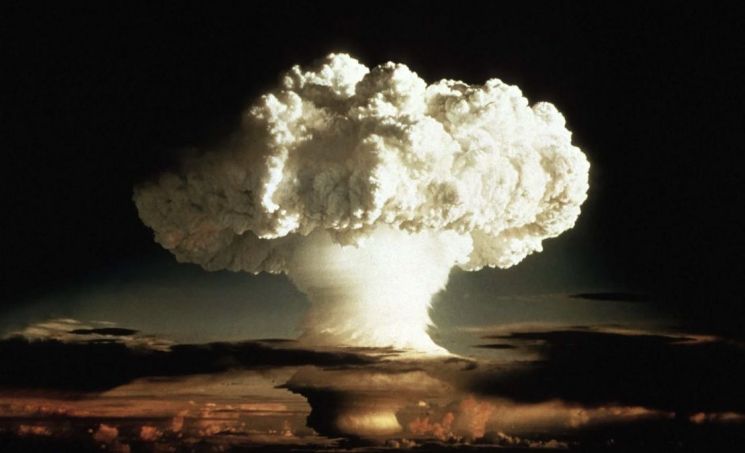 The mushroom cloud that rose during the first hydrogen bomb test in the United States in 1952. Photo by Reuters and Yonhap News Agency
Chris Wright, US Secretary of Energy, stated in an interview with Fox News on the 2nd (local time), “The nuclear test President Trump referred to is not a nuclear explosion test but a noncritical experiment, which is a type of system test,” emphasizing, “Residents of the Nevada desert have absolutely no reason to worry about seeing a mushroom cloud.” This is interpreted as an attempt to contain the controversy sparked by President Trump’s remarks about resuming nuclear testing.
The noncritical tests mentioned by Secretary Wright do not involve detonating a nuclear weapon to test its performance. Instead, these experiments check whether the nuclear material inside a weapon can be compressed to a certain level that could trigger a critical reaction, but the process is stopped before an actual nuclear explosion occurs. Both nuclear-armed countries and the international community generally accept noncritical tests, as they do not result in nuclear explosions.
However, it remains unclear whether the nuclear tests President Trump has proposed will be limited to noncritical tests. In a media interview, President Trump claimed, “China, Russia, and North Korea are all constantly conducting nuclear tests, but the outside world doesn’t know because they don’t have a free press,” adding, “The United States has enough nuclear weapons to destroy the Earth more than 150 times, so we need nuclear tests to make sure they work properly.”
On this matter, the Associated Press pointed out, “It is unclear whether the nuclear tests President Trump mentioned are noncritical or involve nuclear explosions, and there is confusion within the Trump administration,” adding, “President Trump has not provided further details about the nuclear tests, and both the Department of Defense and the Department of Energy have declined to comment.”
Since 1996, Only North Korea Has Conducted Critical Nuclear Tests... Will Trump Break the Taboo?
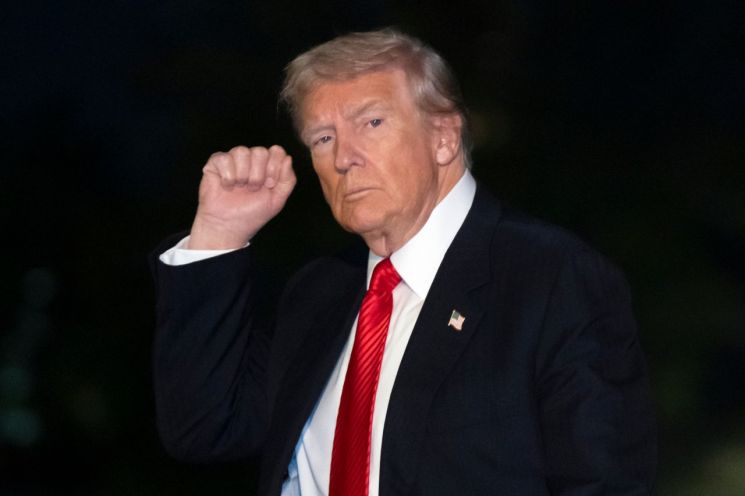
If President Trump orders the resumption of nuclear explosion tests, it would break the international taboo that has been maintained since the Comprehensive Nuclear-Test-Ban Treaty (CTBT) was adopted by the United Nations in 1996. At the time, 187 countries, including the United States, China, Russia, the United Kingdom, and France, signed the CTBT, and since then, North Korea has been the only country to conduct official nuclear explosion tests.
The United States has not conducted a nuclear explosion test for 33 years, since 1992. China also claims that it has not conducted any public nuclear explosion tests since signing the CTBT in 1996. Russia maintains that it stopped nuclear explosion tests in 1990, just before the collapse of the former Soviet Union, earlier than the United States. India and Pakistan also last conducted nuclear explosion tests in 1998 and have since ceased testing.
China and Russia have pushed back against President Trump’s remarks, denying that they are secretly conducting nuclear explosion tests. Mao Ning, spokesperson for China’s Ministry of Foreign Affairs, stated at a regular briefing on the 3rd, “China maintains a nuclear strategy for self-defense and adheres to its commitment to halt nuclear testing,” adding, “We hope the United States will strictly comply with the Comprehensive Nuclear-Test-Ban Treaty and its commitment to halt nuclear testing.”
Dmitry Peskov, spokesperson for the Kremlin, said at a press conference immediately after President Trump’s remarks, “President Trump’s mention of Russian nuclear tests appears to refer to the test launch of the nuclear-powered cruise missile Burevestnik,” adding, “All countries are developing defense systems, but this is not a nuclear test.” He warned, “If the United States pushes ahead with nuclear tests, we will take corresponding measures.”
Nuclear Disarmament Becomes Increasingly Difficult... Concerns Over Escalating Arms Race
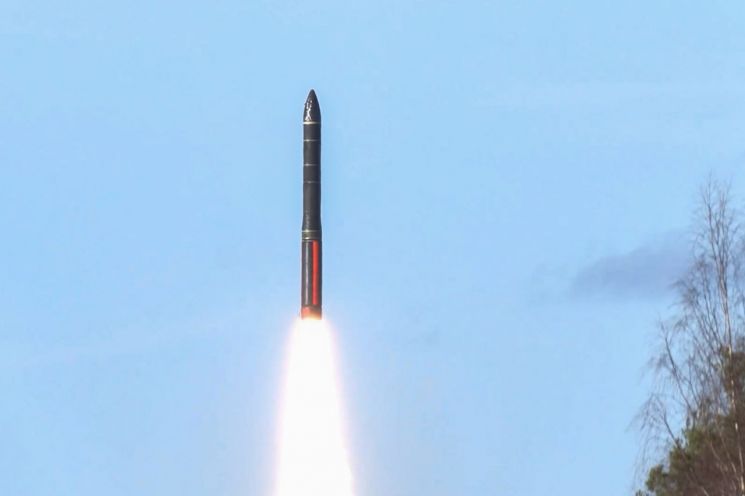
If the United States, China, and Russia resume nuclear explosion tests, there are concerns that the already troubled nuclear disarmament negotiations between the United States and Russia, which have faced difficulties since the Joe Biden administration, will become even more challenging.
Currently, the United States and Russia are estimated to possess 5,225 and 5,580 nuclear warheads, respectively. If the New Strategic Arms Reduction Treaty (New START), the only remaining nuclear disarmament agreement between the two countries, expires soon, the number of intercontinental ballistic missiles (ICBMs) equipped with nuclear warheads-currently limited to 1,550-could increase significantly.
The BBC reported, “President Trump’s remarks about resuming nuclear testing have made negotiations over the New START treaty-the only remaining nuclear disarmament agreement between the United States and Russia-even more difficult,” adding, “With only about 100 days left until the treaty expires in February 2026, if the United States resumes nuclear explosion tests and expands its nuclear arsenal, extending the treaty will become virtually impossible.”
If the nuclear arms race between the United States and Russia resumes, China may also publicly increase its nuclear arsenal. According to estimates by the US Department of Defense, China possessed 600 nuclear warheads last year, with the number increasing by about 100 per year. It is projected that China’s arsenal could reach 1,000 warheads by 2030.
© The Asia Business Daily(www.asiae.co.kr). All rights reserved.



















