Proliferation of "Warehouse-Style Pharmacies"
"Price Innovation or Erosion of Professionalism?"
Medicines Stacked for Consumers to Freely Choose and Purchase
Prices Up to 30% Lower... Pharmacist Counseling Available
Neighborhood Pharmacies War
The pharmacy industry is in turmoil as "warehouse-style pharmacies," reminiscent of large discount stores, continue to emerge. These pharmacies, which feature massive display shelves stacked with over-the-counter medicines and supplements, and even self-checkout counters, have opened their doors, prompting existing neighborhood pharmacies to protest. They argue that such stores undermine the professionalism of pharmacists and threaten public health. Meanwhile, consumers are welcoming the trend, saying it allows them to purchase medicines more cheaply and conveniently. The government, however, is considering amending the "Pharmaceutical Affairs Act" to restrict the naming and advertising of warehouse-style pharmacies.
Price Innovation or Erosion of Professionalism?
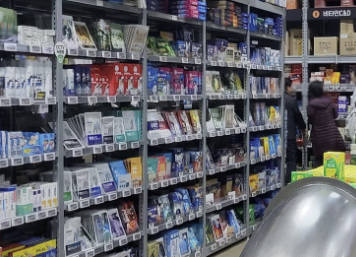
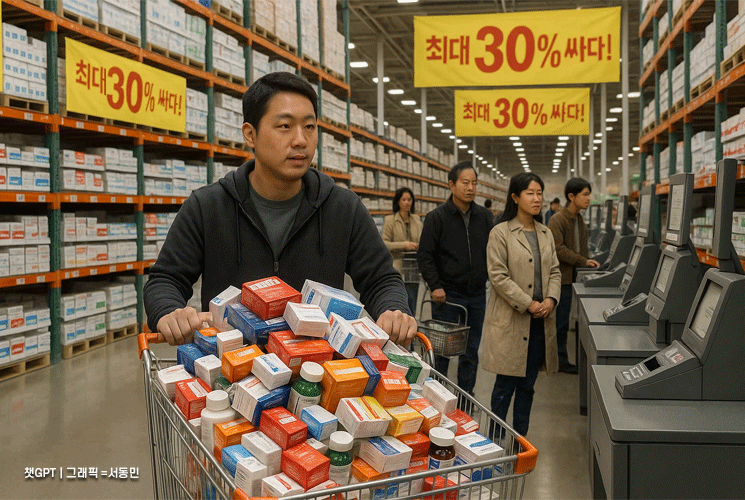
As of November 4, according to industry sources, there are currently seven large-scale pharmacies operating nationwide, each occupying several hundred pyeong (approximately 3,300 square meters), located in Gangnam, Seoul; Seongnam and Goyang in Gyeonggi Province; two locations in Jeonju, North Jeolla Province; and Suseong, Daegu. Large pharmacies are also reportedly preparing to open in Geomdan New Town, Incheon, and Yongsan, Seoul. These pharmacies are characterized by their spacious interiors, where a wide variety of over-the-counter drugs and health supplements are displayed in bulk, allowing consumers to freely choose and purchase products. Each product is labeled with the symptoms it is intended to treat, and customers can receive direct consultations from pharmacists on-site if needed.
Prices are generally 10 to 20 percent, and sometimes up to 30 percent, lower than those at regular pharmacies. This is due to minimized distribution margins, and in some cases, certain medicines are supplied directly from pharmaceutical companies without going through intermediaries. A consumer who visited a warehouse-style pharmacy in Seongnam, Gyeonggi Province, said, "Cold medicine or fever reducers that I frequently buy are about 500 to 1,000 won cheaper than at neighborhood pharmacies, and some probiotic or vitamin C supplements are available at half the price of well-known pharmaceutical brands. In the past, when I asked for a specific medicine at a local pharmacy, I was often recommended a different drug with the same ingredients. Here, I appreciate being able to choose my preferred product from a wide range of options."
Another consumer commented, "Even when convenience stores were first allowed to sell emergency medicines, pharmacists protested, resulting in only a minimal range of products being approved. Contrary to the concerns of pharmacies, no serious problems occurred. If consumers can purchase medicines more conveniently and at lower prices, as in overseas drugstores, such opportunities should not be restricted."
On the other hand, pharmacies-particularly those represented by the Korean Pharmaceutical Association-define these warehouse-style pharmacies as "circumventing the essence of pharmacy through irregular business practices." They argue that medicines should be used in appropriate amounts when needed, and that indiscriminate sales driven solely by price competitiveness can encourage misuse and abuse. Furthermore, they warn that systems excluding the pharmacist's professional review, intervention, and medication guidance can lead to adverse drug reactions, posing significant risks.
Competition in Scale: Small Pharmacies Take the Hit
Such concerns were raised during the National Assembly Health and Welfare Committee's audit last month. Consequently, the government is considering amending the Pharmaceutical Affairs Act to restrict the naming, signage, and advertising of warehouse-style pharmacies. Under current law, there is no basis for regulating warehouse-style pharmacies. Since they do not handle prescription-only medicines and are operated by licensed pharmacists, there are no legal grounds for restriction.
However, the Ministry of Health and Welfare has stated, "If pharmacy names include terms such as 'warehouse,' 'wholesale,' or 'mart,' which imply bulk or low-cost sales, some consumers may purchase excessive amounts of medicines, leading to potential misuse. Therefore, we intend to regulate such expressions to preemptively block potential risks in the interest of public health management."
Within the pharmaceutical industry, some see warehouse-style pharmacies as a new distribution experiment. A representative from a mid-sized pharmaceutical company said, "There have already been large pharmacies in areas like Jongno 5-ga and Namdaemun that differentiate themselves through price competition. Recently, some pharmacies known as 'hair loss medicine hotspots' or 'diet injection hotspots' have attracted crowds of consumers. The warehouse-style pharmacy is simply a new sales format reflecting the changing demands of today's consumers, and there is no fundamental issue with the establishment and operation of large pharmacies."
Another industry insider noted, "Pharmacist organizations are concerned that non-pharmacists, such as building or land owners with significant capital, could become involved in establishing warehouse-style pharmacies. However, operating a pharmacy without a license is illegal, so the focus should be on preventing such illegal practices. In fact, there are even reports that well-capitalized pharmacists are actively seeking locations for large pharmacies. This suggests that the pharmaceutical distribution market is likely to undergo significant changes, and polarization among pharmacies may intensify in the future."
A professor at a pharmacy college in Seoul commented, "It is natural for various types of pharmacies to emerge as consumer preferences and the distribution market evolve with the times. However, given the nature of medicines, consumers may not be able to fully understand all the information about the drugs they take. Therefore, measures to prevent misuse and abuse must be considered."
© The Asia Business Daily(www.asiae.co.kr). All rights reserved.


















